
Visual Redress
Rewriting our spaces
Every building tells a story
Every building tells a story. Every name, image, and inscription signals who belongs — and who does not.
For much of its early history, the Faculty of Medicine and Health Sciences at Tygerberg, established in 1956 under apartheid, reflected the exclusions of its time. For those who did not fit that narrow mould, it could feel unwelcoming, even alienating.
That legacy cannot simply be declared over; it must be actively addressed.

Visual redress is not about erasure, but expansion
Visual redress is not about erasure, but expansion — restoring missing narratives, affirming dignity, and ensuring that all who enter feel they belong.
As Dr Leslie van Rooi, former Director: Social Impact and Transformation at Stellenbosch University, notes, it is an ongoing process with no endpoint: a continual commitment to more honest, inclusive, and just representation.

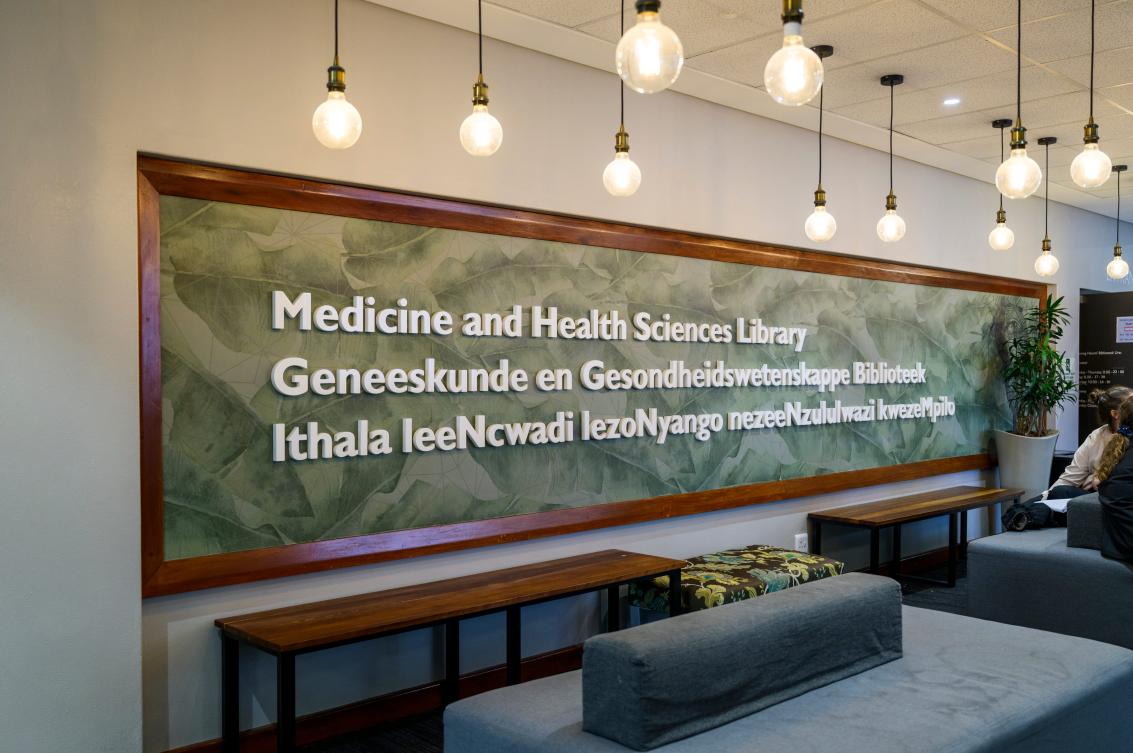
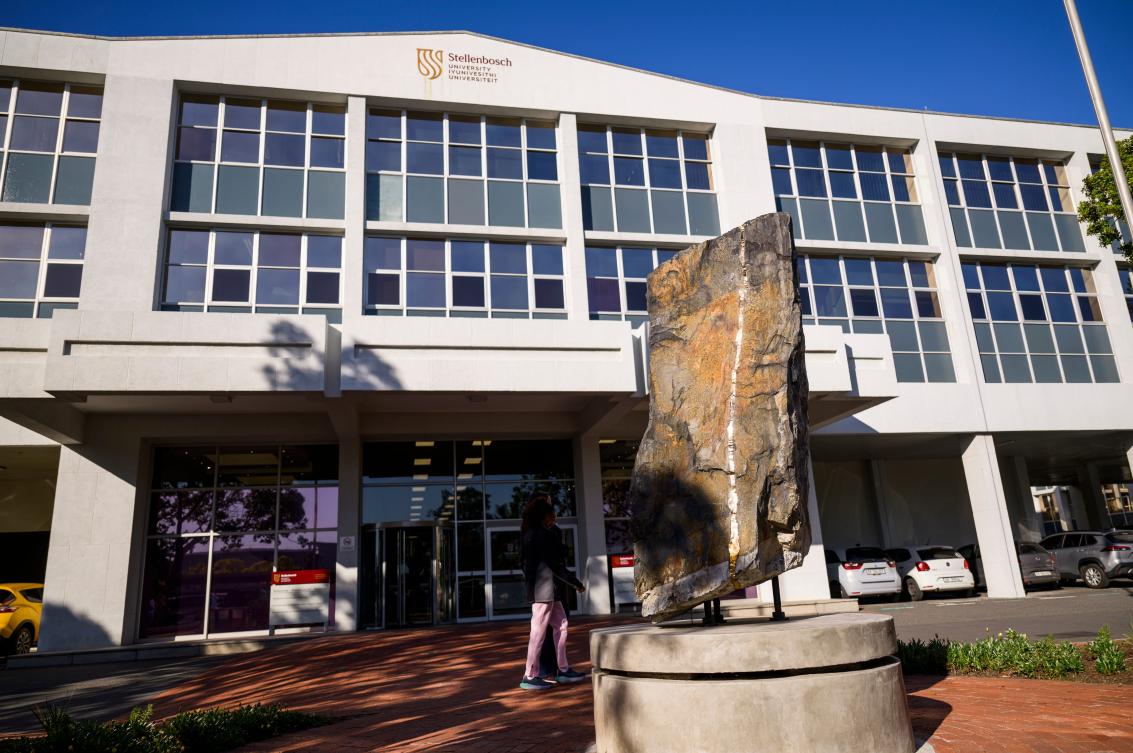


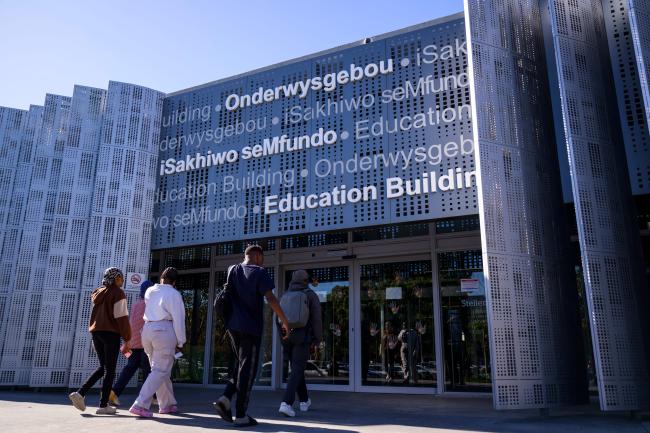


Our spaces now reflect our student base.
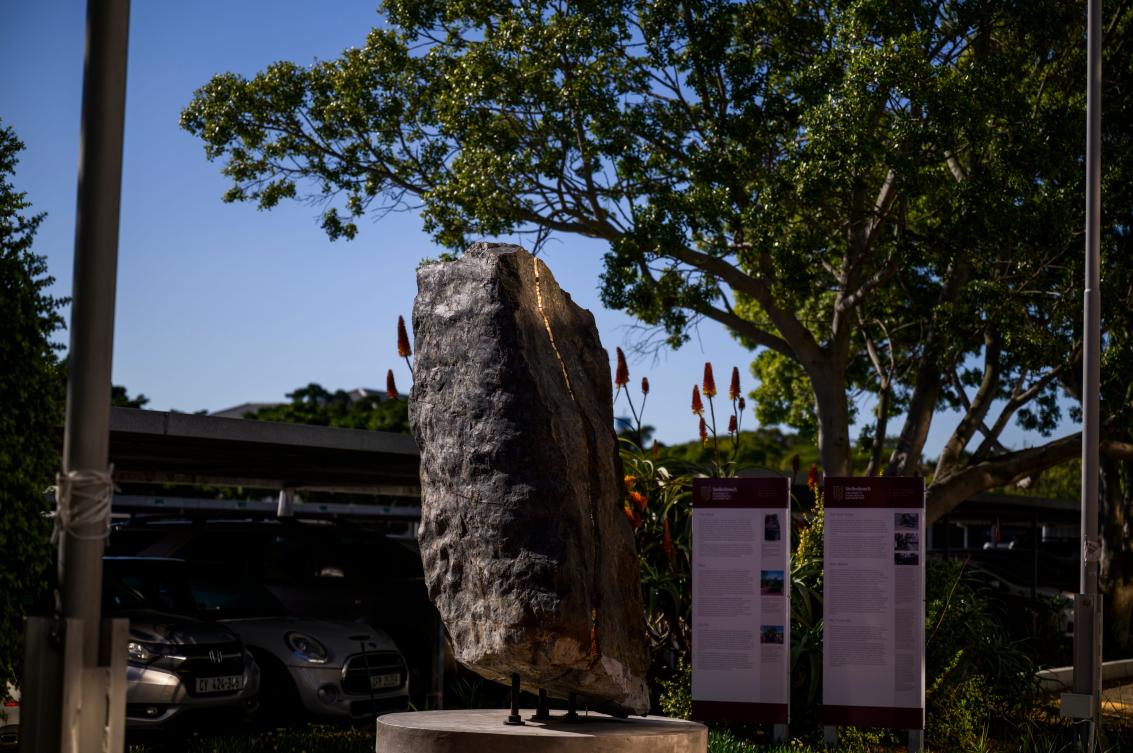
The Singing Rock / Die Klip
Since 1974, a slate stone at the entrance to the Clinical Building carried a single Afrikaans inscription — an extract from the poem Die Beiteltjie by N.P. van Wyk Louw, meaning "a chisel must be capable of breaking stone for it to be a chisel." It was meant to capture the Faculty's ideology.
For decades, it did. But as we changed, and as South Africa changed, the stone began to tell a different story. As Dr Florence de Vries, former visual redress project lead, explains: "The nature of the singing rock, its purpose, its symbol, its impact has been questioned by students and staff and members of the community who visit the Tygerberg Campus. In this regard, it was decided to expand on the story of the singing rock."
The intention was not to erase the past, but to transform its meaning — preserving history while signalling change, and reshaping the perception of all who enter the Faculty.
In 2022, award-winning South African artist Jenna Burchell was commissioned to reimagine the Clinical Building Singing Rock, creating a striking and inclusive new installation that symbolises the coming together of cultures and communities on the Tygerberg Campus.

Stellenbosch University unveils new visual redress art installation.
Hardekraaltjie
The land beneath Tygerberg Campus holds older stories still.
Before the Faculty was built, before Tygerberg Hospital was established, a community called Tiervlei had its roots here. Their cemetery, Hardekraaltjie, served this community from 1909 to 1946. When apartheid's Group Areas Act forced the community's removal, the cemetery was closed. The land was transferred to Stellenbosch University in 1971. The graves remained, largely forgotten.
Today, the Faculty and University are working with the descendants of the Tiervlei community — many of whom now live in Ravensmead — to memorialise Hardekraaltjie with the dignity it deserves. Oral histories have been recorded in a publication. Archival material is being gathered. A memorial installation is planned.
The Hardekraaltjie cemetery memorialised.
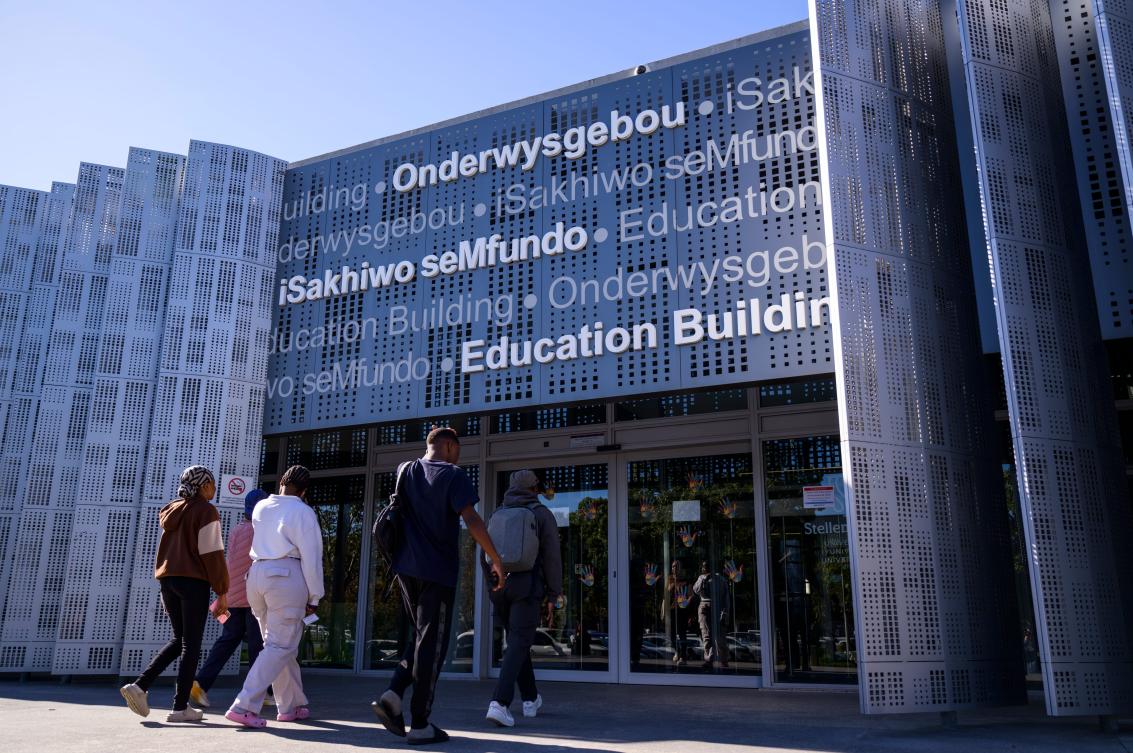
The entrance to our Education Building.
The Education Building façade
The Education Building's façade carries its name in three languages — Education Building · Onderwysgebou · iSakhiwo seMfundo.
A small thing, perhaps, but a deliberate one. South Africa is a country of eleven official languages, and a faculty that trains health professionals to serve every corner of it must reflect that reality in the spaces those professionals walk through every day.
The Faculty Charter
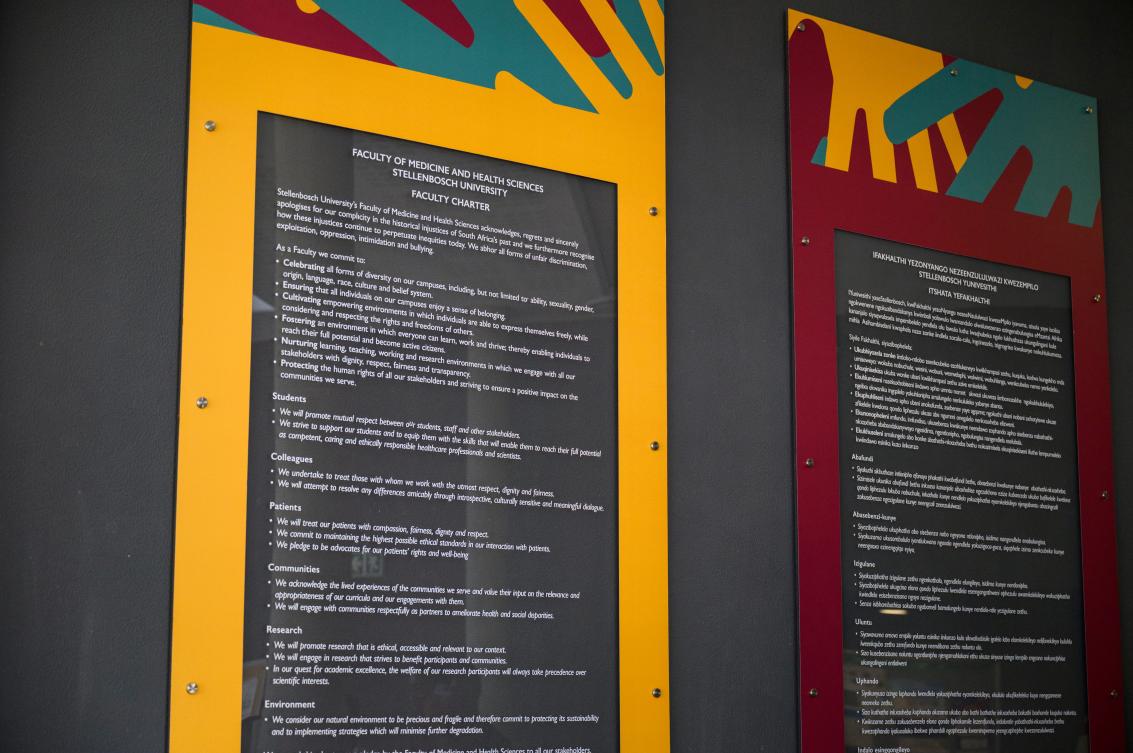
Visual redress is not only expressed in stone and art. It is also written into the Faculty's foundational documents.
The Faculty Charter — the first of its kind at Stellenbosch University, adopted when the Faculty was 63 years old — acknowledges the history of exclusion directly and commits the institution, in writing, to the values of South Africa's Constitution. It is a document of accountability, not just aspiration. A public statement, made permanent, that names the past honestly and binds the Faculty to a better future.

Our Faculty Charter
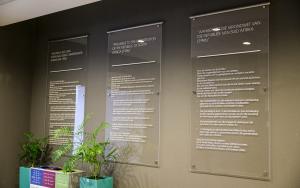
The Preamble to our Constitution.
The preamble to the Constitution
At the entrance to the Faculty, an artwork presents the preamble to South Africa's Constitution in three languages: Afrikaans, isiXhosa, and English.
It is not decoration. It is a daily reminder of the society the Faculty exists to serve, and the values it has committed to reflec
Reshaping what we stand for
A campus transformed from the inside out — where symbols and spaces are being reimagined to reflect who we are today. From a multilingual façade to the preamble of our Constitution, our physical environment now speaks to the values we have committed to uphold.
The work is not finished. It will not be finished in 70 more years. But it is being done, deliberately, in conversation with the community we serve.