
SIAN 2026: In Africa, With Africa, For Africa
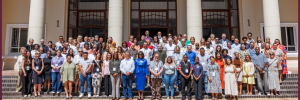
- The 22nd annual SIAN meeting brought together 70 representatives from more than 40 institutions across 23 countries to reflect on the future of international collaboration in a rapidly changing world.
- Guided by the theme In Africa, with Africa, for Africa, the university reaffirmed its commitment to the continent, framing these partnerships as essential for addressing regional challenges and serving society.
- Leadership emphasized that true internationalisation is defined by "genuine exchange" and mutual respect rather than just funding or data, moving away from one-sided models toward collaborative learning.
“Internationalisation is not about numbers, money or time spent. What matters is reciprocity — a genuine exchange where both partners learn from each other.”
With more than three decades of experience in international higher education, Stellenbosch University International’s (SUI) Senior Director Robert Kotzé set the tone for SIAN 2026 — a “family meeting” that brought together global partners to reflect on the future of collaboration in a rapidly changing world.
Drawing on this experience, he reminded delegates that partnerships are not about numbers, funding, or agreements, but about working together, complementing one another, and remaining open to learning.
“It’s not about partners coming to teach us something, and we have to just nod our heads,” Kotzé said during the programme. He explained that real internationalisation needs mutual respect, flexibility, and a willingness to build partnerships that go beyond simple exchanges and become truly collaborative.
A strong commitment to Africa
The theme of SIAN 2026 was: In Africa, with Africa, for Africa. The theme reflected the vision of Stellenbosch University’s (SU) Rector and Vice-Chancellor, Professor Deresh Ramjugernath, and made the week a celebration of global partnerships and a strong statement of commitment to Africa.
Kotzé described internationalisation at Stellenbosch University as an ongoing process that brings together different cultures and global perspectives in the university’s strategies, activities, and programmes for both students and staff. He stressed that this work should support teaching, learning, research, and innovation in the “meaningful service of society,” from the local community to South Africa, the continent, and the world.
Working towards a sustainable future together
Professor Folasade Ogunsola, Vice-Chancellor of the University of Lagos and the first woman in that role, gave the opening keynote and brought this vision to life. In her speech, Building African Futures Through Consortia and Partnerships, she said that working together across Africa is crucial.
For Ogunsola, research partnerships are about more than academic achievement. “They help Africa address its own challenges, keep talented people, set its own goals, and work toward a more sustainable future.” She shared examples from the African Research Universities Alliance (ARUA), the Africa-Europe Clusters of Research Excellence, and the partnership between the University of Lagos and SU to show how both large groups and one-on-one partnerships can make a real difference.
She pointed out that large networks help raise visibility, share resources, and build momentum. However, it is often the one-on-one partnerships within these networks that build trust, strengthen relationships, and make real collaboration possible. By working together through joint doctoral programmes, student leadership events, staff exchanges, and shared research, institutions can break down stereotypes, form lasting friendships, and create the academic community Africa needs.
Her message was clear: with today’s political tensions, uneven research funding, climate challenges, and the loss of talent from Africa, universities on the continent need each other more than ever. She emphasized that collaboration is not just a strategy. “It’s actually about survival.”
Purposeful partnerships
In response, Professor Sibusiso Moyo, SU’s Deputy Vice-Chancellor for Research, Innovation and Postgraduate Studies, highlighted the practical points in Ogunsola’s speech. She welcomed the focus on action, support systems, and people, and pointed out that successful partnerships rely not just on leaders and researchers, but also on the staff who make collaboration happen and on students, whose growth as global citizens should stay at the centre.
Moyo also stressed that building partnerships should be purposeful and focused on action. She said universities need to look beyond one-on-one collaborations and create spaces where academia, industry, civil society, and communities can work together on today’s biggest challenges. She added that the humanities and social sciences are essential in turning research into policy, diplomacy, and public action.
She also warned that limited funding should not be an excuse to stop working together. If universities are committed to collaboration, they need to keep finding ways to work together, build on what they already have, and expand what is possible.
Panel discussions
These ideas continued in the day’s panel discussions, where speakers from Egypt, Tanzania, and Namibia talked about the real challenges of building international partnerships in higher education.
Rana Tarek from the Egypt-Japan University of Science and Technology spoke about how bilateral agreements, exchange programmes, and working together between institutions create opportunities for students and staff. Bernard Mzamba from Tanzania’s Institute of Finance Management emphasized the need for management support, formal agreements, and cooperation at the faculty level to keep partnerships going. Dr. Anna Matos-Correia from the Namibia University of Science and Technology said that partnerships are long-term investments that need trust, cultural understanding, and a broad view of resources—not just money, but also people, knowledge, commitment, and shared goals.
The panel and subsequent group discussions moved beyond general ideas to tackle tough questions around equitable partnerships, researcher-led collaboration, sustainability, and the risks of over-reliance on individuals.
Looking back on his experience with internationalisation since 1993, Kotzé shared lessons that stood out during the day. He emphasised that partnerships should be mutual, not measured only by numbers; they should allow for flexibility, extend beyond individuals, and be judged by the depth and breadth of engagement rather than labels such as “strategic” or “non-strategic.”
He also argued for stronger collaboration in higher education within the Southern African Development Community (SADC), saying the region has a lot of untapped potential for deeper academic cooperation.
In addition to academic discussions, SIAN 2026 included opportunities for diplomatic engagement. Members of the diplomatic corps participated in the programme, underscoring that universities are increasingly seen as important players in international relations. Academic collaboration, student exchanges, and scientific partnerships not only connect institutions, but they also build trust and understanding between countries, often in ways that formal diplomacy cannot.
Welcoming the new Rector
SIAN 2026 also provided the setting for a special event welcoming SU’s new Rector and Vice-Chancellor, Professor Deresh Ramjugernath, into the institution’s international network.
The gathering brought together 70 representatives from more than 40 institutions across 23 countries, along with members of the diplomatic corps in Cape Town, reflecting the university’s growing global partnerships.
In his first SIAN speech as SU’s Rector and Vice-Chancellor, Ramjugernath repeated Stellenbosch University’s vision of being 'in Africa, with Africa, for Africa,' showing that the university is based in Africa but also active globally.
As he welcomed delegates to the evening event, he said this was a time not to start a new conversation, but to pause, reflect, and celebrate the partnerships that make the global network possible. He emphasised that the real value lies not in numbers, but in the strength of the relationships that partnerships represent.
Ramjugernath noted that universities today face political instability, climate change, inequality, rapid technological changes, and pressure on democracy. In this environment, no university can work alone. Finding solutions requires working together, and partnerships are more important than ever.
He explained that Stellenbosch University’s approach to internationalisation is closely tied to its overall mission. The university is proud to be rooted in Africa and connected to the continent’s challenges and opportunities, while also being active globally. For Stellenbosch, internationalisation is not just about moving people or gaining attention, but about shared goals and long-term collaboration.
That purpose is captured in the final words of Stellenbosch University’s Vision 2040: in service of society.
For Ramjugernath, this phrase guides how the university’s academic excellence, research, and partnerships should be seen. International engagement should not be about prestige, but about helping universities make a real difference in society, both in Africa and beyond.
Partnership agreements signed
At the event, the university signed partnership agreements with the University of Lagos in Nigeria, the Institute of Finance Management in Tanzania, and the University of São Paulo in Brazil, showing its commitment to deeper collaboration in teaching, research, and innovation, especially in the Global South.
The week of SIAN 2026
Overall, the week’s programme showed the many sides of modern internationalisation. In addition to discussions of African partnerships and consortia, SIAN 2026 covered topics such as science diplomacy, student integration, staff exchanges, global and regional engagement, and the practical work of internationalisation staff. Delegates met with students at the Study Abroad Fair, enjoyed the International Food Fair, and visited the SU’s Tygerberg Campus to discuss health sciences collaboration.
But above all, the main idea was clear: internationalisation is most valuable when it helps universities build trust, create knowledge together, and serve society in a meaningful way.
In this way, SIAN 2026 was a clear statement that Stellenbosch University’s future is rooted in Africa, strengthened through global partnerships, and guided by a shared commitment to serve society.
Related stories
Events
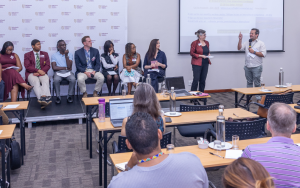
From mobility to meaning: SIAN 2026 explores new ways to put internationalisation into practice
People often think of internationalisation in higher education as student exchanges, travel, or partnership agreements. On the third day of Stellenbosch...
Events
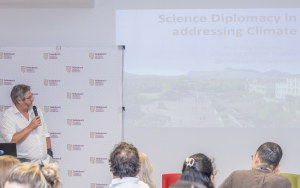
Who owns the narrative? Science diplomacy sparks conversations at SIAN 2026
When it comes to climate change, sustainability, and development, influence comes from two sides. Those who provide the evidence (the data) and those who tell...

Events
Confucius Institute at Stellenbosch University Celebrates the 2026 Chinese New Year
On 16 February 2026, the Academia student community at Stellenbosch University (SU) was transformed with lanterns and festive décor as the 2026 Year of the...