
Confucius Institute at Stellenbosch University Celebrates the 2026 Chinese New Year
- On 16 February, the 2026 Year of the Horse Spring Festival was celebrated with a Chinese New Year Gala jointly organised by the Confucius Institute at Stellenbosch University and the Department of Modern Foreign Languages.
- The event featured interactive cultural activities, a formal gala programme and a shared culinary experience, offering participants hands-on engagement with Chinese traditions.
- Beyond the festivities, the celebration served as a platform for intercultural dialogue and strengthened educational collaboration between China and South Africa, highlighting the role of language education and cultural exchange in fostering mutual understanding.
On 16 February 2026, the Academia student community at Stellenbosch University (SU) was transformed with lanterns and festive décor as the 2026 Year of the Horse Spring Festival was celebrated. The Chinese New Year Gala was jointly organised by the Confucius Institute at Stellenbosch University (CISU) and the SU Department of Modern Foreign Languages. Approximately 250 guests, including staff, students and community partners, gathered to mark this important occasion in the Chinese cultural calendar.
Distinguished guests included Mr Ren Faqiang, Consul General of the People’s Republic of China in Cape Town, Mr Robert Kotze, Director of Stellenbosch University International and local Co-Director of the CISU, Mr Luo Xiangcong, Head of the Chinese Section in the Department of Modern Foreign Languages; and Prof Zheng Ruojuan, Co-Director of the CISU. They were joined by representatives of SU International, faculty and students from the Department of Modern Foreign Languages, as well as principals and teachers from the CISU’s affiliated primary and secondary school teaching sites.
Cultural Experience Activities
The programme comprised three components: interactive cultural activities, a gala performance and a Chinese culinary experience. The venue reflected the symbolism and traditions of the Spring Festival, creating an atmosphere that was both celebratory and educational.
The cultural experience segment provided participants with opportunities to engage directly with traditional Chinese practices. In the calligraphy area, guests practised writing auspicious characters such as Fu (Blessing) and Chun (Spring). Paper-cutting activities showcased intricate zodiac and festive designs, while the Chinese knot-making station introduced participants to decorative crafts symbolising harmony and good fortune.
Interactive stations, including the traditional pitch-pot game and a chopsticks-and-beads challenge, encouraged participation and offered insight into elements of Chinese etiquette and daily life. Additional activities included traditional ink rubbing (tuoyin) and lantern-riddle challenges.
Opening of the Gala
The gala commenced following a symbolic New Year countdown.
Consul General Faqiang joined faculty and students in celebrating the occasion and extended New Year greetings to those present. He commended the collaborative efforts of the CISU and the Department of Modern Foreign Languages in advancing Chinese language education in South Africa, and reaffirmed the Consulate General’s support for initiatives that enable South African students to deepen their understanding of China and experience its development firsthand.
Mr Kotze reflected on the symbolism of the horse in Chinese culture, noting its associations with courage, vitality and perseverance. He emphasised the importance of sustained educational and cultural collaboration between China and South Africa, highlighting the role of such partnerships in strengthening bilateral relations and youth engagement.
Mr Luo shared idioms associated with the horse, including “taking the lead” (一马当先) and “achieving swift success” (马到成功), offering cultural insight in an accessible and engaging manner.
Prof Zheng described the Spring Festival as the most significant traditional celebration in Chinese culture — a time of renewal and reunion. Celebrating this occasion with South African colleagues and students, she noted, reflects the growing cultural ties between the two countries. The gala served not only as a festive gathering but also as a platform for intercultural dialogue and mutual understanding.
Performances
The performance programme showcased a diverse range of artistic expressions from CI teaching sites. Highlights included the festive song Gong Xi Fa Cai, demonstrations of Chinese Kung Fu and Tai Chi, and a Hanfu showcase illustrating elements of traditional Chinese aesthetics. A violin performance blending Western technique with Chinese melodic traditions further reflected the spirit of cultural exchange.
Learners who have excelled in the South Africa Chinese Bridge Competition also took to the stage, demonstrating language proficiency and confident stage presence. Their participation underscored the sustained impact of Chinese language education initiatives and the opportunities created through academic and cultural exchange.
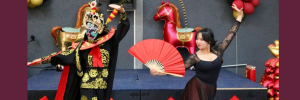
A Sichuan Opera face-changing performance captivated the audience with its rapid mask transformations and interactive elements, while the guzheng piece Colourful Clouds Chasing the Moon added a moment of elegance and reflection. Lucky draws interspersed throughout the evening extended festive goodwill to attendees.
A Platform for Cultural Exchange
The event concluded with a shared Chinese culinary experience, during which guests’ continued conversations sparked throughout the evening.
The 2026 Chinese New Year Gala was not only a celebration of tradition, but also a meaningful platform for intercultural engagement between China and South Africa. By presenting Chinese culture in an accessible and experiential format, the CISU and its partners brought the Spring Festival into campus life, fostering mutual understanding and strengthening academic and cultural ties.
Related stories
Events
From mobility to meaning: SIAN 2026 explores new ways to put internationalisation into practice
People often think of internationalisation in higher education as student exchanges, travel, or partnership agreements. On the third day of Stellenbosch...
Events
Who owns the narrative? Science diplomacy sparks conversations at SIAN 2026
When it comes to climate change, sustainability, and development, influence comes from two sides. Those who provide the evidence (the data) and those who tell...
Events
SIAN 2026: In Africa, With Africa, For Africa
“Internationalisation is not about numbers, money or time spent. What matters is reciprocity — a genuine exchange where both partners learn from each other.”
Wit...