

PREDAC participants reflect on their teaching journeys during face-to-face contact session at STIAS
- Newly appointed academics at Stellenbosch University recently attended a PREDAC Phase 4 contact session at STIAS, facilitated by Dr Chrischar Rock. The session focused on reflection and critical reflection as central to academic practice, inviting participants to consider how their experiences, values and assumptions shape their approaches to teaching, learning and assessment.
- Through interactive discussions, participants explored what good teaching looks like, how learning can be recognised, and how academics can continue to grow in their teaching roles amid changing student needs and higher education contexts. The session also supported participants in beginning their teaching philosophy statements, encouraging them to articulate their beliefs about teaching-learning-assessment and connect these to their pedagogical choices.
- Overall, the session created a valuable collegial space for academics to step back from everyday demands, engage meaningfully with peers, and develop the reflective habits, confidence and sense of belonging needed to strengthen teaching-learning-assessment at SU.
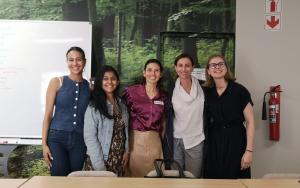
As part of the Professional Educational Development for Academics (PREDAC) short course, newly appointed academics at Stellenbosch University (SU) recently gathered for a face-to-face contact session at the Stellenbosch Institute for Advanced Study (STIAS). The session formed part of Phase 4 of the short course and created a dedicated space for participants to engage in critical reflection on their teaching-learning-assessment practices and begin developing their teaching philosophy statements (TPSs).
PREDAC is an annual professional learning opportunity offered to newly appointed academics at SU. The programme supports academics in reflecting on their understanding of, assumptions about and approaches to teaching, learning and assessment within the context of contemporary higher education. Through engagement with educational theory, institutional frameworks and practical approaches, participants are encouraged to critically consider how they could enhance their teaching practices within their own disciplinary contexts.
The STIAS contact session was facilitated by Dr Chrischar Rock, a citizenship, multiculturalism and human rights practitioner and lecturer in the Faculty of Education at SU. Dr Rock has more than twenty years’ experience in teaching and facilitation in the United Kingdom and South Africa, and focuses on practical learning, reflective practice and feedback literacies in teacher education.
The session focused on the role of reflection and critical reflection in academic practice, with participants exploring how their experiences, beliefs and values influence the ways in which they approach teaching, learning and assessment. Dr Rock emphasised that reflective practice is not a one-off activity, but an ongoing process that develops as academics continue to engage with their students, colleagues and changing educational contexts.
“Today, I want to invite the opportunity to have good conversations about the work that we do,” Dr Rock explained. She highlighted the importance of creating spaces where academics can think intentionally about their teaching practices and how these shape their professional growth.
Through a range of interactive activities and discussions, participants explored questions such as: What does good teaching look like? How do we know when learning has taken place? What enables academics to grow in their teaching role? These conversations encouraged participants to draw on their own experiences while also engaging critically with the broader institutional and societal contexts in which teaching-learning-assessment takes place.
A key theme emerging from the discussions was the need for academics to respond thoughtfully to changing student needs and educational environments. Participants reflected on the impact of recent changes in higher education, including the increased role of technology, shifting student expectations and the importance of designing learning experiences that prepare students for complex professional contexts.
Dr Rock also encouraged participants to move beyond reflection towards critical reflection – asking not only “what” and “how”, but also “why”. This process enables academics to transform their experiences into knowledge and use that understanding to inform future teaching decisions.
The session supported participants in drafting the foundations of their teaching philosophy statements. A TPS provides academics with an opportunity to articulate their beliefs about teaching-learning-assessment, connect these beliefs to their pedagogical choices and the scholarship of teaching and learning, and reflect on the impact of their practices on students and colleagues.
Importantly, the session also highlighted the value of collegiality and creating supportive spaces where academics can share challenges, learn from one another and develop a stronger sense of belonging within the University community. Dr Rock encouraged participants to view their teaching philosophy as a living document that evolves as their understanding of teaching-learning-assessment develops.
The PREDAC contact session provided participants with an opportunity to step away from the everyday demands of academic work and intentionally reflect on their role as educators. By engaging in meaningful conversations with colleagues from across faculties, participants continued building the knowledge, confidence and reflective habits needed to support excellence in teaching-learning-assessment at SU.
Related stories
Events
Lecturers hone public speaking skills at workshop
On 13 March 2026, a group of Stellenbosch University (SU) lecturers gathered for a professional learning workshop titled “Effective communication for lecturers...
Events
2025 Scholarship of Teaching and Learning (SoTL) conference
The 18th annual Scholarship of Teaching and Learning (SoTL) conference took place at the Protea Hotel by Marriott Stellenbosch in Technopark on 3 and 4 November...