Institute for Biomedical Engineering
Biomedical Engineering is the application of science, technology, engineering and mathematics to provide for health-related needs. Biomedical Engineering is inherently multidisciplinary (persons from multiple disciplines contribute) and interdisciplinary (expertise from multiple disciplines must be integrated).
There are multiple routes into biomedical engineering at Stellenbosch University. Some of these routes are provided by the Institute for Biomedical Engineering, while the Faculty of Engineering, the Faculty of Science and the Faculty of Medicine & Health Sciences also offer routes into biomedical engineering.

Orthopaedic Engineering
Developing solution for the treatment of musculoskeletal disorders is a challenging yet exciting field of research

Neural Engineering
The brain is the most complex organ in the human body and is responsible for our every thought, action, memory, feeling and subjective experience

Injury Biomechanics
Injury Biomechanics is an essential field in the prevention or management of trauma related to injury of the human body
PhD in Biomedical Engineering
This PhD programme prepares the candidate for a research, academic, or high-level consulting career. It requires that a candidate to undertakes independent research at the most advanced academic levels.
Master of Engineering Science in Biomedical Engineering - Research
This MEngSc (Research) programme develops interdisciplinary engineering science research specialists in biomedical engineering.
Master of Engineering Science in Biomedical Engineering - Structured
This MEngSc (Structured) interdisciplinary programme develops specialist knowledge and skills to critically evaluate and apply biomedical engineering technology and research.

Where engineering and medicine meet to make a better world
The IBE hosts interdisciplinary postgraduate programmes aimed at biomedical engineering research and practice. The IBE programmes are intended to augment the mono-disciplinary programmes (such as MSc and MEng programmes). Therefore, the focus in the IBE degree programmes is on modules and research spanning more than one faculty and are aimed at students from diverse disciplinary backgrounds.
Supervisors for student research and projects are mostly drawn from the Faculties of Engineering, Science, and Medicine & Health Sciences, but any faculty could contribute. See details for each degree programme in the relevant sections.
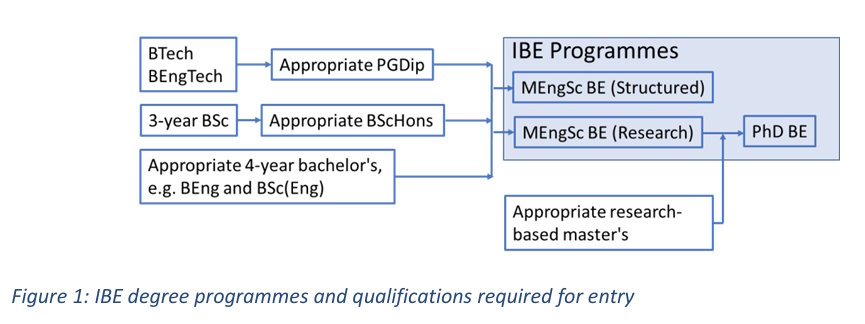
Figure 1 illustrates the relationships between the IBE degree programmes and the routes from other qualifications into these programmes. Note that admission to any of the IBE degree programmes is subject to selection, in addition to relevant prior qualifications. Details are given in later sections of this guide.
Candidates with a 3-year bachelor's degree are advised to complete a BScHons1 or a PGDip in Engineering in a field relevant to biomedical engineering, thereby establishing a strong disciplinary base before entering into the IBE's interdisciplinary programmes.