
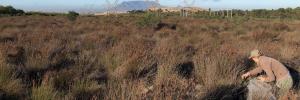
Sand Fynbos Ecological Restoration, Cape Floristic Region, South Africa
- Collaborative Restoration: The project successfully united nursery partners, researchers, and volunteers to clear invasive species and restore Sand Fynbos at Blaauwberg Nature Reserve.
- Scientific Progress: The team successfully propagated structural and rare species, using field experiments and MSc research to improve seed survival and planting techniques.
- Positive Outcomes: By late 2025, restored sites showed strong recovery, with planted species already flowering and providing seeds for future natural regeneration.
The Sand Fynbos Ecological Restoration project (July 2024–July 2025), funded by the Anglo American Foundation, successfully rehabilitated five hectares within the Cape Floristic Region. Led by Professor Karen Esler and VULA Environmental Services, the team navigated complex permitting and weather challenges to propagate structural species from local cuttings and seeds. This collaborative effort involved multiple nurseries, focusing on nursery-specific success rates and soil optimization.
Fieldwork included extensive alien clearing, experimental planting of seedlings versus cuttings, and innovative research by MSc student Bongiwe Mbombo, who proved that capsicum seed coatings effectively deter rodent granivory. By September 2025, the restoration sites showed remarkable recovery, with planted Leucadendron already flowering—a vital sign of long-term sustainability. The project culminated in a massive volunteer effort to maintain the site, highlighting the power of community-driven conservation.
FINAL REPORT
July 2024-July 2025
REPORT TO THE ANGLOAMERICAN FOUNDATION FUND TRUST
Photo Story: Sand Fynbos Ecological Restoration, Cape Floristic Region, South Africa
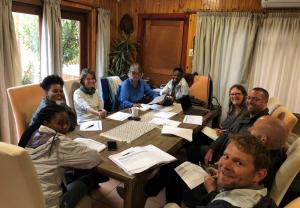
Photo 1: The project met regularly and communicated via WhatsApp Group, virtual meetings and also regularly meets in person. This planning meeting took place in May 2022 at VULA premises.
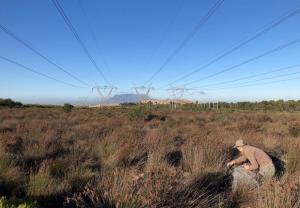
Photo 2. All team members were involved in collecting cuttings and seed material regularly throughout the year from remnant vegetation near to Blaauwberg Nature Reserve. Considerable time was taken up in 2022 to gain permits and permissions to access the remnant land to collect material.
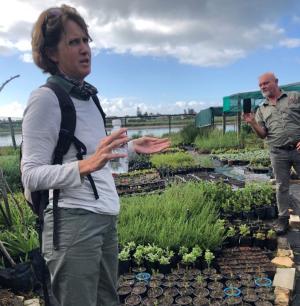
Photo 3: We involved three nursery partners in this project (Caitlin von Witt from FynbosLife and Deon van Eerden from VULA Environmental Services pictured here at the FynbosLife nursery. This collaboration highlighted the value of partnership learning and that the outcomes are sometimes related to a range of issues, such as nursery microclimate and conditions, and levels of experience and training.
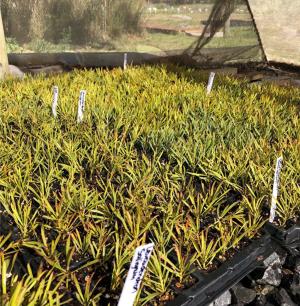
Photo 4. The ANGLO project team propagated structural species and species of special concern. As we expected, there was significant variation in success across species and nurseries. Some failed propagation attempts were repeated to determine if season has an influence on outcome. Successfully rooted cuttings were potted into 2 types of soil.
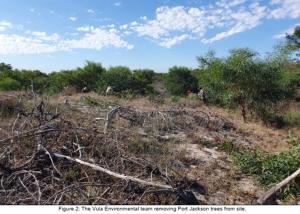

Photos 5 & 6. The VULA Environmental team assisted with alien clearing on site. This cleared area provided the sites for the in-field planting of species propagated in the nurseries.
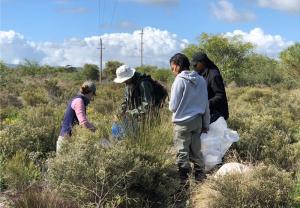
Photo 7: The project team continued to collect cuttings in August 2023 near Morning Star.

Photo 8. One of the drier plots (plot 2) in September 2023 showing flowering of annuals from the sown seed.
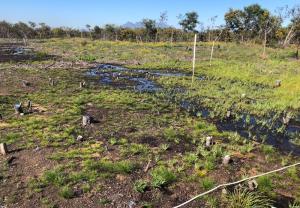
Photo 9. One of the inundated plots (plot 4) during the September 2023 survey at Blaauwberg NR.

Photo 10: Rootstock from seed at VULA nursery in September 2023 (Phylica cephalantha).

Photo 11. Rootstock from seed at VULA nursery in September 2023 (Leucadendron salignum).

Photo 12. View across the field site towards Table Mountain in December 2023: at this stage, the site was drying out after significant rains.

Photo 13:June 2024, the experimental plot set-up comparing seedlings (small containers) and cuttings (larger containers) of various species. Picture taken before the plants were planted [Photo: K. Esler]

Photo 14: June 2024, Counting and sorting the seedlings in the field was an exacting task [Photo: K. Esler]
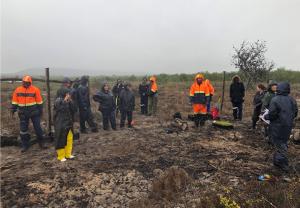
Photo 15: The Team of 21 worked hard under challenging weather conditions to get the planting done in June 2024Photo: K. Esler]

Photo 16: Only one plot established in 2024 was inundated [Photo: K. Esler]

Photo 17. Bongiwe Mbombo determining optimal siting of her cafeteria experiment; the wire cages will prevent herbivores other than rodents from accessing the seed array [Photo: K. Esler
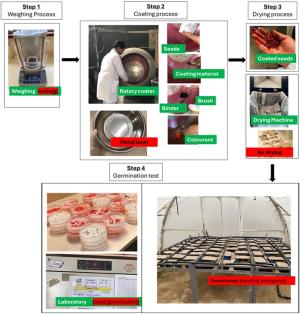
Photo plate 18. A graphic illustration showing MSc student Bongiwe Mbombo’s seed coating process undertaken at the Agricol Seed Testing Facility in Brackenfell; coated seeds were used in laboratory and greenhouse experiments [obtained from Mbombo 2025]

Photo plate 18. Detailed visual representation of MSc student Bongiwe Mbombo’s field experiment to determine if capsicum coated seeds deter rodent granivory (yes, they did) with materials used for this experiment (B a-h) and an image of experiment set-up (e), showing a close-up for stack 2, with cage 1 close to the Acacia stack debris (e1) and cage 2 far (10m) from stacked debris (e2). [obtained from Mbombo 2025]

Photo 19. Prof Karen Esler (PI) standing in one of the experimental restoration sites, September 2025. We are very happy with the recovery outcome.
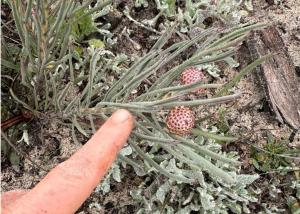
Photo 20. September 2025. Exceptionally promising is that some of the planted individuals (e.g. this Leucadendron) are already flowering. This means that seeds for the next generation (post-fire) would be available to assist with the sustained recovery of the experimental restoration sites.

Photo 21. In September 2025, a group of volunteers from civil society, VULA, Stellenbosch university and the City of Cape Town gathered on site to hand pull alien seedlings on the 5ha ANGLO sites. We are very grateful for the goodwill and enthusiasm generated out of this project.