
The Summer I Found My Voice: How Environmental Humanities at Bristol Rewrote My Worldview
- Charné Meyer, a final-year BCom Industrial Psychology student at Stellenbosch University, attended the Environmental Humanities Summer School at University of Bristol to deepen her understanding of how environmental narratives shape identity, policy, and human behaviour.
- The city of Bristol became an immersive classroom, where geology, folklore, industrial history, and environmental theory intersected.
- Beyond academics, the programme strengthened her interdisciplinary perspective, renewed her academic purpose, and left her with lasting personal and professional inspiration.
About the Author: Charné Meyer
I am a final-year BCom Industrial Psychology student at Stellenbosch University. In my free time I love running, community volunteering, and finding meaning in conversations that stretch across cultures and disciplines.
From Stellenbosch to Bristol: Why Environmental Humanities?
My academic journey began in Stellenbosch, a town where history, landscape, and identity are always in conversation. Studying Industrial Psychology there trained me to think deeply about people: behaviour, systems, and justice. Yet I increasingly felt drawn to a bigger question that psychology alone could not answer: how do humans understand, narrate, and respond to the environments they shape and inherit?
The Environmental Humanities Summer School at the University of Bristol offered exactly that bridge. I chose it because I wanted an intellectually challenging, globally relevant programme that truly merges academic insight with personal transformation. As a final-year student, I was eager to explore how environmental narratives shape human identity, policy, and urban space while gaining international experience at a world-class institution. The interdisciplinary nature of the course, and Bristol’s reputation as both a green and industrially historic city, made this opportunity unmissable. Supported by Stellenbosch University’s commitment to international mobility, this was not a detour from my academic path; it was an extension of it.
Bristol as a Classroom: Standing Grounded in the Ancient Pulse
Bristol is not a city you simply study; it is a city that studies you back. My time there was nothing short of transformative. The most striking aspect of the programme was how inseparable the academic content was from the physical place, making the city itself our primary text.
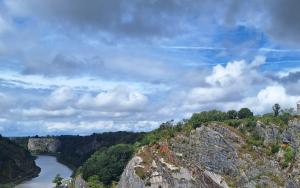
Bristol is a city where contrasts beautifully coexist rather than collide. The gorgeously green landscapes of the Avon Gorge rest alongside the industrial echoes of Brunel’s legacy. Standing at the edge of the Gorge, listening to stories of folklore giants Goram and Vincent, I began to understand Bristol as a living archive. Its geology, folklore, and industrial heritage exist in a constant, fascinating dialogue where nature speaks as loudly as steel. Nature and industry coexist, often uncomfortably, always meaningfully. For a student coming from South Africa, a country equally shaped by layered and contested landscapes, this perspective resonated deeply.
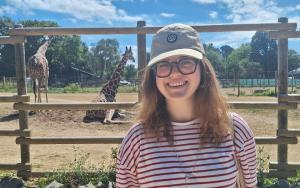
The sessions were informative and genuinely soul stirring. We explored everything from the poetic insights of Ralph Pite on how verse confronts ecological crisis, to the eerie symbolism of Sam Le Butt’s "Ecohorror," and the creative cut-ups with Milo Newman that made art feel alive with meaning. I’ll never forget the field trip to the Bristol Zoo Project, where theory met practice in the most tangible, emotive way, all while looking for little red pandas hiding up in the trees or watching a brown bear scratch its back a few feet away!
A key highlight was the "Deep Time Walk along The Downs," facilitated by Mathilde Braddock. This session was a moving journey through time and strata, where Mathilde wove together geology, storytelling, poetry, and immersive reflection. Moving through Earth’s 4.6 billion-year history at the rate of one million years per metre was humbling in a way no textbook could replicate. With every stop, I felt increasingly grounded in the ancient pulse of our planet, yet more acutely aware of humanity’s brief, profound impact. The academic staff were incredibly generous, approachable, and brilliant. They not only shared knowledge but actively helped us become participants in reshaping environmental discourse.
Community, Care, and Finding My Global Family
Bristol quickly became a second home. As one of the UK’s most vibrant cities, it offers the perfect blend of academic immersion and youthful energy. Living at Goldney Hall was comfortable and picturesque, with ivy-covered buildings and tranquil gardens that made even the early mornings feel poetic.
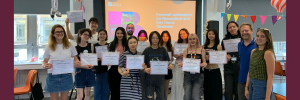
Crucially, the people made the experience unforgettable. The friendships I made began during those first awkward ice-breaker introductions but very quickly turned into something much deeper. Students came from diverse backgrounds, but our shared curiosity bonded us. Your floormates quickly become your mini global family: the ones who save you a seat at the cafeteria, help you find a lost umbrella, and bond with you over shared snacks and the chaos of getting ready for the Clifton Suspension Bridge walk. It is the kind of space where networks are born without trying.
The Bristol Summer staff, mentors, and coordinators created such a safe and open environment that genuine connection became easy. I was greeted with warm, smiling faces when I arrived, and leaving was genuinely difficult because I had developed a profound fondness for everyone- from the cooks and cleaning staff to the lecturers and friends. My heart has just increased in size with all the love I’m carrying for my Bristol Family!
The Takeaway: A Renewed Sense of Purpose
This programme has had a profound personal and academic impact. It expanded my critical thinking and challenged me to rethink how psychology, culture, and environmental narratives intersect. I now approach my Industrial Psychology studies with a stronger interdisciplinary lens, attentive to how environmental narratives shape identity, behaviour, and wellbeing. This experience, supported by the academic foundation laid at Stellenbosch, was not just enriching; it was personally grounding. I leave with lifelong friends (talking about you Laine!) and a renewed sense of purpose.
The Environmental Humanities Summer School is a catalyst. It will stretch you intellectually, support you personally, and stay with you long after you return home. Upon passing the accredited academic courses, you receive a University of Bristol transcript, which you can present to Stellenbosch University to request credits towards your degree.
My final message is simple: If you are even considering applying, BE BRAVE AND STOP HESITATING! Come curious and open-hearted, and Bristol will meet you with wisdom, wonder, and a few surprises along the way.
Related stories
Opinion and features
From a Greeting in Nyanja to a Place Called Home
Choosing a university is never just about rankings. When I was deciding where to pursue my BSc in Agriculture, Stellenbosch University (SU) stood out not only...

Opinion and features
Blooming Where You Are Planted: Redefining Leadership Across Borders
In my home country, Zimbabwe, leadership is an asset of time. It is a crown reserved strictly for the elderly, for the grey hairs who have survived decades of...

Opinion and features
In Africa, For Africa: Building Community through Continental Collaboration
Identity and Roots
Uganda is home for me. It is where my work is rooted — in the realities of clinical care and public health systems, with a clear focus on...