World Refugee Day: Showing solidarity with refugees in South Africa
- World Refugee Day was on 20 June.
- Experts at Stellenbosch University co-authored an opinion piece.
- Many South Africans, civil society, and faith groups continue to stand in solidarity with refugees and asylum seekers.
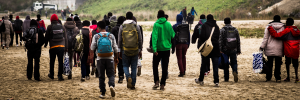
South Africa has hosted refugees and asylum seekers for over three decades, providing many with an opportunity to rebuild their lives. Sadly, this legacy of hospitality has increasingly been overshadowed by recurrent xenophobic attacks that have left thousands of refugees and asylum seekers vulnerable to violence and displacement from a country they have come to call home. Despite this, many South Africans, civil society, and faith groups continue to stand in solidarity with refugees and asylum seekers.
This is the view of Prof Hassan Mahomed (Division of Health Systems & Public Health), Dr Martina Lembani (University of the Western Cape) and Yeukai Chideya (Institute for Life Course Health Research) in an opinion piece for the Mail & Guardian to mark World Refugee Day on 20 June.
Read the original article below or click here for the piece as published.
Hassan Mahomed, Martina Lembani and Yeukai Chideya*
The theme of this year’s World Refugee Day, commemorated annually on 20 June, focuses on the ‘right to seek safety as a common safeguard for all of us.’ For this vision to become a reality, everyone has a role to play in ensuring that asylum seekers and refugees are provided with opportunities to rebuild their lives in safe, supportive, and inclusive environments. This requires host countries to show solidarity with refugees and asylum seekers.
Many nations around the world have been hosting asylum seekers, refugees and migrant workers for many decades. For example, during the apartheid era, South Africans fled the country and sought refuge in neighbouring Southern African countries, which provided them with protection and support. At the same time, the migrant labour system in South Africa attracted workers from neighbouring countries, particularly the mining sector.
However, since South Africa’s democratic transition, the country has experienced increased migration from other African nations, with many people seeking safety and better economic opportunities as they flee conflict, persecution, and poverty. The number of migrants and refugees was estimated by Statistics South Africa in 2022 at about 2.4 million.
From the early 1990s, there have been episodes of xenophobia directed specifically at African migrants, many of which have resulted in violence. South Africa has faced many challenges, including a very high unemployment rate leading to high levels of frustration within poor communities. Unfortunately, misinformation about migrants and refugees have led to perceptions that these groups steal jobs and contribute to these challenges. However, the facts do not support this.
Sadly, an increase in xenophobia over the last 30 years has now led to certain organised groups demanding that all “illegal” immigrants leave the country by 30 June 2026. In practice, all migrants—including refugees and asylum seekers—are targeted. The use of the term “illegal” is inappropriate as bureaucratic mechanisms in South Africa have been slow to process migrants and the correct terminology should be to refer to documented and undocumented migrants.
Another important aspect of ensuring safety and dignity for all is addressing the deepening crisis of healthcare access for refugees and asylum seekers in South Africa. This situation is characterised by a growing disconnect between the country's constitutional commitment to human rights and equality and the increasingly hostile legislative and social realities experienced by many refugees and asylum seekers.
While the South African Constitution guarantees the right to health services for everyone regardless of documentation status, the Immigration Act of 2002 creates significant confusion by requiring providers to verify a patient's legal status before administering care. This legislative ambiguity, paired with rising xenophobic sentiment, has fostered a "hostile environment" where undocumented migrants—and increasingly all black African foreigners—are systematically excluded from health services.
The public health system is undeniably overburdened, plagued by human resource shortages, medicine stock-outs, and leadership failures in some parts of the country. However, the pervasive narrative blaming migrants, including refugees and asylum seekers, for these systemic collapses is factually incorrect. In fact, research indicates that foreigners utilise public health services at a much lower rate than citizens due to language barriers, the “migrant health effect”, and a legitimate fear of being attacked at clinics. For instance, in 2014 the Western Cape government reported that hospital utilization constituted about 1.6% of total hospitalisation. This is in line the overall percentage of migrants in South Africa which is estimated at 3% of the South African total population.
Instead of addressing the root causes of poor service delivery—which has sparked widespread protests over water, housing, and electricity—extremist groups have recently called for a total ban on migrant healthcare access in public health facilities, representing a severe breach of constitutional rights. Despite the efforts of civil society organisations like Collective Voices for Health Access to challenge these exclusions in court, the gap between the law and the lived experience of migrants continues to widen. Protecting the health rights of the most vulnerable is not merely a legal obligation but a vital measure of South Africa’s commitment to the human rights values it was founded upon.
Whenever there is a crisis, it is children who suffer the most. A few weeks ago, 700 learners from two schools in Cape Town engaged in a violent protest demanding that their foreign national peers leave not only their schools but also the country. Many refugee children have been born and raised in South Africa and know no other home. Research has shown that xenophobic attacks and discrimination expose refugee children to emotional and physical harm, negatively affecting their sense of belonging and identity formation. Schools should be safe spaces for all children, irrespective of their citizenship or migration status.
There is an urgent need for the Department of Basic Education and other relevant stakeholders to intervene by incorporating topics into the curriculum that educate learners about who refugees and asylum seekers are, the circumstances that lead people to seek refuge, the importance of social inclusion, and the values of empathy, diversity, and peaceful coexistence. Developing understanding and respect from an early age is essential for building more inclusive and cohesive communities.
South Africa has hosted refugees and asylum seekers for over three decades, providing many with an opportunity to rebuild their lives. Sadly, this legacy of hospitality has increasingly been overshadowed by recurrent xenophobic attacks that have left thousands of refugees and asylum seekers vulnerable to violence and displacement from a country they have come to call home.
Despite these challenges, many South Africans, civil society, and faith groups continue to stand in solidarity with refugees and asylum seekers. Their support has demonstrated the values of compassion and ubuntu that underpin South Africa’s democracy.
As we commemorate World Refugee Day, may we all reflect on how we can ensure that the right to safety serves as a safeguard for everyone living in South Africa, regardless of their nationality or migration status. A society that protects the rights and dignity of its most vulnerable members ultimately becomes safer for all.
*Prof Hassan Mahomed is affiliated with the Division of Health Systems & Public Health at Stellenbosch University. Dr Martina Lembani is a senior lecturer in the School of Public Health at the University of the Western Cape. Yeukai Chideya is a researcher in the Institute for Life Course Health Research at Stellenbosch University.
Related stories
Opinion and features
Beyond administration: time to overhaul NSFAS as we know it
The struggling National Student Financial Aid Scheme (NSFAS) has now been placed under administration for the third time since 2018. The time has come to...

Opinion and features
Youth Day: Young people's voices must be heard
South Africans celebrated Youth Day on 16 June. In opinion pieces for the media, staff and students at Stellenbosch University emphasised why it is important to...
Opinion and features
World Environment Day highlights importance of sustained climate action
AI and climate change, climate apathy and environmental amnesia, climate change as a health emergency, and environmental protection. These are the issues that...