
Multilingualism is a powerful tool for learning, participation and belonging in higher education.
Building community through multilingualism at SU Teaching-Learning-Assessment Day
- Multilingualism is a powerful tool for learning, participation and belonging in higher education.
- A workshop titled Building Community through Multilingualism: A Look at Academic Spaces, presented during Stellenbosch University's (SU) first Teaching-Learning-Assessment (TLA) Day on 18 May.
- Multilingualism can be a practical way of building clearer understanding, richer participation, more inclusive classrooms and stronger academic communities.
Multilingualism should be seen not merely as a policy requirement, but as a powerful tool for learning, participation and belonging in higher education.
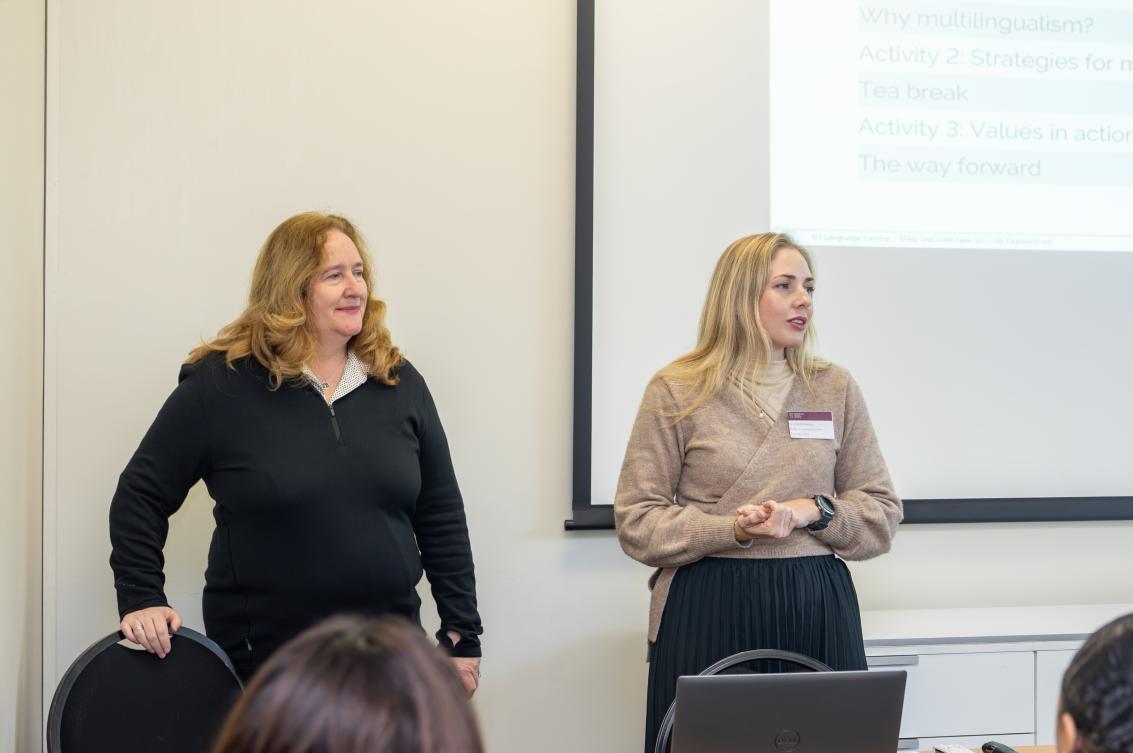
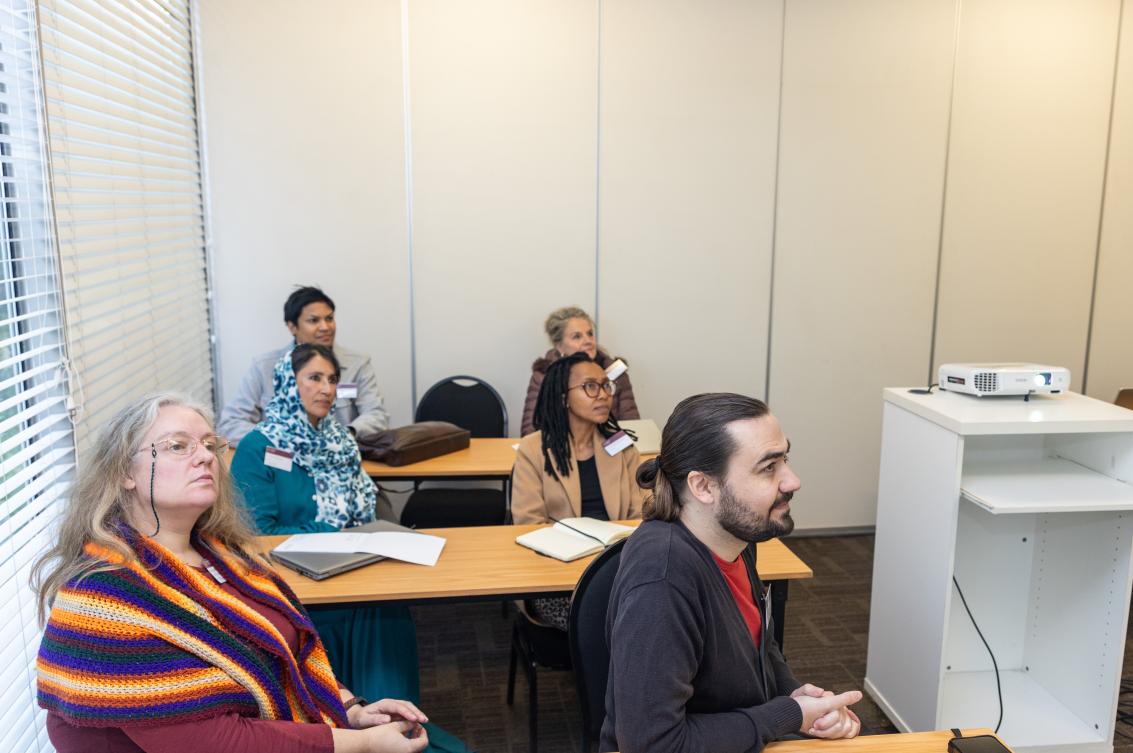
This was the central message of a workshop titled Building Community through Multilingualism: A Look at Academic Spaces, presented during Stellenbosch University's (SU) first Teaching-Learning-Assessment (TLA) Day on 18 May.
Developed by a facilitation team from the SU Language Centre, with input from Helga Sykstus and Sanet de Jager, the workshop encouraged lecturers to view multilingualism as an opportunity to strengthen teaching and learning.
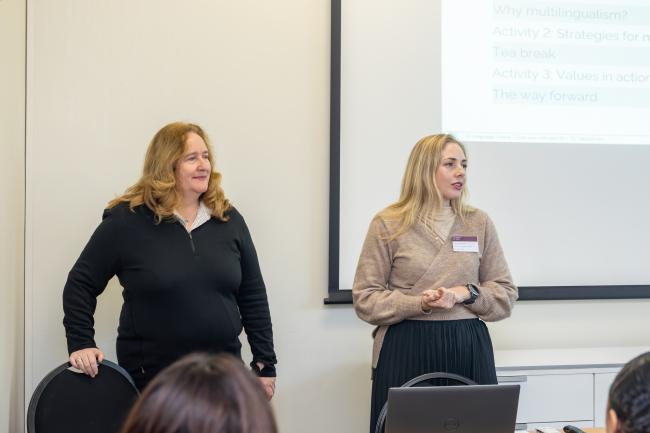
Facilitated by Dr Arné Binneman, Selene Delport, Eduard de Kock and Dr Kim Wallmach, the session explored practical ways in which multilingual approaches can contribute to more inclusive academic environments.
"Multilingualism is already present in our classrooms. The question is how we create opportunities for students to draw on the linguistic resources they already bring with them in support of learning," said Binneman.
Participants were encouraged to recognise the diverse linguistic repertoires students bring to the classroom, including English, Afrikaans, isiXhosa, South African Sign Language and many other languages. Rather than viewing these languages as barriers, the workshop highlighted their value as resources that can support understanding, participation and confidence.
The session also connected multilingual classroom practices to SU's broader commitment to transformation, community-building and fostering a multilingual mindset. Through reflection and discussion, participants considered how institutional policy can translate into meaningful classroom practice.
Practical strategies for multilingual classrooms
A key focus of the workshop was the exploration of three practical strategies: multilingual terminology, translanguaging and educational interpreting.
The discussion on multilingual terminology demonstrated how explaining key concepts across languages can deepen students' conceptual understanding. Rather than functioning as a simple translation exercise, multilingual explanations can reveal different layers of meaning and support access to complex academic concepts.
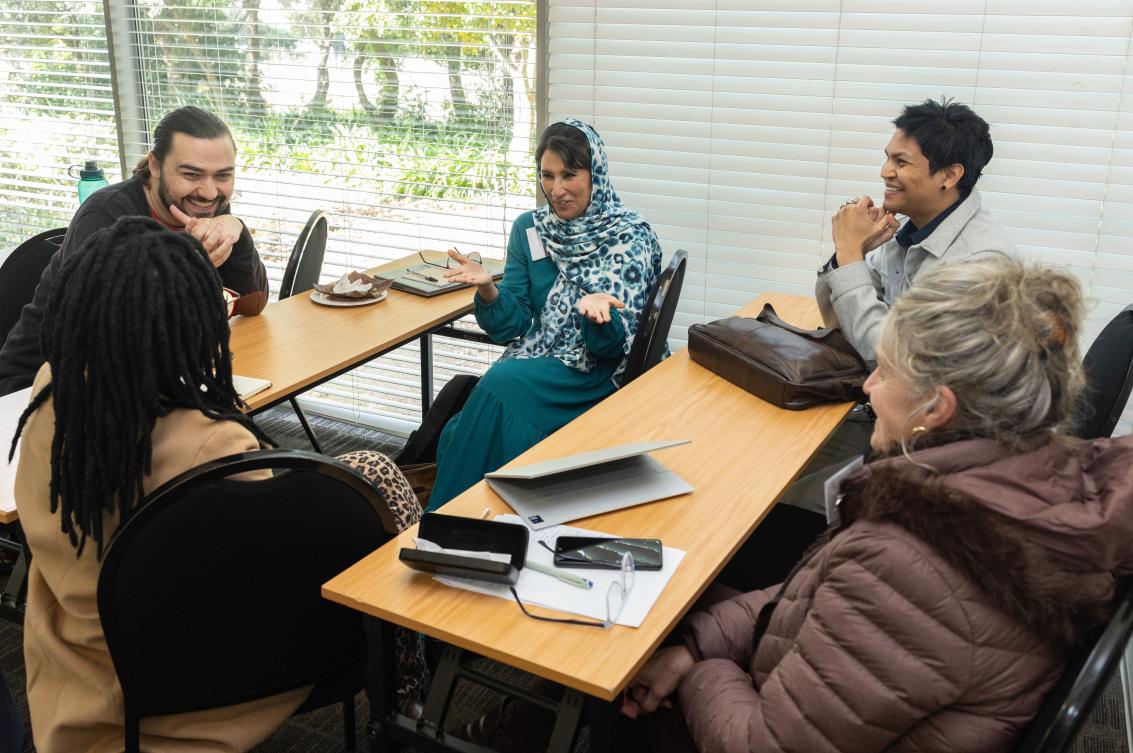
Participants shared examples from their own disciplines. One group examined the concept of "auto-rhythmicity" in medical physiology and discussed how explanations in Afrikaans could make the concept more accessible before inviting further explanations in other languages. Another participant reflected on how an English term such as "vacuum cleaner" may become more transparent through the Afrikaans equivalent stofsuier, illustrating how language can help uncover meaning.
The workshop also explored translanguaging, which recognises that multilingual students naturally draw on multiple languages to make sense of information, solve problems and communicate understanding. In practice, students may discuss a concept in one language, take notes in another and present their findings in English.
Participants considered ways to incorporate these practices into teaching through multilingual discussions, student-generated glossaries, peer explanations and concept check-ins.
The conversations also highlighted the collaborative nature of multilingual learning. Participants noted that lecturers do not need to speak every language represented in the classroom for multilingual approaches to be effective. Instead, students can contribute their own linguistic knowledge and support one another's learning, creating a more participatory and inclusive environment.
Educational interpreting formed the third strand of discussion. Interpreting was presented as one of several tools that can support additive bilingualism and improve student participation and comprehension. Participants reflected on practical ways to increase access to interpreting services, including QR code links, SUNLearn resources and anonymous feedback tools.
Learning through participation
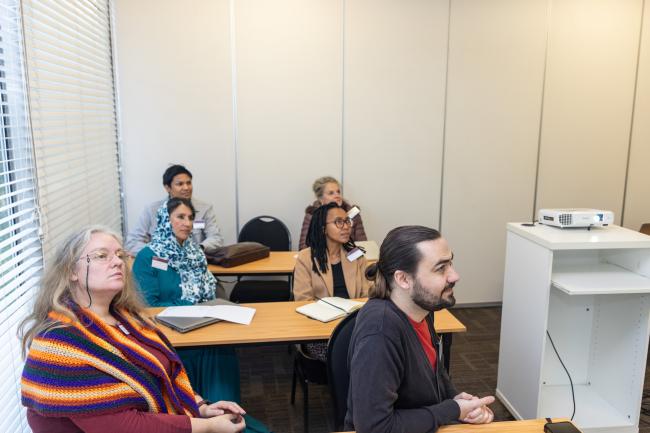
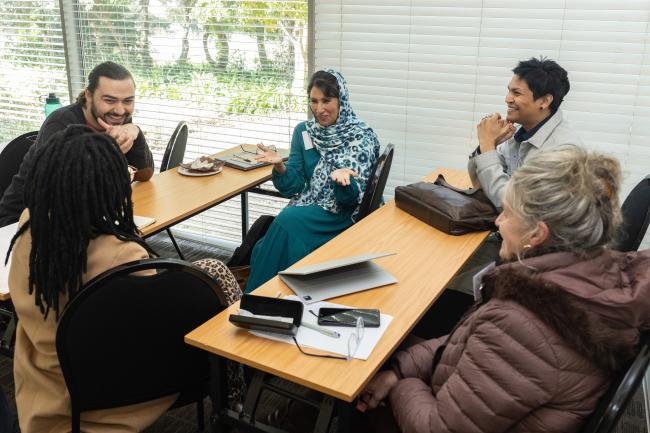
The workshop itself modelled the principles it promoted. Participants were invited to share classroom experiences, discuss language-related challenges and identify threshold concepts within their disciplines that could benefit from multilingual approaches.
Later in the session, lecturers worked through realistic teaching scenarios drawn from the Stellenbosch context, exploring ways to create opportunities for students' linguistic resources to support learning, even when lecturers do not share all the languages spoken in the classroom.
According to the facilitators, one of the most significant insights to emerge from the workshop was the understanding that multilingualism is fundamentally relational. It influences who feels recognised in academic spaces, who feels able to participate and whose knowledge and experiences are valued. While acknowledging that English remains dominant in many academic and professional contexts, the workshop positioned multilingual practices as a means of helping students develop deeper conceptual understanding while also building the disciplinary language needed in their fields.
By the end of the session, participants had engaged with institutional policy, reflected on their own teaching practices and explored practical strategies for applying multilingual approaches in their classrooms.
The workshop concluded with a clear message: multilingualism can be a practical way of building clearer understanding, richer participation, more inclusive classrooms and stronger academic communities.
- The workshop was presented by the SU Language Centre facilitation team with contributions from Helga Sykstus and Sanet de Jager. The article is based on reflections by Dr Arné Binneman, Dr Kim Wallmach and Susan Lotz.
Related stories

Media release
Seven days of gambling could wipe out a year of national student funding
At the current rate at which South Africans gamble, it would take just seven days to spend the equivalent of the country’s entire national student funding...
Events
From one war to another: SU hosts conversation on refugees and migrants
After fleeing violence, persecution and trauma in their home countries, many asylum seekers encounter new challenges in South Africa – shaped by xenophobia...
Events
New archive at SU sheds light on overlooked liberation history
A major archive documenting one of South Africa’s most influential – yet often overlooked – liberation traditions has found a home at Stellenbosch University...