

There are >40,000 native vascular plant species recorded in mainland sub-Saharan Africa. Despite the impressive species list, much of Africa’s plant diversity remains underexplored due largely to uneven sampling and persistent spatial gaps in available biodiversity databases.
Harnessing big data and zeta diversity to explain African plant distributions
- Species distribution maps as high-level proxies for analysing biodiversity.
- As the first continental-scale assessment of zeta diversity for African plants, this study provides novel insights into their biogeographic patterns by teasing-apart spatial configurations of narrow-ranged and widespread species.
Africa’s plant diversity
There are >40,000 native vascular plant species recorded in mainland sub-Saharan Africa. Despite the impressive species list, much of Africa’s plant diversity remains underexplored due largely to uneven sampling and persistent spatial gaps in available biodiversity databases.
High resolution distributional maps offer a promising avenue to address these gaps, by capturing species coverage that, when unified, can uncover a broader spectrum of biodiversity patterns.
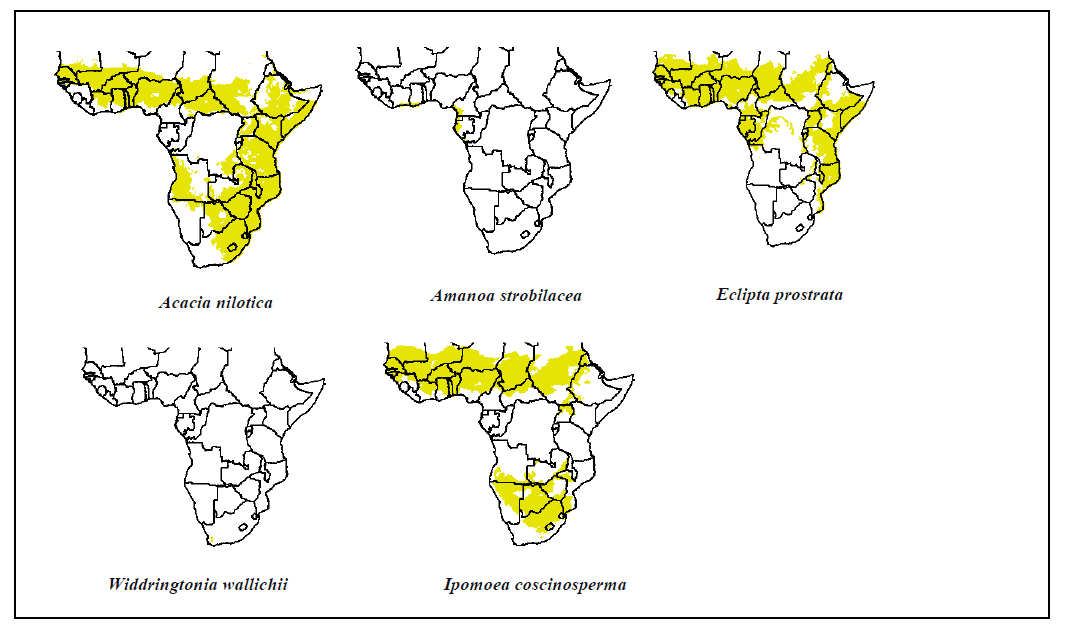
Spatial maps of plant distributions across Africa.
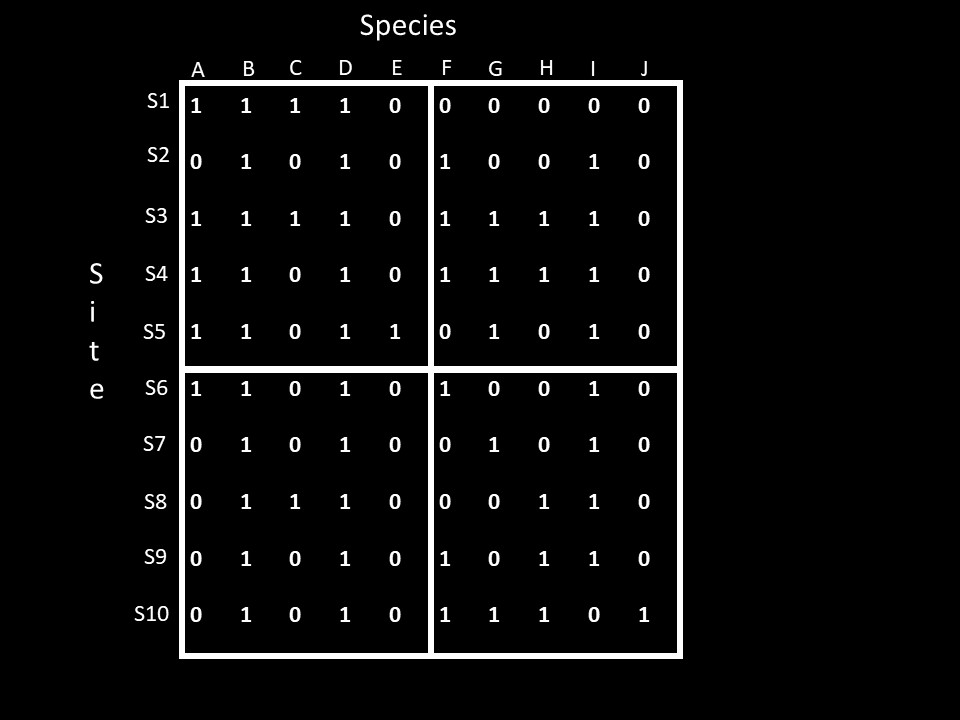
A depiction of distribution maps when converted to a site-by-species matrix for analysing biodiversity.
An international team of scientists from Stellenbosch University (SU), the School of Geography at the University of Leeds in the United Kingdom, and the University of Lincoln in New Zealand, has now achieved this by synthesising big data for more than 23,000 native vascular plants from a SPARC (Spatial Planning for Protected Areas in Response to Climate Change) project coordinated by Conservation International.
The results, published in the Botanical Journal of the Linnean Society, present striking contemporary patterns in plant species richness (i.e., the number of species in a given location) and species turnover (i.e., change in species composition of a given community), as well as the processes likely shaping them across the continent.
Dr Thina Ncube, a South African phytogeoinformatics scientist from SU, says much like previous studies, the team found high concentrations of plant richness in well-established regions including those that coincide with historical biodiversity hotspots: “Our findings also suggest that the famed hotspots including those of the Maputaland–Pondoland–Albany in South Africa and the Guineo-Congolian forests in west and central Africa, could possibly span much larger areas than previously mapped, surpassing the boundaries illustrated in earlier works.”
Using an advanced statistical model, the team found that climate, particularly mean annual precipitation, best explains the contemporary pattern of plant species richness. This finding provides a baseline for predicting how plant richness in Africa could respond under climate change.
A geographically distinct flora
By also analysing community composition through measuring species turnover, the study reaffirmed Africa as a continent with geographically distinct plant communities. These diverse communities not only span both northern and southern hemispheres but also spatially overlap with previously well-recognised vegetation zones characterised by tropical, temperate and arid environments.
Zeta diversity – beyond the norm
Scientists have long been intrigued by the processes that govern plant community composition, with numerous mechanisms explored traditionally through the lens of beta diversity.
Beta diversity measures differences in species composition between pairs of communities, characterising turnover patterns, but it is limited to pairwise comparisons. To overcome this limitation, zeta diversity, a powerful ecological tool, was then developed by co-author Professor Cang Hui (SU) and colleague.
Zeta diversity quantifies shared species across multiple sites and provides a more nuanced view of biodiversity patterns that can tease-apart the environmental processes shaping both narrow-ranged and widespread species.
As the first continental-scale assessment of zeta diversity on African plants, the team applied this approach to examine the multi-site species turnover of the >23,000 species through a pipeline of multi-site generalised dissimilarity modelling.
They found environmental heterogeneity as a probable explanation for plant distributions Africa-wide, with key findings pointing to geographic distance as a likely barrier for the narrowly distributed plants, while soil pH conditions possibly reinforce the distribution of the widespread species.
From a scientific perspective, these findings are particularly useful for conservation biodiversity as they can aid in customising conservation efforts and landscape management geared towards supporting rare/endemics/narrow-ranged plants, while still accommodating the broader habitat requirements of generalist species.
In a changing world, there is a view that zeta diversity could be immensely valuable, particularly for revealing how African vascular plants (some of which are already under duress) may respond to future global change – an increasingly important and urgent task in the lead-up to 2030 global plant conservation targets.
This piece is based on the research by Thinabakho R.L. Ncube, Jon C Lovett, Helen M De Klerk and Cang Hui. Read more: Biogeographical patterns and compositional turnover of African vascular plants
Related stories

Media release
South African fynbos soil delivers a new species of soil bacterium
Microbiologists from Stellenbosch University have discovered a previously unknown bacterial genus within the phylum Acidobacteriota. It is the first genus from...

Awards and milestones
SU mathematician headed for 75th Lindau Nobel Laureate Meeting
Dr Chevarra Hansraj is one of six South African scientists chosen by the Academy of Science of South Africa, with the support from the Department of Science...

Awards and milestones
First-year student selected to attend youth science forum in London
First year BSc student Sibella Murray has been selected by the National Science and Technology Forum (NSTF) to attend the 2026 LIYSF (London International...