
Photonics
Welcome to the Stellenbosch Photonics Institute
The Stellenbosch Photonics Institute focusses on photonics related research and development in Southern Africa. The group boasts excellent laser facilities, world-class research projects, and a vibrant combination of students, lecturers and other staff members. These factors combine to generate a unique and highly successful research environment.
Please see below an overview of our research focus areas and principal investigators.
Research focus areas
Applied spectroscopy
Vibrational spectroscopy of anti-microbial peptides
This project investigates the use of vibrational spectroscopy to investigate structural changes in Gramicidin S, an antimicrobial peptide, due to changes in its environment.
Time resolved CARS
This project uses a unique photonic crystal fibre (PCF) that was developed together with Prof. Alex Heidt from the Institute of Applied Physics at the University of Bern that can produce coherent polarisation maintaining broadband pulses. Due to the coherence, these broadband pulses can be compressed to time durations shorter than the original pulses. This is achieved through compression techniques that we have developed using spatial light modulators (SLMs) in a 4f shaper geometry.
Optical trapping of aerosol particles
We are developing specialised laser traps together with Dr A Ward from Rutherford Appleton Laboratories.
Optical coherence tomography
We are investigating schemes to improve the axial resolution of optical coherence tomography, surpassing what is traditionally achievable using broadband light sources.
Biophotonic platform
We constructed an integrated optical tweezers/microfluidic system for the monitoring of live cells.
PI: Prof. Pieter Neethling
Quantum nanophotonics
Quantum nanophotonics
The quantum nanophotonics project continues as part of the South African Quantum Technology Initiative (SA QuTI) and a Laser Rental Pool grant from the CSIR. Research is focused on advancing compact quantum optical devices using plasmonic nanostructures coupled with nitrogen-vacancy centres (NVCs).
Quantum sensing
Quantum sensing research is aligned with SA QuTI and an African Laser Centre grant from the CSIR. The research leveraged quantum plasmonic sensors based on Hong-Ou-Mandel (HOM) interferometry, demonstrating enhanced refractive index sensing compared to classical methods.
PI: Prof. Mark Tame
Ultrafast science and imaging
Ultrafast spectroscopy
The group focuses on fundamental investigations of photo-induced reactions on ultra-short time-scales. Current projects include:
- Memristive devices
- UV-absoring compounds
- Transient spectroscopy of donor-acceptor polymer films
- UV-pump MIR--probe measurements with subpicosecond resolution on a class of osmium and ruthenium phenanthroline and polypyridyl complexes.
Fluorescence microscopy
The research focuses on developing and modeling imaging systems to locate and track fluorescent objects far below the optical diffraction limit.
PI: Dr Gurthwin Bosman
High resolution light matter interactions
Quantum control
The long-term aim of the project is to demonstrate unsharp (weak) quantum measurement in a cost-effective setup using two isotopes of ytterbium.
High resolution spectroscopy
This project investigates laser-based resonance ionisation as a technique to purify atomic isotopes for medical use.
Collaboration with ISOLDE facility (CERN)
Dr Christine Steenkamp is part of a collaboration at the ISOLDE facility, CERN. During December 2024 she participated in an experiment testing a new technique to produce ultracold molecules by laser-photodetachment.
PI: Dr Christine Steenkamp
Laser techniques and theory in biological systems
Theory of biological systems
The statistical physics of soft condensed matter and biological systems, presents tools to investigate the role of structures and physical processes in living matter. Of particular interest in biology is that the phenomena occur out of equilibrium. Our work is focused on the cellular and subcellular length scales, both on equilibrium properties but also including the role of molecular machines in cells (so-called active matter).
Projects include:
- To understand the structural and viscoelastic properties of asters coupled by cross-linking active motors.
- Development of a model for dynamical networking as found in reversible synthetic networks and in cytoskeleton.
- Studying the dynamics of ingression of the malaria parasite in red blood cells.
PI: Prof. Kristian Müller-Nedebock
Quantum technology and communication
Free-space satellite-based quantum communication
The project was based on a collaboration with the University of Science and Technology of China to implement the first quantum satellite link in the Southern Hemisphere and the longest intercontinental link between South Africa and China.
High-dimensional encoding for free-space quantum communication
This project is aligned with SAQuTI and the CSIR NLC Rental Pool program. Quantum communication with optical modes carrying orbital angular momentum may play a crucial role by enabling the encoding of multiple bits of information per photon, significantly increasing data capacity and security.
Fibre-based quantum communication
This project is aligned with SAQuTI and the CSIR NLC Rental Pool program. Guiding orbital momentum (OAM) modes through optical fibre is a significant challenge due to modal dispersion, mode coupling, and fibre imperfections. Unlike conventional linearly polarised modes, OAM modes are highly sensitive to perturbations such as bending and twisting, which can cause mode mixing and degradation of the structured light beam. This project focuses on the investigation of nested Photonic Crystal Fiber (PCF) with a hexagonal lattice of air holes, capable of supporting Orbital Angular Momentum modes (OAM).
PI: Dr Yaseera Ismail
Additive manufacturing, X-ray tomography, Biomimicry
The 3D innovation research group works on additive manufacturing, X-ray tomography and biomimicry and extends to many local and international collaborators.
PI: Prof. Anton du Plessis
Group members
Academic members

Postdoctoral fellows


Technical staff
Our postgraduate students
Current PhD students
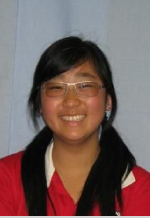
Jane Dai
Supervisor: Dr Gurthwin Bosman
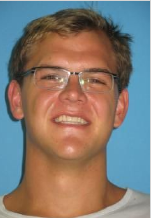
Anthonie de Beer
Supervisor: Prof. Pieter Neethling
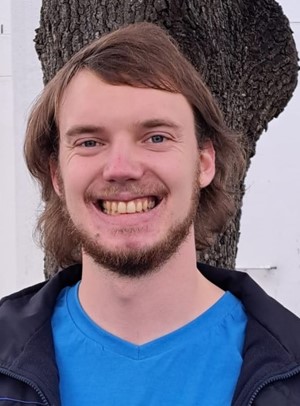
Eugéne Fouché
Supervisor: Prof. Pieter Neethling
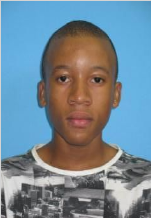
Unathi Skosana
Supervisor: Prof. Mark Tame
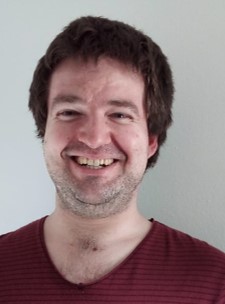
Conrad Strydom
Supervisor: Prof. Mark Tame
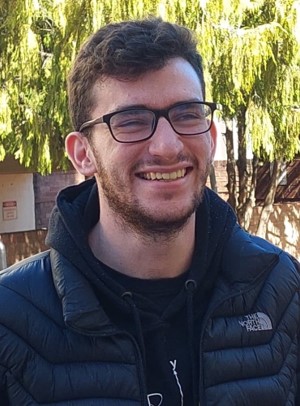
Le Roi du Plessis
Supervisor: Prof. Pieter Neethling
Nancy Payne
Supervisor: Dr Christine Steenkamp
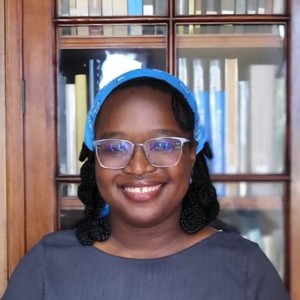
Thobekile Ngwane
Supervisor: Dr Christine Steenkamp
Belkhelfa Nabila
Prof. Pieter Neethling
Current MSc students
Jacques Buys
Supervisor: Dr Yaseera Ismail
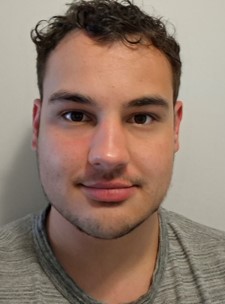
Adrian Crous
Supervisor: Dr Christine Steenkamp
Chisomo Gadama
Supervisor: Dr Yaseera Ismail
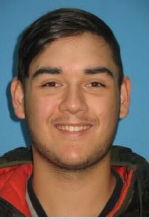
Calvin Groenewald
Supervisor: Prof. Pieter Neethling
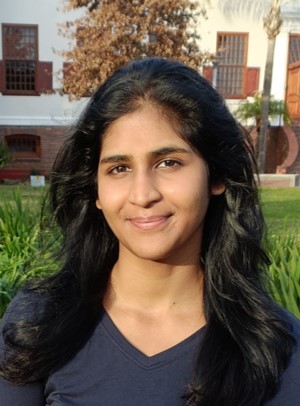
Abigail Iyer
Supervisor: Dr Christine Steenkamp
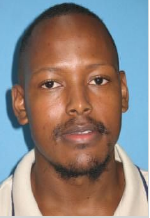
Thakgalo Mangena
Supervisor: Dr Christine Steenkamp
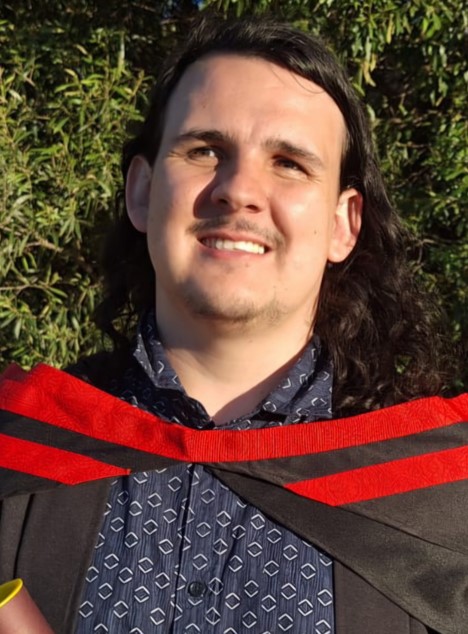
Matthew Marior
Supervisor: Dr Gurthwin Bosman
Mankaleme Moshi
Supervisor: Dr Yaseera Ismail
Pashleen Naidoo
Supervisor: Dr Yaseera Ismail
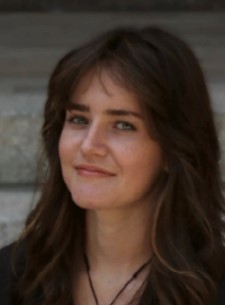
Celia Sheriff
Supervisor: Prof. Mark Tame
Our alumni
PhD graduates
- Dr Siann Bester (March 2026)
- Dr Anneke Erasmus (March 2026)
- Dr Frederick Waso (March 2025)
- Dr Imraan Badrodien (December 2024)
- Dr Ratsimandresy Holinirina Dina Miora (March 2024)
MSc graduates
- Le Roi du Plessis (March 2025)
- Cornelius de Villiers (March 2025)
- Kelsey Everts (March 2025)
- Hanri Jacobs (MEngSci(Bio), March 2025)
- Busiswe Mbuyisa (March 2025)
- André Smith (December 2024)
- Zarah Tayob (MEngSci(Bio), March 2025)