
AI in research showcase - Rohan Benecke
Human in the Loop: Dr Rohan Benecke's Journey with AI
Artificial intelligence is reshaping knowledge work across disciplines, but for researchers working at the intersection of computational modelling, clinical data and biological systems, its implications run particularly deep.
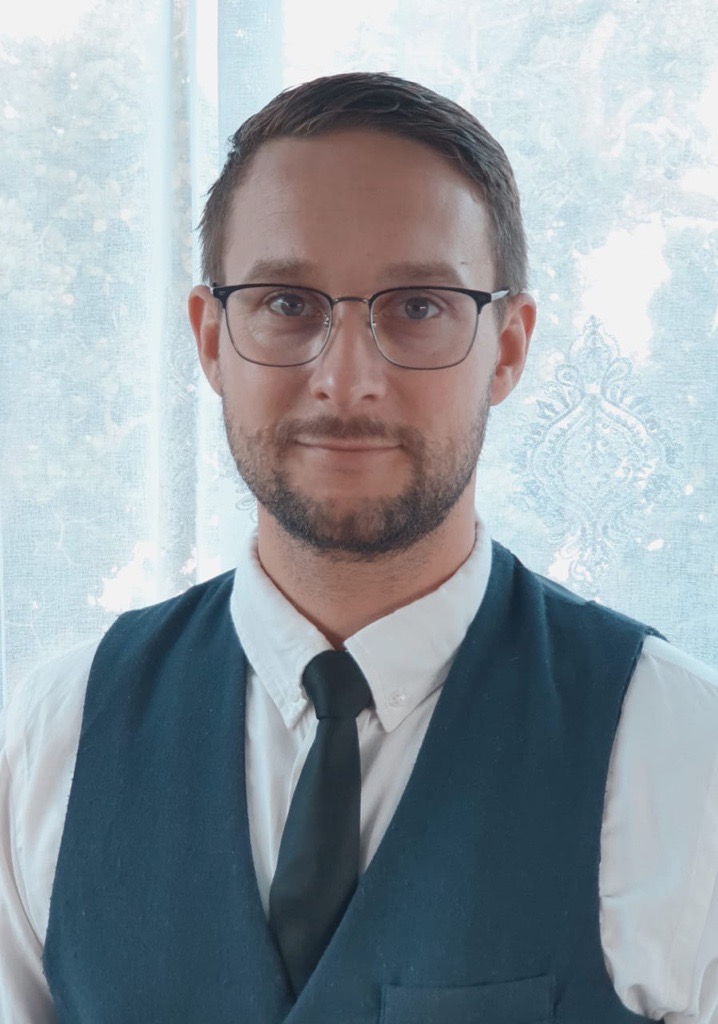
Liela Groenewald, Head of the Doctoral Office, Tygerberg, spoke to Dr Rohan Benecke, researcher and lecturer in the Division of Clinical Pharmacology at Stellenbosch University, about his journey with AI, the opportunities it presents for health research, and why scientific judgement remains essential in an increasingly automated world.
Also see: SU researcher profile | Google scholar profile | OrcID
Please share a little about yourself and what sparked your interest in your field of research.
"I'm a researcher and lecturer in the Division of Clinical Pharmacology at Stellenbosch University. My training is actually in physiology and molecular biology, and what pulled me in early was a fairly stubborn question: how do living systems coordinate themselves, from the behaviour of single cells up to the response of a whole patient to a drug?"
"That mechanistic curiosity is what eventually led me into computational modelling and pharmacometrics, where the same question becomes tractable with real clinical data. So the clinical pharmacology is where I work, but the underlying pull has always been about mechanism," Benecke says.
How did AI become part of your research journey?
"The first time I saw an LLM write code, back in the GPT-2 days, I realised that I do not need to learn to code anymore. Rather, I would need to learn how to make boilerplate code stack into useable outputs."
"You can think of human intelligence in our space as being deep, able to take a singular insight or node to its deep mechanistic function. AI allows us to do something on the wide scale, to take several insights or nodes and track their interaction."
"It is obvious that AI will be transformative for all knowledge-based work. It was clear to me from the start that getting good at AI was a serious step towards being a good scientist going forward," he explains.
"Part of using AI well is knowing when not to reach for it, because for some questions
the slow, manual route is what generates actual understanding."
Can you describe a moment when AI made a meaningful difference in your research?
For Benecke, the most significant impact came not from replacing scientific work, but from creating systems that allow researchers to harness AI's strengths while guarding against its weaknesses."
"The clearest one was building a literature and citation pipeline. Language models are fluent but they invent references, which is fatal in scientific work."
"So I built a four-stage system where the model proposes search queries, those queries actually scrape bibliographic databases, every reference is verified by DOI, and only the verified set is allowed back into the writing step."
"The difference was that I could use the speed of the model without inheriting its tendency to fabricate. I've taken a similar approach to automating parts of our population PK modelling workflow, where the routine scaffolding is automated but the modelling judgement stays with me," he says.

A screenshot of Benecke's statistics application

A screenshot of Benecke's dosing application
What challenges or pitfalls have you encountered along the way?
"The big one is how persuasive these tools are when they're wrong. A confident, well-written wrong answer is far more dangerous than an obvious error, and it's easy to stop checking."
"The second is the temptation to let the tool do the thinking rather than the typing, which quietly erodes the understanding you're supposed to be building."
"On the practical side, the automation I build tends to be brittle. The orchestration breaks in ways that take real time to diagnose."
"And in the wider field, I've noticed AI work in biology often undervalues domain expertise, treating the biology as a dataset rather than as the thing you actually need to understand," Benecke cautions.
What have you learned about using AI responsibly and effectively?
His approach to AI can be summarised in a single principle: verification before trust.
"Mostly that the value comes from verification, not trust. The useful pattern is to treat the model as a fast but unreliable instrument and to wrap it in checks that ground its output in something verifiable, whether that's a DOI, a unit test, or a known result."
"I try to keep the human in the loop at exactly the points where judgement matters, and to be honest about the difference between something the model produced and something I've checked. Part of using it well is also knowing when not to reach for it, because for some questions the slow manual route is what actually generates understanding," he comments.
What excites you most about the future of AI in health research?
While optimistic about the possibilities, Benecke's outlook remains grounded in the scientific challenges that AI may help address.
"What interests me is the prospect of linking scales, using these tools to connect mechanism at the molecular and cellular level to what we observe clinically in patients."
"In my own area that could mean better, more individualised dosing for populations that are usually an afterthought, like children and neonates, where the data are sparse and the stakes are high."
"I'm cautiously optimistic rather than starry-eyed. The upside is real, but it depends entirely on keeping the science, and the scientist's judgement, in charge of the tools," Benecke concludes.
