
Rethinking our freedom in a time of climate crisis
- Freedom Day was celebrated on 27 April.
- Freedom also means that we must protect the environment.
- Freedom must also be about the conditions that make life possible.
South Africans celebrated Freedom Day on 27 April. In an opinion piece for the Cape Argus, Dr Gibson Ncube from the Department of Modern Foreign Languages draws attention to the link between freedom and the climate crisis. He writes that a truly free society is one in which people can live in environments that sustain rather than harm them. It is one in which economic progress does not come at the expense of ecological survival.
- Read the original article below or click here for the piece as published.
Gibson Ncube*
South African literature has been grappling with the realities of climate change, environmental degradation, and ecological precarity. For example, Lauren Beukes’s speculative fiction, like the novel Moxyland, imagines futures shaped by environmental and technological crises. Alistair Mackay’s novel It doesn’t have to be like this, considers a Cape Town that has been ruined by climate change and social unrest. These and many other authors have grappled with the growing awareness that questions of environment and climate are no longer peripheral but central to how South Africans think of their present and imagine their futures.
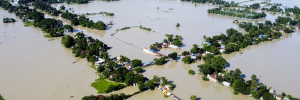
The issues that dystopian literature has been representing are not merely fictional. For many people across the country, the signs are already visible. Water shortages have become more common in many areas, while floods have devastated other areas. Temperatures have also been rising every year. These temperature increases have had a direct impact on crop production, livelihoods, and daily life.
There has also been a worrying rise in diseases, including various forms of cancer, which many researchers link to environmental degradation and prolonged exposure to pollutants. These, of course, are not distant or abstract matters. These ecological issues are influencing how people live, what they eat, and how they secure their futures. In the face of such a situation, freedom cannot be understood only as a political achievement. It must also be about the conditions that make life possible.
Each year on Freedom Day (27 April), South Africans pause to remember the historic moment in 1994 when the country formally broke from the injustices of Apartheid. It is a day that celebrates political liberation, the right to vote, and the promise of dignity for all. However, as we mark this important day, it is worth asking a difficult but necessary question: what does our freedom mean in a world where the environment itself is under threat?
Across the African continent, similar patterns have been emerging. Communities that contribute the least to global environmental damage and pollution are often the ones facing its harshest consequences. This reality raises uncomfortable questions about justice and responsibility. It also forces us to rethink what liberation and freedom look like in the present moment. If people are free in name but live in polluted, unstable, or depleted environments, then that freedom is unfortunately fragile.
Part of the problem, I think, lies in the continued reliance on extractive practices. South Africa is currently, by a large margin, the top country in coal mining on the continent. Such large-scale mining of fossil fuels, coupled with large-scale agriculture and industrial expansion, has long been central to economic development.
However, these activities often come at a cost. Rivers and the air are polluted. The land itself is degraded. Communities are displaced. In many cases, the benefits are unevenly distributed, while the environmental damage is widely felt. These patterns, of course, echo older histories of exploitation, even if they now operate under different political conditions.
To speak of and celebrate freedom today, then, is to recognise that human well-being is closely tied to the health of the environment. Clean air, safe water, and stable ecosystems should not be luxuries. They are essential to a dignified life. When these are compromised, so too is the promise of freedom. However, this doesn’t mean we should reject development altogether. Rather, we need to ask harder, and even uncomfortable, questions about how development takes place, who it serves, and what it leaves behind.
We also have an opportunity to think differently. Many African traditions have long emphasised the interconnectedness between people and the natural world. The very essence of ubuntu, for example, understands human existence as fundamentally relational and dependent on others, including the environments that sustain life. While these perspectives are often overlooked in modern policy debates, they offer valuable ways of imagining a more balanced relationship with the environment. They remind us that caring for the earth is not separate from caring for each other.
As we commemorate Freedom Day, we need to hold on to its original spirit while also expanding its very meanings. Freedom is not only about the past, but also about the present and the future that we want to build. A truly free society is one in which people can live in environments that sustain rather than harm them. It is one in which economic progress does not come at the expense of ecological survival.
The task ahead is indeed not simple. It requires collective responsibility, thoughtful policy, and a willingness to rethink familiar ways of doing things. But it also offers a chance to deepen the meaning of what freedom itself means. In South Africa, the struggle for meaningful freedom continues. Today, it includes the urgent work of ensuring that the environment on which all life in the country depends is protected, restored, and sustained for generations to come.
In a Freedom Day article for the Mail & Guardian, facilitated by Stellenbosch Business School, Prof Armand Bam argues that Freedom Day was never meant to be a day of selective remembrance. It was meant to mark a break from a past we are learning how to confront. Freedom is not the absence of responsibility. It is the obligation to reckon honestly with what came before and to build differently because of it.
*Dr Gibson Ncube is a senior lecturer in the Department of Modern Foreign Languages at Stellenbosch University. His current research focuses on how cultural productions, especially literature and cinema, represent queer lived experiences in the face of environmental crisis, in different African contexts.
Related stories
Opinion and features
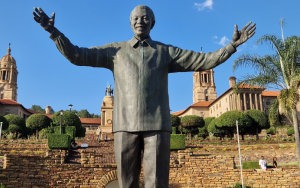
Mandela Day: Madiba’s life a reminder that liberation, journey to freedom continue
Nelson Mandela’s life reminds us that liberation is never a completed matter but an ongoing responsibility, and that the road to freedom is never truly finished...

Opinion and features
How emergency procurement fuels corruption – and how to prevent it
Bribery, the embezzlement of public funds, conflicts of interest, the unethical exchange of confidential information, and the steering of contracts and...

Opinion and features
Entrepreneurship hubs, right skills can help reduce youth unemployment
During Youth Month, one of the key issues highlighted was the difficulty many young people face in finding work. In opinion pieces for the media, Luluto Mgweba...