
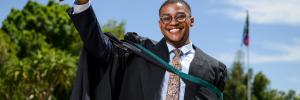
Reuben Masia declared in kindergarten that he wanted to be a doctor. He has graduated from Stellenbosch University (SU) with a MBChB,
First-generation SU medical graduate proves that dreams rooted in small places can travel far
- Reuben Lefa Masia, who graduated from Stellenbosch University (SU) with a MBChB, hails from Roossenekal, a 2,5 km² dot on the Limpopo map.
- Masia declared in kindergarten that he wanted to be a doctor.
- SU’s SOAR programme for first-generation university students provided a pillar of support.
Roossenekal, a 2,5 km² dot on the Limpopo map, is the kind of town “where the horizon feels close and the ceiling of dreams even closer”. But for Reuben Lefa Masia, who graduated from Stellenbosch University (SU) with a MBChB, it was also a town with a remarkable spirit and sense of community, a place that nurtured the belief that “even the smallest of places can produce giants”.
Masia declared in kindergarten that he wanted to be a doctor. “I never grew out of that conviction. Instead, it matured, fuelled by the privilege of serving people at their most vulnerable, by a fascination with the human body, and by the dream of returning home equipped to help fight the diseases that burden our communities.”
At Roossenekal Primary School, Masia says his teachers “poured into us with a conviction far bigger than the town itself. They arrived every day with fire in their voices and hope in their hands, moulding our young minds into believing that not even the sky was our limit.”
High school took him from St Thomas College in Burgersfort to Lydenburg High School in Mpumalanga, where he gained lifelong friends, mentors and memories. “Each school, each teacher, each moment chiselled me into who I am today.”
SU was always the first choice
When it came to choosing where to study, SU stood out long before he applied. He researched every medical school in the country, but the turning point came during matric, when he was selected to attend a fully sponsored camp at SU’s Faculty of Medicine and Health Sciences. That experience didn’t just affirm his dream, he says, “it whispered that this is where my story needed to unfold”.
Building bridges
Being a first-generation student is “both an honour and a heavy load”, he admits. “You walk into rooms your bloodline has never stepped into. There is no blueprint, no footsteps to trace. Only faith, courage and the hope that you’re planting seeds for those who come after you.”
There were days when the weight felt overwhelming. But through every moment of doubt, he never felt alone. His family supported him throughout the journey, even without fully understanding the academic pressures he faced. “When I wrote exams, it felt like they were writing with me,” he says. “Their belief in me built a bridge over my self-doubt.”
SU’s SOAR programme for first-generation university students provided another pillar of support. Friendships were formed, support systems strengthened, and the annual SOAR gathering served as a reminder that the journey was possible. “It is not an exaggeration to say SOAR helped carry me through all six years of this degree,” he says.
Music and medicine
Masia’s time at SU was enriched not only by medicine but by music. For four years, he was a member of the world-renowned Stellenbosch University Choir – the realisation of a long-held dream.
“For four years – long enough to count as a degree of its own – I stood among voices from across the country, blending stories, cultures and souls into harmonies that healed and inspired.”
Music, he says, sustained him through grief, exhaustion and fear. It reminded him of beauty within himself and the world.
Under the leadership of André van der Merwe, he performed some of the world’s most complex choral repertoire and travelled across continents. One of his most unforgettable moments was standing on stage in Tokyo, Japan, performing to an audience of 5 000 people. It was a reminder, he says, “that music can cross oceans and pierce hearts”.
From small beginnings to big achievements
While he may come from a small hometown, Masia’s journey has taken him around the world. He has presented at International Surgery Week in Austria, completed a summer programme at King’s College London, performed with the SU Choir in Tokyo, undertook a trauma surgery elective at Northwestern Memorial Hospital in Chicago, joined the organising team of an international future surgeons programme in Kuala Lumpur, and presented his undergraduate neurosurgery research on two major stages in South Africa.
Each milestone, he says, felt like another reminder that dreams rooted in small places can travel far. “None of this would have been possible without the unwavering support of SU.”
Fighting the doubts
Academically, his greatest challenge wasn’t the workload; it was convincing himself that he belonged. “Imposter syndrome followed me everywhere: ward rounds, tutorials, presentations. It shrank my voice and made me question my place.”
Gradually, everything shifted. A turning point was internalising Marianne Williamson’s famous words: “Our deepest fear is not that we are inadequate. Our deepest fear is that we are powerful beyond measure.”
“I realised that God does not choose the qualified – He qualifies those He calls,” he says. And from that moment, he stepped into the fullness of who he was becoming.
Inspiration from everyday heroes
Throughout it all, he drew inspiration from his parents, who, Masia says, built a life defined by perseverance, sacrifice and love despite their difficult circumstances.
He adds that academically, inspiration abounded in friends, characters in books and films, mentors and everyday heroes in the hospital corridors.
Looking ahead
Reflecting on his graduation, Masia says he feels as if he is standing on the edge of what he calls “a vast and open horizon”. He plans to serve with compassion, to bring humanity and excellence into every hospital room, and to contribute to systems that are kinder and more accessible, especially for underserved communities like the one he comes from.
Long term, Masia hopes to specialise in neurosurgery. But above all, he says, he wants to wake up each day with the honour of doing what he loves: “Serving people, serving my community and giving my life to meaningful work.”
His message to other first-generation students carving their paths in their respective fields is: “Break those generational ceilings. Step into rooms your bloodline has never entered. You are not alone; you will never be.”
Related stories
Awards and milestones
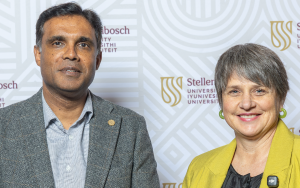
Top lecturers take centre stage at TLA celebration
An accomplished audience recently gathered at the Stellenbosch Institute for Advanced Study (STIAS) for Stellenbosch University’s (SU) annual “Celebrating...
Media release
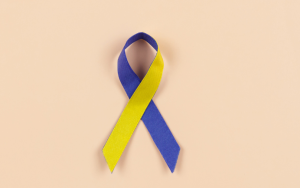
People with Down syndrome must be included in conversations about their healthcare
People with Down syndrome and their families consistently value healthcare that is relational, respectful, and person-centred, rather than focused solely on...
Media release
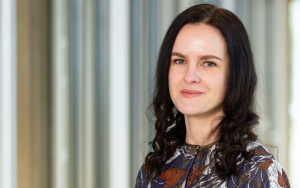
SU scientist receives R14 million grant to tackle West Nile virus
As climate and environmental change continue to reshape ecosystems across the world, scientists are warning that mosquito-borne diseases may spread into new...