Research data management
What is research data management?
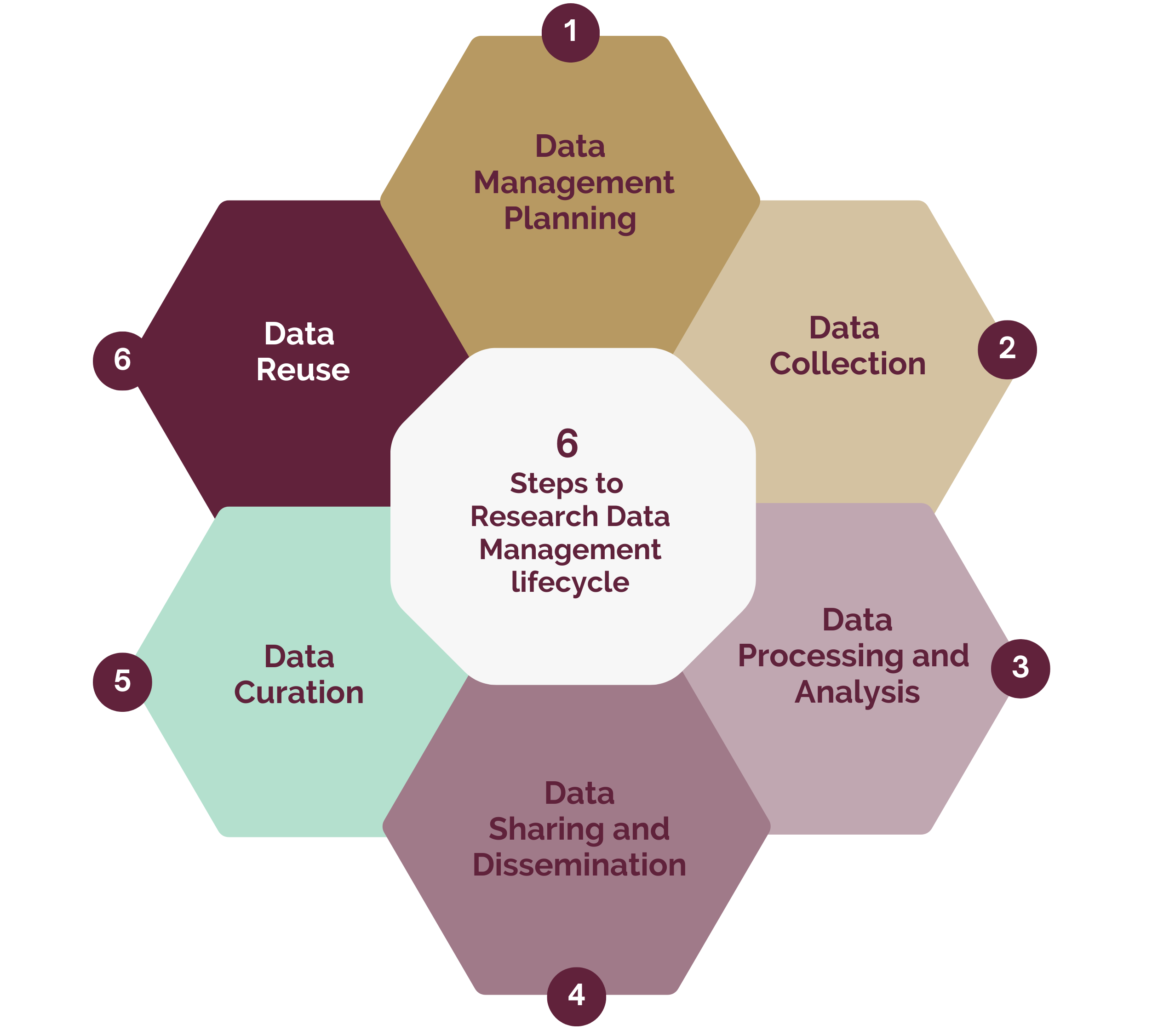
Research data management is a process which can be captured visually through the use of a lifecycle model known as the Research Data Management lifecycle. In order to view a brief description of each stage of the Research Data Management lifecycle please see the relevant stages below and on the lifecycle diagram.
Research data management lifecycle
This initial phase involves outlining how data will be handled both during and after a research project. It includes identifying data types, defining standards for metadata, and establishing protocols for storage, security, and eventual sharing to ensure compliance with funder or institutional requirements. SunDMP, our data management planning tool can aid you in developing data management plans.
The active gathering of information through various methods such as experimentation, observation, surveys, or digital capturing. During this stage, it is essential to maintain consistent file naming conventions and organise data in structured formats to ensure the integrity and provenance of the primary material. Read more about data collection here.
Raw data is cleaned, checked for quality, and transformed into a format suitable for interpretation. This stage involves the use of specialised software or code to perform statistical tests or computational modelling, with all steps documented to allow for the reproducibility of the findings. Read more about data processing here and analysis and visualisation here.
The process of making research outputs available to the wider community. This involves choosing appropriate platforms or repositories to host the data, assigning persistent identifiers (such as DOIs), and determining the terms of use through specific data licences. Our institutional research data repository, SUNScholarData, is specifically for the publication of research data. Read more about data publication here.
Active management of the data to ensure it remains accessible and usable over the long term. This includes "cleaning" metadata for better discoverability, migrating files to sustainable formats to prevent digital obsolescence, and ensuring the data is securely archived in a trusted environment. This is the responsibility of the librarians in Research Data Services.
The final stage where datasets are discovered and utilised by other researchers for new projects, meta-analyses, or educational purposes. Effective reuse validates the original research and fosters collaboration by allowing the academic community to build upon existing evidence. Our institutional research data repository, SUNScholarData, also enables reuse by other researchers.
Why research data management?
- The benefits of publicly-funded research should flow back to the public
- Management of research projects in a more efficient manner
- Compliance with research funder mandate
- Compliance with legal and ethical requirements
- In order to facilitate the reproducibility and re-usability of research findings
- Duplication of research efforts can be reduced – along with the associated costs
- Validation of previously published research