
Postgraduate studies
The South African geological record is extraordinary and unique, providing a world-class natural laboratory for those interested in research in the earth sciences. New technologies and the transition from fossil fuels to renewable energies have, in recent years, opened up a wide variety of opportunities for geologists in the exploration of 'green' metals, besides the more traditional mineral exploration.
Environmental issues related to human activities and the broad topic of climate change provide an important research focus for the field of environmental geochemistry: research in hydrogeology centres around the distribution, movement and properties of groundwater, an increasingly scarce and valuable commodity in sub-Saharan Africa and South Africa, in particular. These diverse fields are being taught and researched by staff and students in the department and offer a wide range of careers in South Africa and abroad.
Come and study with us!
Contact us
Current postgraduate students
PhD students

Caitlin Jones
Structural controls on Au mineralization of Wassa Mine - New insights from implicit 3D geomodelling, petrography and geochronological analysis, and implications for near-mine and regional exploration targeting
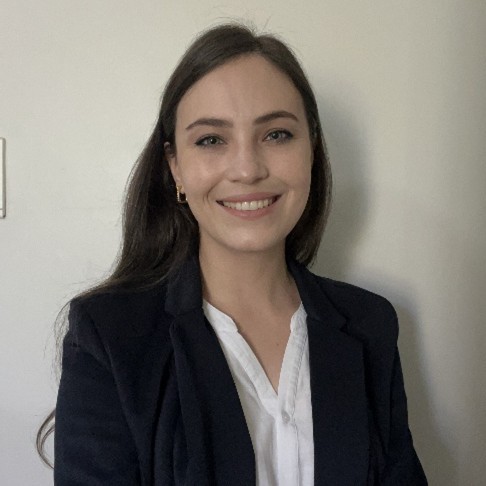
Emtia Janeke
My research focuses on marine biogeochemistry, particularly the role of trace metals and dust inputs in ocean systems. I combine laboratory experiments using local South African dust and marine phytoplankton with global compiled datasets to examine how these factors influence phytoplankton productivity. This work helps improve understanding of how changing environmental conditions influence aquatic ecosystem functioning and supports more reliable predictions of future marine and air quality changes.
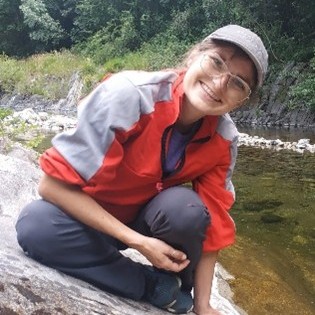
Helena M Fest
My PhD research focuses on post-orogenic magmatism in the Variscan French Massif Central, with particular emphasis on the origin, growth, and petrogenetic significance of large potassium feldspar crystals, with the aim to constrain the magmatic processes and crystallisation histories preserved in the minerals to advance our understanding of granite formation and continental crust evolution.
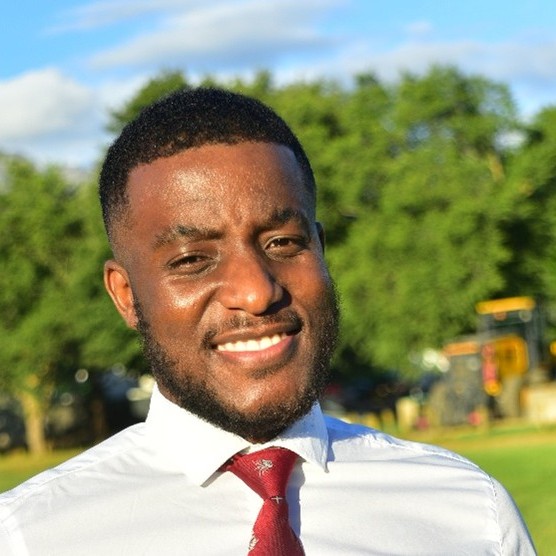
Victor Farai Mugabe
This doctoral research investigates the transport, transformation, and fate of mercury in both atmospheric and aquatic environments across the Southern Hemisphere. The study focuses on atmospheric mercury along a latitudinal transect from Cape Point to the Antarctic ice edge, as well as remote oceanic sites including Marion Island and Gough Island. These measurements will help characterize long-range transport pathways and background mercury levels in the marine boundary layer of the South Atlantic and Southern Ocean.
In parallel, the project examines total mercury concentrations in river water and sediments from a South African river system draining into the Agulhas Current. This component aims to identify how mercury is partitioned between dissolved and particulate phases, and which environmental compartments act as dominant reservoirs.
A key objective is to evaluate the geochemical cycling of mercury in both marine and freshwater systems, and to assess the potential for bioaccumulation in aquatic food webs, with implications for fish and human exposure.

Ntando Majola
My research focuses on understanding how iron, an essential micronutrient, is distributed and cycled in the South Atlantic Ocean. In particular, I investigate dissolved and particulate iron across equatorial and West African margin regions, including areas influenced by low oxygen conditions.
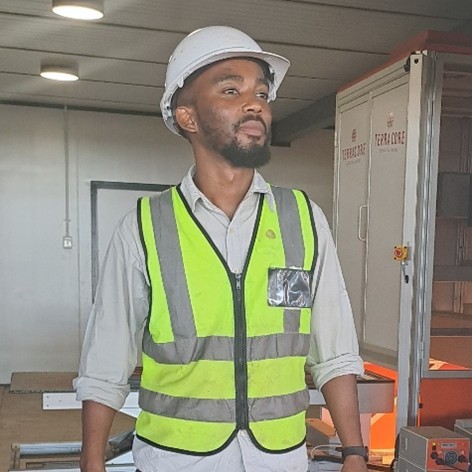
Mawande Ntantiso
My research project focuses on improving how we understand and model mineral deposits by using advanced scanning technologies on drill core. In modern mineral exploration, especially for critical metals like copper, geologists increasingly rely on drill-core data because many deposits are buried and not visible at surface. However, traditional core logging can be subjective and may miss subtle mineralogical variations that are important for both exploration and processing.
This project primarily focuses on the application of hyperspectral imaging (HSI) to scan porphyry copper drill core and generate high-resolution spectral data. Hyperspectral data enables the identification of minerals based on their interaction with light, providing detailed insights into mineral distribution and alteration patterns that are not always visible through conventional methods. To support and validate these interpretations, the study also incorporates complementary core scanning techniques such as X-ray fluorescence (XRF), which provides quantitative geochemical information. The integration of these datasets allows for a more objective and comprehensive understanding of the deposit.
The ultimate goal is to build a more reliable geological and geometallurgical model that links mineralogy to processing behaviour. This has important implications not only for improving resource definition, but also for optimizing how ore is processed once mined.
This research contributes to the growing trend of data-driven and quantitative geology. This approach uses multiple datasets together to reduce uncertainty and improve decision-making in the mining industry.

Ritshidze Nenwe
My PhD research, titled “Enhancing Groundwater Storage Change Estimations in Water-Scarce Regions: Development of a Local Downscaling GRACE Approach for Improved Water Supply Management in South Africa,” focuses on improving the accuracy of groundwater monitoring using satellite data. Specifically, the study develops a local downscaling approach for GRACE satellite observations to enhance groundwater storage estimations at finer spatial scales. The research aims to support more effective water resource management in water-scarce regions of South Africa by providing more reliable, high-resolution groundwater information.

Jared Tanner Walsh
My PhD is a targeted study on quantifying mercury dynamics and fluxes within two key aquatic environments: the Berg River Estuary and the broader South Atlantic Ocean.
MSc students

Jordan M. Bense
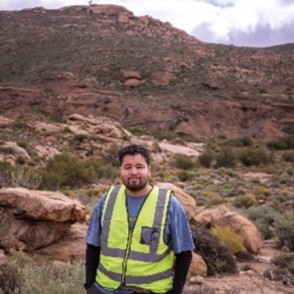
This study aims to evaluate the groundwater dynamics of the regolith-fractured crystalline aquifer system in Devon Valley, Stellenbosch, with emphasis on recharge pathways, flow mechanisms, and the interaction between the regolith and fractured basement units; using a calibrated numerical groundwater model.
Ayden T. Carolissen
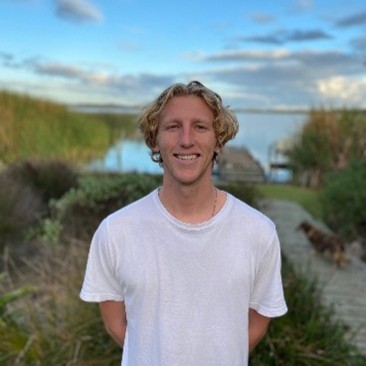
My research investigates the spatial controls on carbon and gold associations within the Carbon Leader reef of the Witwatersrand basin. By integrating historical datasets with 3D modelling, my study aims to identify the geological controls that governed the distribution of these Gold – Carbon associations. This work will improve understanding of gold deposition at the reef scale and contribute to more effective exploration and resource targeting in one of the world’s most significant gold deposits. By distinguishing between Multiple Au-C relations (e.g., seam carbon, flyspeck carbon, and gold barren carbon), the study will provide a more detailed framework for interpreting mineralization patterns of this reef.
William R.O. Day
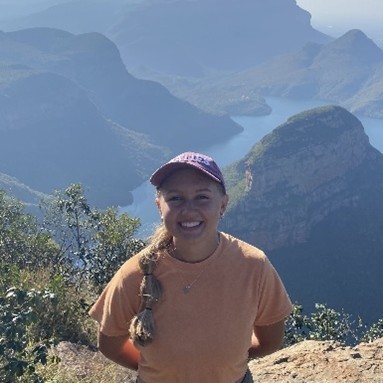
My research focuses on the distribution and cycling of dissolved and particulate nickel (Ni) and copper (Cu) in the seawater surrounding Gough Island, a volcanic island located in the Southern Ocean. Trace metals (TM) play a vital role in regulating primary productivity, with Ni and Cu involved in a range of metabolic processes required for cell function. While TM cycling in the open ocean has been relatively well studied, smaller-scale controls remain poorly understood, particularly in island-influenced systems. Gough Island also lies within a transition zone between subantarctic and subtropical water masses, creating an environment in which physical mixing can influence metal supply and distribution. Using datasets from 2023 and 2024, this study examines how biological uptake, remineralisation of sinking organic matter, organic ligand complexation, and water mass mixing may affect the distributions of Ni and Cu. This research aims to be one of the first detailed trace metal investigations around Gough Island, a biogeochemically important but understudied region.
Louise E. Dekker
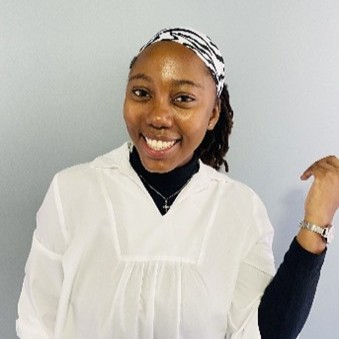
My MSc focuses on the structural analysis and interpretation of Table Bay and False Bay in the Western Cape, based on bathymetric imagery.
Sinothanda Gininda
My MSc research will characterise how near-surface weathering alters the mineralogy and metallurgical behaviour of the Merensky Reef and UG2 chromitite at Modikwa Platinum Mine (eastern Bushveld Complex). Using core logging, petrography, XRD, XRF, SEM based mineral liberation analysis, and sequential extraction, the study will document vertical changes from fresh rock through transitional to oxide zones focusing on sulfide oxidation, secondary Fe-oxyhydroxide and silicate formation, and PGM redistribution. Where time permits, bench-scale flotation tests will link mineralogical changes to PGE recovery losses. The goal is a site-specific geometallurgical framework to guide processing of weathered PGE ores.
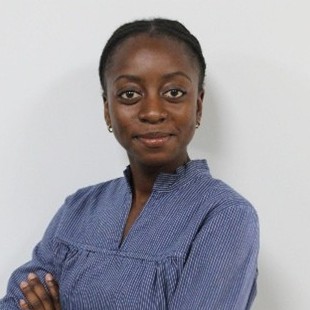
Anesu Karadzandima
My research investigates the environmental and toxicological risks of mercury (Hg) in airborne dust within the Saldanha Bay Municipal Area, a critical industrial and port hub in South Africa. By analysing the atmospheric transport and deposition of industrial dust, utilising BSNE samplers, ghost wipes, and ICP-MS analysis, I aim to quantify the health risk levels posed to local populations through inhalation, ingestion and dermal contact. This work employs Scanning Electron Microscopy (SEM) and Positive Matrix Factorization (PMF) to distinguish between natural and anthropogenic sources, providing essential baseline data for terrestrial Hg contamination. Ultimately, this study supports the Minamata Convention and South Africa’s National Environmental Management: Air Quality Act by bridging the gap between industrial expansion and the protection of public health.
Study leader: Prof. Susanne Fietz

Theresa Kuhn
My MSc research investigates how structural deformation and host-rock chemistry control gold mineralisation within shear zone–hosted reef systems at the Venice Mine complex, Zimbabwe. By integrating structural mapping, petrography, and geochemical analyses, I aim to improve predictions of gold distribution and understand its recoverability, with broader implications for Archean greenstone belt deposits.
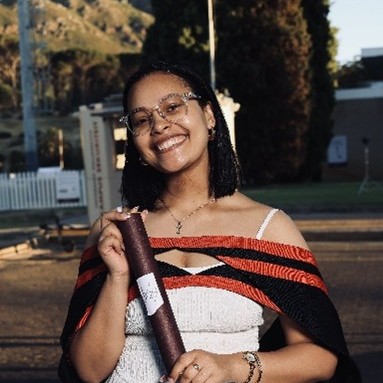
Shannon Marcus
The study examines the industrial effluent recharge basin linked to the Atlantis Aquifer under the Atlantis Water Resource Management Scheme, focusing on environmental risks within the managed aquifer recharge system. It investigates contaminants in industrial wastewater-especially persistent pollutants like PFAS, heavy metals, and other substances that may not easily break down in sandy coastal aquifers, and how they behave underground in terms of movement and longevity. The research also looks at how these contaminants might travel through groundwater to sensitive areas, including ecosystems that depend on groundwater and nearby coastal environments, where pollution could reach the ocean via submarine groundwater discharge. Overall, the study aims to understand how long-term industrial recharge affects aquifer health, ecosystem stability, and coastal water quality.
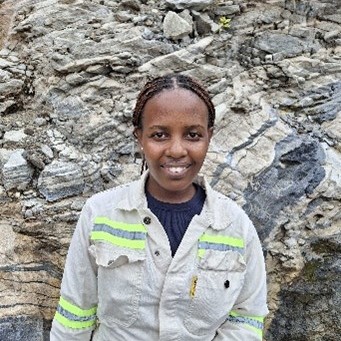
Boitshepo Hope Masetlha
The UG1 chromitite seam in the Upper Critical Zone of the Bushveld Complex exhibits notable petrogenetic and mineralogical variations, as evidenced by changes in chromitite thickness, proportion and type of associated gangue minerals, such as pyroxenites and anorthosites. This section of the Bushveld Complex comprises mainly pyroxenites, anorthosites and norites. The UG1 chromitite layers are hosted within pyroxenite and anorthosite, which are occasionally mixed to form chromitiferous pyroxenitic anorthosite, chromitiferous anorthosite and chromitiferous pyroxenite. These variations are also observed structurally through frequent bifurcations of the seam and the presence of dropstones. Mineralogically, differences in chromite chemistry affect the Cr/Fe ratio and other oxide proportions, while textural relationships influence the degree of liberation. Three textural classes were identified, each having an impact on beneficiation. The UG1 seam is generally concentrated using gravity methods; however, variability in gangue mineralogy and chromite grain size distribution can influence recovery efficiency and concentrate grade. These properties have important processing and economic implications, as they determine separation efficiency, optimal particle size, and overall metallurgical performance. Understanding this variability is therefore important for designing effective beneficiation strategies.

Lerato Mashedi
This study investigates the relationship between mineral chemistry, texture, and surface reactivity of lithium-bearing phases at Blesberg Mine, with a focus on spodumene. It examines how isomorphous substitution, particularly of Fe, Mn, and Cr, influences collector adsorption and surface hydrophobicity, which are critical for froth flotation performance. Using integrated geochemical and mineralogical techniques, including XRF, LA-ICP-MS, and SEM-EDS, the research characterises different spodumene varieties (grey-white, kunzite, and hiddenite) occurring within the same geological setting.
By combining this characterisation with adsorption experiments, the study aims to establish direct links between crystal chemistry and beneficiation behaviour. A key objective is to assess whether spodumene colour can serve as a reliable proxy for predicting flotation response and separation efficiency. The findings are expected to provide practical insights into ore sorting and beneficiation strategies for lithium pegmatites in Southern Africa.
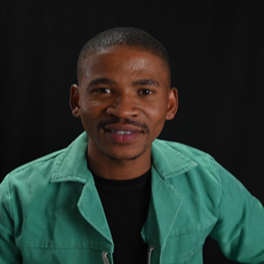
Mpho Mpongoshe
My MSc research focuses on the integration of core logging, petrography, and geochemical analysis to investigate the origins of mafic-ultramafic intrusive rocks within a mineralized layered suite at the Uitkomst area (Nkomati Nickel Mine).
Overall, this research will significantly improve our understanding of the mafic-ultramafic intrusive geology and the factors influencing mineralization. The main objective is to try understanding the geological model and mineralization potential of the Mooifontein area and whether it has similarities to the Uitkomst System (Nkomati Nickel Mine).
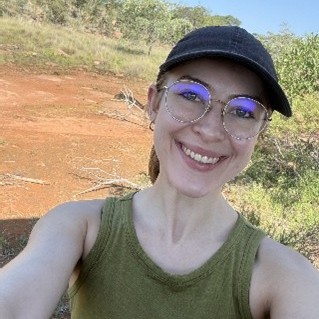
Jordan Powell
I am conducting a sedimentological and structural reconstruction for a suite of newly discovered fossil deposits in southeast Mongolia. Historically, geological context of the locality and broader basinal setting within this region of Mongolia has been sparse, resulting in many tenuous biostratigraphic and sequence stratigraphic correlations to the northerly adjacent Eastern Gobi Basin. This work will start with a two-month expedition to Mongolia, which will include a broad survey of the region along with collection of geochemical and chronostratigraphic samples for analysis. Broadly, if successful, this study could not only strengthen our environmental and geological understanding of this region as compared to those in the East Gobi Basin but could elucidate the early phases of continental-scale aridification that continued up to the terminal Cretaceous.
Study leader: Dr Ryan Tucker
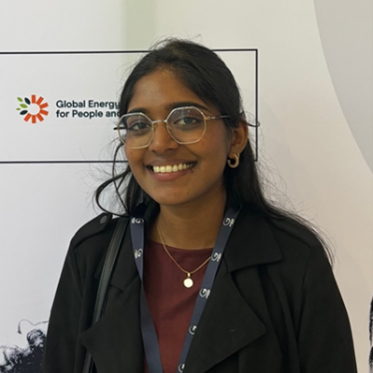
Krianka Pillay
Rivers are critical archives of environmental change, and the Lower Orange River is no exception. My research focuses on the iron biogeochemistry of this dynamic system including within the estuary, using iron, a redox-sensitive tracer, to understand the interplay between natural ecosystem processes and human-induced impacts at a catchment scale. This work sits at the interface between marine and freshwater geochemistry, contributing to a broader understanding of how large river systems respond to change. Given the Fe-rich nature of the Lower Orange River, understanding the bioavailability of this iron is particularly significant since the river serves as an important source of Fe to the South Atlantic, where iron availability directly governs marine productivity and carbon cycling. This work aims to increase awareness of the importance of South Africa’s longest river and aid in providing environmental data for this understudied dynamic river.
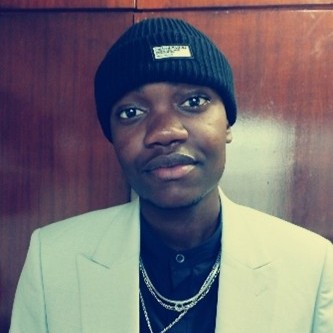
Sambule Radebe
This study focuses on the mineralogical, geochemical, and textural characterization of the UG3 chromitite reef within the Upper Critical Zone of the Bushveld Complex. Using integrated analytical techniques such as QEMSCAN, SEM-EDS, XRF, and LA-ICP-MS, the research aims to determine mineral composition, PGE distribution, and metal deportment. A key objective is to understand how these characteristics influence the geometallurgical behavior of UG3, particularly in comparison to the well-studied UG2 reef. Ultimately, the study seeks to provide insights int optimizing processing strategies for improved platinum group element recovery.
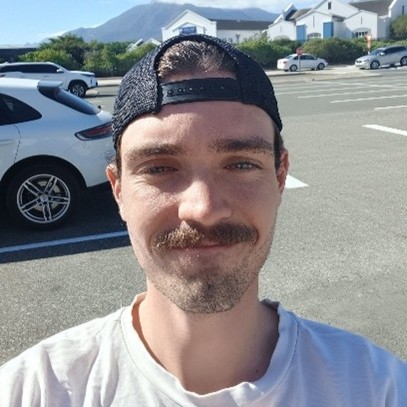
Tristan Reid
The global shift towards increased renewable energy production has seen a proportional growth in the demand for lithium (Li), as it is integral in the production of the lithium-ion batteries used in electric vehicles as well as industrial-scale energy production. According to the United States Geological Survey (USGS), lithium-ion batteries alone accounted for 87% of global Li consumption in 2023. Lithium-bearing pegmatites account for the majority of global Li production.
Despite the growing economic interest in Li-pegmatites, there is still debate as to their petrogenesis. My project aims to investigate the formation of Li-pegmatites by testing the hypothesis that these deposits form as the result of partial melting of a Li-bearing metasedimentary source, utilizing both experimental petrology as well as thermodynamic modelling techniques. This is done by running experiments at certain pressures and temperatures to induce partial melting, then analyzing the product of these experiments in order to determine whether it is possible for these deposits to form this way, as well as to determine the Li partition coefficient for different minerals under these conditions. Thermodynamic modelling is run parallel to these experiments, with the results of both experiments and modelling being compared to determine the accuracy of modelling, as well as to investigate the reasons for any differences encountered.
This will provide some insight into the source material and conditions required for Li-pegmatite formation, as well as assist in thermodynamic modelling of Li-bearing systems.
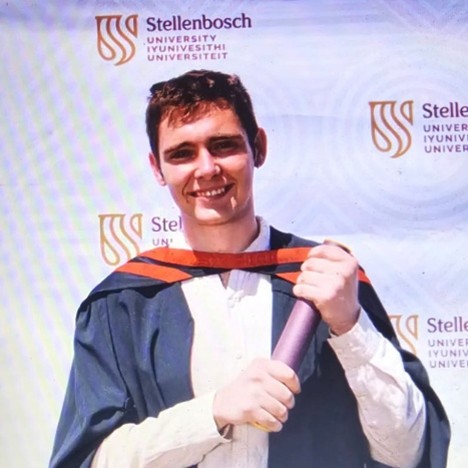
David C. Stewart
The Eureka gold deposit is a high-grade greenfields discovery in the Northern Zone of the Damara Belt, where gold mineralisation is interpreted to be synorogenic to the Damara Orogeny. Hosted within calcareous sandstones and sandstone-siltstone units of the Okonguarri Formation, the deposit records lower amphibolite-facies conditions. A distinctive feature is the development of garnet rims around carbonate minerals and sulphides associated with mineralisation, suggesting interaction between S-bearing fluids and Fe-rich carbonates during mineralisation. This study integrates petrography, SEM-EDS, LA-ICP-MS, and phase-equilibrium modelling to investigate these reactions and their role in gold deposition.

Jàzelle Theron
My MSc research in Earth Sciences focuses on improving the understanding of tantalum mineralisation in rare-element pegmatites of southern Africa. My study will investigate how tantalum is distributed, enriched and hosted within pegmatite systems, and how geological, structural and geochemical controls influence its occurrence. By integrating mineralogy, geochemistry and economic geology, the research aims to better understand tantalum from its geological formation through to its resource potential and strategic importance as a critical mineral used in electronics, aerospace and advanced technologies. The project will also contribute to broader knowledge of critical mineral supply chains and the geological factors that control economically viable tantalum resources.
Study leaders: Dr Matt Mayne and Dr Nils Backeberg
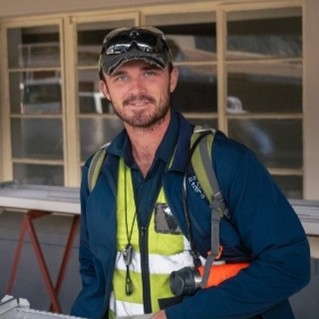
Rico Carl Thiart
This study investigates the geological controls on copper mineralisation at the Okohongo deposit in northwestern Namibia, a region known for numerous sedimenthosted copper occurrences within the Kaoko Belt. The research focuses on understanding how stratigraphy and deformation interact to control the formation, distribution and timing of copper mineralisation.
The project integrates detailed geological mapping, structural analysis, geochronology and ore and alteration petrography to constrain the pressure-temperature conditions and timing of mineralisation and the relationship between stratiform and structurally controlled mineralisation styles. The aim of the project is to combine these datasets and develop a tectonohydrothermal model and a 3D geological framework of the deposit. The findings will contribute to improved exploration strategies for stratigraphic/structurally controlled copper systems in northwestern Namibia.
Study leader: Prof. Alex Kisters
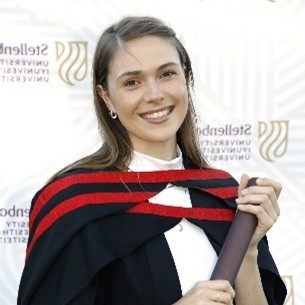
Caitlynn van Wyk
My Masters research looks at experimentally constraining chromium (Cr) solubility in silicate melts that are representative of bushveld complex parental melts. By simulating high-temperature magmatic conditions in the lab, I am investigating Cr saturation behavior that may lead to the formation of chromite-only layers as observed in the Bushveld. The work combines experimental petrology with SEM analysis to better understand the crystallization processes of the world’s largest layered intrusion.
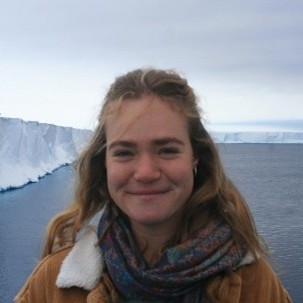
Nina Woithe
My MSc research investigates the distribution and cycling of iron (Fe) in the seawater across the continental shelf and off-shelf region in Penguin Bukta, Antarctica. This work explores the key physicochemical mechanisms governing physical Fe speciation, alongside the biological influences of primary production. While most studies have focused on dissolved iron (dFe), often overlooking the importance of the particulate fraction (pFe), my research addresses this gap by examining both dFe and pFe across a small-scale shelf-to off-shelf gradient.