
BMRI Management
Renowned infectious disease specialist appointed Biomedical Research Institute director
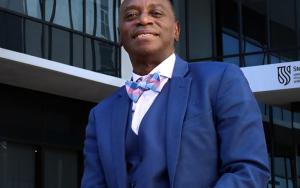
Infectious disease specialist Prof Jean B Nachega appointed full professor of Infectious Diseases and part-time Director of the Biomedical Research Institute (BMRI) at Stellenbosch University's Faculty of Medicine and Health Sciences in November 2025.
As Director, his role centres on shaping the BMRI’s long-term vision, promoting collaboration across disciplines and building partnerships that expand the institute’s scientific and societal impact.
Nachega previously served as the founding director of the Faculty’s Centre for Infectious Diseases from 2008 to 2018.
The internationally renowned infectious disease specialist Prof Jean B Nachega has been appointed Full Professor of Infectious Diseases and part-time Director of the Biomedical Research Institute (BMRI) at Stellenbosch University’s Faculty of Medicine and Health Sciences (FMHS).
Nachega previously served as the founding director of the Faculty’s Centre for Infectious Diseases from 2008 to 2018. He also holds tenured and adjunct appointments as Associate Professor of Epidemiology, Infectious Diseases and Microbiology at the University of Pittsburgh and Adjunct Associate Professor of Epidemiology and International Health at Johns Hopkins University in the United States (US).
“I am deeply honoured to return to Stellenbosch University in this new leadership role,” says Nachega. “My mission is to help define and implement a strategic vision for the BMRI that promotes world-class interdisciplinary research, strengthens capacity- building and enhances the institute’s visibility and impact globally.”
As Director, Nachega will focus on strategic leadership rather than day-to-day management. His role will centre on shaping the BMRI’s long-term vision, promoting collaboration across disciplines and building partnerships that expand the institute’s scientific and societal impact. His key priorities include:
Defining and articulating the BMRI’s vision, mission and research priorities;
Fostering interdisciplinary collaboration across departments and research units;
Building strategic partnerships with governments, universities and global funders;
Enhancing capacity development through mentorship and advanced training programmes; and
Serving as a global ambassador to raise the BMRI’s profile and attract new collaborations and investment.
Nachega emphasises that his leadership will prioritise translational biomedical research – bridging the gap between laboratory discoveries, clinical practice and population health.
“Building a world-class institute to tackle local and global health challenges requires cross-cutting collaboration,” he explains. “My goal is to expand the BMRI’s reach, integrating research across infectious and non-communicable diseases, mental health, climate-sensitive conditions and pandemic preparedness.” He adds: “I’ve spent the last two decades ensuring that science benefits patients and communities.
The BMRI will be a catalyst for that transformation – from bench to bedside to society.”
A cornerstone of Nachega’s agenda is developing research capacity and leadership among emerging African scientists. Drawing on his extensive experience as a mentor and principal investigator on research or training programmes funded by the National Institutes of Health (NIH), Wellcome Trust, European & Developing Countries Clinical Trials Partnership (EDCTP), Bill & Melinda Gates Foundation, the US President’s Emergency Plan for AIDS Relief (PEPFAR) and others, he aims to build sustainable training pipelines that foster excellence across the continent.
“We will build on the BMRI’s strong foundation of training and mentorship to expand and reach a critical mass of scientific excellence,” he notes. “Our goal is to further invest in young talent through structured mentorship, advanced research training and leadership opportunities – nurturing the next generation of scientific leaders who will drive Africa’s and the global health research agenda.”
Nachega’s career reflects a lifelong dedication to advancing global health through research, training and service. Originally from the Democratic Republic of Congo, he earned his MD from the University of Louvain (Belgium) in 1989, followed by specialisation in Internal Medicine and Infectious Diseases in 1997. He completed a Master of Public Health at Johns Hopkins University in 1999 and subsequently obtained a Diploma in Tropical Medicine and Hygiene from the London School of Hygiene & Tropical Medicine in 2000. He went on to earn a PhD in Clinical Pharmacology from the University of Cape Town in 2008 and later completed postdoctoral research at Harvard University’s TH Chan School of Public Health (2009–2010) as a John McGoldrick Fellow.
Nachega has since led multiple multinational research and training initiatives across Africa, including the Southern Africa Consortium for Research Excellence (SACORE) and the Medical Education Partnership Initiative (MEPI). His programmes have collectively mobilised over R200 million in funding, produced hundreds of peer-reviewed publications and trained dozens of PhD and postdoctoral fellows. His scientific leadership across Africa and beyond has earned him election to three prestigious academies: the Academy of Science of South Africa (ASSAf, 2008), the African Academy of Sciences (AAS, 2012) and, most recently, the Académie Congolaise des Sciences (ACCOS, 2025).
A prolific researcher, he has authored more than 250 peer-reviewed papers in leading journals such as The Lancet, The New England Journal of Medicine, JAMA, Nature Medicine and Annals of Internal Medicine. He also serves as an ad hoc expert to the World Health Organisation, the US Centers for Disease Control and Prevention (US CDC), Africa Centres for Disease Control and Prevention (Africa CDC) and the Bill & Melinda Gates Foundation.
Nachega envisions the BMRI as a national and international hub of excellence that advances cutting-edge biomedical science while addressing Africa’s most pressing health priorities. “The BMRI’s evolution offers an opportunity to align world-class science with public health impact,” he says. “I am honoured to contribute to this exciting new chapter for Stellenbosch University and the Faculty of Medicine and Health Sciences.”
Medical physiologist leads with excellence, compassion, and innovation
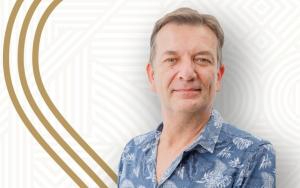
Head of the SU Division of Medical Physiology Prof Hans Strijdom was elected as Deputy Director and Chair of the Executive Leadership Team at SU’s Biomedical Research Institute (BMRI) in April 2026.
He plans close alignment between the BMRI and the Department of Biomedical Sciences, diversification of research funding in response to recent global funding cuts, and opportunities for interdisciplinary engagement.
Strijdom also serves as Executive Head of the SU Department of Biomedical Sciences, Head of the Division of Medical Physiology, and Deputy Director of the Centre for Cardio-Metabolic Research in Africa (CARMA).
Prof Hans Strijdom, Head of the Division of Medical Physiology and Executive Head of the Department of Biomedical Sciences at Stellenbosch University’s Faculty of Medicine and Health Sciences (FMHS), is Deputy Director of the Biomedical Research Institute.
Three pillars: excellence, compassion and accountability
Strijdom includes compassion as a key part of his vision. “One usually thinks of excellence as cut-throat and chasing for achievement – to be the best,” he says. “However, we should always aim for compassion, too.
“We should never forget that it is ultimately about people – whether it’s the students, the researchers or the patients that our research is trying to help one day. Because ultimately that is what biomedical research is about: the whole premise of our research is to find treatment for disease or to prevent disease.”
In addition, Strijdom points out, he is a strong proponent of self-accountability for both staff and students: “We do not micromanage, but that then requires a very high level of responsibility from all individuals for what they do.” He refers to excellence, compassion and self-accountability as the three pillars of his vision.
In addition, he says, that vision is informed by Stellenbosch University’s values and by the FMHS’s mission statement.
Diversifying funding
Strijdom’s acceptance of the role came just weeks before his appointment as Executive Head of the Department of Biomedical Sciences. It is therefore natural that alignment between the two features prominently in his plans. “It will be very much an integrated system,” he explains.
For instance, the BMRI aims to assist in fundraising – firstly, to help sustain existing research but, secondly, also to look for new avenues of research. “It’s an ongoing enterprise,” says Strijdom. However, fundraising became even more of a priority when the United States (US) announced significant federal research funding cuts last year. It was a huge setback for many South African universities.
“Our environment was affected very badly because so many of our top researchers were funded through the US’s National Institutes of Health,” says Strijdom. “The impact of that was devastating.”
For this reason, he stated in the vision statement he submitted before he was appointed that it was important to make a concerted effort to start looking for alternative research funding opportunities. “Lessons were learnt about receiving grants from a particular source and sometimes forgetting that the allocation of those funds is often subject to changes in government priorities,” says Strijdom.
“That is why we expedited the launch of the BMRI this year so that we can start looking for alternative funding and don’t become over-reliant on a source that might end. This is one of our challenges in the next five to 10 years.”
Distinguished scientists and research leader
Strijdom is a highly distinguished scientist. In recognition of his work in medical physiology, he received the Physiological Society of Southern Africa Lifetime Career Achievement Award in 2024.
“My passion for medical physiology is still very strong,” says Strijdom, who followed up his MBChB with a PhD in Medical Physiology at Stellenbosch University in 2006.
“My own research focuses on people with HIV and looks specifically at why people with HIV have a greater risk of developing heart disease and metabolic disease. We are trying to figure out what the underlying causes might be.”
Strijdom also serves as Deputy Director of the FMHS’s Centre for Cardio-metabolic Research in Africa (CARMA), which he helped to establish in 2019. On top of that, he retains his position at the Division of Medical Physiology where he has been Head since November 2020. “The Division is up and running and my staff are supportive,” he says. “My new appointment will not have a negative impact on my work in the Division.”
Poised for success
For Strijdom, his appointment came at an opportune time. “Despite all the problems in the world and the funding crisis and the geopolitical instability, we are very well-positioned to take things to the next level in terms of our research mandate,” he says. “We have a wonderfully diverse campus of students and staff. We have experts in so many subject fields. We have everything in our favour right now – the current leadership, the current management and the staff and students – to really go for it.”
In May 2026, Strijdom hosted the inaugural BMRI Seminar, aimed at crating opportunities for interdisciplinary engagement, collaboration, and knowledge sharing.
The speakers’ presentations were highly engaging and thought-provoking and the BMRI looks forward to future seminars that foster collaboration and showcase the outstanding biomedical research taking place within Stellenbosch University, Faculty of Medicine and Health Sciences. The strong attendance from researchers, academics, and postgraduate students highlighted the need for such a platform within the research community.
Infectious disease specialist appointed BMRI director
- Infectious disease specialist Prof Jean B Nachega has been appointed full professor of Infectious Diseases and part-time Director of the Biomedical Research Institute (BMRI).
- Nachega previously served as the founding director of the Faculty’s Centre for Infectious Diseases from 2008 to 2018.
- As Director, his role will centre on shaping the BMRI’s long-term vision, promoting collaboration across disciplines and building partnerships that expand the institute’s scientific and societal impact.
The internationally renowned infectious disease specialist Prof Jean B Nachega has been appointed Full Professor of Infectious Diseases and part-time Director of the Biomedical Research Institute (BMRI) at Stellenbosch University’s Faculty of Medicine and Health Sciences (FMHS).
Nachega previously served as the founding director of the Faculty’s Centre for Infectious Diseases from 2008 to 2018. He also holds tenured and adjunct appointments as Associate Professor of Epidemiology, Infectious Diseases and Microbiology at the University of Pittsburgh and Adjunct Associate Professor of Epidemiology and International Health at Johns Hopkins University in the United States (US).
“I am deeply honoured to return to Stellenbosch University in this new leadership role,” says Nachega. “My mission is to help define and implement a strategic vision for the BMRI that promotes world-class interdisciplinary research, strengthens capacity- building and enhances the institute’s visibility and impact globally.”
As Director, Nachega will focus on strategic leadership rather than day-to-day management. His role will centre on shaping the BMRI’s long-term vision, promoting collaboration across disciplines and building partnerships that expand the institute’s scientific and societal impact.
His key priorities include:
- Defining and articulating the BMRI’s vision, mission and research priorities;
- Fostering interdisciplinary collaboration across departments and research units;
- Building strategic partnerships with governments, universities and global funders;
- Enhancing capacity development through mentorship and advanced training programmes; and
- Serving as a global ambassador to raise the BMRI’s profile and attract new collaborations and investment.
Nachega emphasises that his leadership will prioritise translational biomedical research – bridging the gap between laboratory discoveries, clinical practice and population health.
“Building a world-class institute to tackle local and global health challenges requires cross-cutting collaboration,” he explains. “My goal is to expand the BMRI’s reach, integrating research across infectious and non-communicable diseases, mental health, climate-sensitive conditions and pandemic preparedness.”
He adds: “I’ve spent the last two decades ensuring that science benefits patients and communities. The BMRI will be a catalyst for that transformation – from bench to bedside to society.”
A cornerstone of Nachega’s agenda is developing research capacity and leadership among emerging African scientists. Drawing on his extensive experience as a mentor and principal investigator on research or training programmes funded by the National Institutes of Health (NIH), Wellcome Trust, European & Developing Countries Clinical Trials Partnership (EDCTP), Bill & Melinda Gates Foundation, the US President’s Emergency Plan for AIDS Relief (PEPFAR) and others, he aims to build sustainable training pipelines that foster excellence across the continent.
“We will build on the BMRI’s strong foundation of training and mentorship to expand and reach a critical mass of scientific excellence,” he notes. “Our goal is to further invest in young talent through structured mentorship, advanced research training and leadership opportunities – nurturing the next generation of scientific leaders who will drive Africa’s and the global health research agenda.”
Originally from the Democratic Republic of Congo, Nachega’s career reflects a lifelong dedication to advancing global health through research, training and service. He earned his MD from the University of Louvain (Belgium) in 1989, followed by specialisation in Internal Medicine and Infectious Diseases in 1997.
He completed a Master of Public Health at Johns Hopkins University in 1999 and subsequently obtained a Diploma in Tropical Medicine and Hygiene from the London School of Hygiene & Tropical Medicine in 2000.
He went on to earn a PhD in Clinical Pharmacology from the University of Cape Town in 2008 and later completed postdoctoral research at Harvard University’s TH Chan School of Public Health (2009–2010) as a John McGoldrick Fellow.
Nachega has since led multiple multinational research and training initiatives across Africa, including the Southern Africa Consortium for Research Excellence (SACORE) and the Medical Education Partnership Initiative (MEPI). His programmes have collectively mobilised over R200 million in funding, produced hundreds of peer-reviewed publications and trained dozens of PhD and postdoctoral fellows.
His scientific leadership across Africa and beyond has earned him election to three prestigious academies: the Academy of Science of South Africa (ASSAf, 2008), the African Academy of Sciences (AAS, 2012) and, most recently, the Académie Congolaise des Sciences (ACCOS, 2025).
A prolific researcher, he has authored more than 250 peer-reviewed papers in leading journals such as The Lancet, The New England Journal of Medicine, JAMA, Nature Medicine and Annals of Internal Medicine. He also serves as an ad hoc expert to the World Health Organisation, the US Centers for Disease Control and Prevention (US CDC), Africa Centres for Disease Control and Prevention (Africa CDC) and the Bill & Melinda Gates Foundation.
Nachega envisions the BMRI as a national and international hub of excellence that advances cutting-edge biomedical science while addressing Africa’s most pressing health priorities.
“The BMRI’s evolution offers an opportunity to align world-class science with public health impact,” he says. “I am honoured to contribute to this exciting new chapter for Stellenbosch University and the Faculty of Medicine and Health Sciences.”