

Two FMHS professors join academy of outstanding scientists
- Prof Faadiel Essop and Prof Sian Hemmings were inducted as Members of the Academy of Science of South Africa.
- Prof Faadiel Essop is Director of the FMHS’s Centre for Cardio-metabolic Research in Africa and Prof Sian Hemmings is the Deputy Director of the South African Medical Research Council/Stellenbosch University Genomics of Brain Disorders Extramural Research Unit.
- The key objective of ASSAf when it was inaugurated in 1996 was to bring together the best scientific minds in the country in the service of society.
Two senior academics from Stellenbosch University’s Faculty of Medicine and Health Sciences (FMHS) were among the 45 leading scholars inducted as Members of the Academy of Science of South Africa (ASSAf) at its Annual Awards Ceremony late last year.
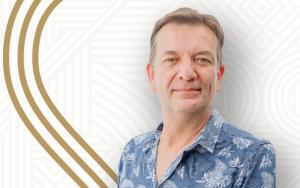
They are Prof Faadiel Essop, Director of the FMHS’s Centre for Cardio-metabolic Research in Africa (CARMA), and Prof Sian Hemmings, Deputy Director of the South African Medical Research Council/Stellenbosch University Genomics of Brain Disorders Extramural Research Unit.
Meaningful impact in cardio-metabolic field and beyond
Essop, who has been a full professor at Stellenbosch University since 2011, regards his induction as a significant recognition of his research. “It is a great honour and privilege,” he says.
“Although all my efforts during my career were not pursued for the sake of recognition, it is nice to be honoured in this way. I value and cherish this occasion as it means that all the research work tackled over the course of my career resulted in a meaningful impact within the cardio-metabolic field and also within broader society.”
Essop adds: “I have always strived to be a holistic researcher, philosopher and thinker, hence my research work and contributions extend beyond the cardio-metabolic field to include the scholarship of teaching and learning as well as tackling broader contextual issues related to science and medicine.”
He is a Fellow of the Royal Society of South Africa, a Teaching Advancement at University (TAU) fellow and has twice been a recipient of Stellenbosch University’s teaching excellence award. He was also recently awarded the prestigious TAU Fellows award for his innovation in curriculum development, inter-disciplinary work and holistic student training in the medical field.
“My approach has always been to challenge existing dogmas and paradigms with critical and creative thinking, and I have always tried to model this approach to all my students, Faculty members and others that I have mentored,” Essop explains. “It is my belief that, in this way, we all can become transformative leaders to tackle tough problems and ensure meaningful progress in terms of major health challenges faced.”
Essop is committed to tackling the increase in cardio-metabolic diseases in Africa and to strengthening collaborative research across the continent and beyond. He is a former president of the African Association of Physiological Sciences (AAPS) and a former elected council member of the International Union of Physiological Sciences (IUPS).
Essop was also recently awarded the 2025 IUPS Julie Chan Prize, which honours physiologists for outstanding international mentoring and career development. He was recognised for mentoring over 90 students worldwide and for his holistic approach to professional growth, as well as his leadership roles in advancing physiology across Africa and globally.
Essop pays tribute to his wife, children and spouses, his mentors, his colleagues in the FMHS’s Division of Medical Physiology, Stellenbosch University’s leadership and his students for their roles in his career. He says they have enriched his life “through many meaningful, exciting and insightful engagements”.
Advancing molecular psychiatry across Africa
Hemmings, who became a full Professor in the FMHS’s Department of Psychiatry last year, shares Essop’s view that election as a Member of ASSAf is a significant recognition of an academic’s research.
“Being elected to ASSAf is an honour that carries deep personal and professional significance to me,” says Hemmings. “ASSAf membership is highly selective, reserved for those who have demonstrated outstanding scientific achievement and leadership. Throughout my career, I have been committed to advancing molecular psychiatry in South Africa and, more broadly, across the African continent.
“This membership recognises the relevance of my research on trauma-related psychiatric disorders, where we integrate genomics, epigenetics, immunology and microbiome science in an attempt to improve mental health, and thus quality of life, in high-adversity contexts.”
Hemmings also regards her ASSAf membership as an acknowledgement of the impact of the initiatives that she leads or co-leads to foster public engagement with science and to generate data that is relevant to support wellbeing and quality education in Africa.
“ASSAf membership comes with a clear responsibility: to keep advocating for inclusive, socially responsive science,” she points out. “In my leadership roles within African and global organisations, I have worked to amplify African perspectives in psychiatric genetics, strengthen research capacity and reduce inequalities in scientific research.
“Being part of ASSAf will further enable me to contribute to these aims, alongside peers who are equally committed to excellence, evidence-informed decision-making and national development.”
Hemmings, who chairs the African Neuroscience Alliance and is a member of the board of directors of the International Society of Psychiatric Genetics (ISPG), believes her ASSAf membership will lead to further opportunities for collaboration.
“I am enthusiastic about collaborating with fellow members to influence science policy and innovation to the benefit of South Africa and the continent,” she says. “This recognition motivates me to extend my mentorship of emerging neuroscientists, to support interdisciplinary, collaborative approaches and to help shape a scientific ecosystem that is equitable, contextually grounded and impactful for South Africa and the wider African region.”
The key objective of ASSAf when it was inaugurated in 1996 was to bring together the best scientific minds in the country in the service of society. As their research track records indicate, Essop and Hemmings are clearly outstanding additions to the esteemed academy.
Related stories
Awards and milestones
Strijdom to lead biomedical sciences with focus on excellence, compassion and innovation
Prof Hans Strijdom, the Head of the Division of Medical Physiology at Stellenbosch University’s Faculty of Medicine and Health Sciences (FMHS), was appointed...

Awards and milestones
New SAMRC/SUN Preeclampsia Research Unit to tackle life-threatening pregnancy condition
The South African Medical Research Council (SAMRC) has established a new Extramural Research Unit (EMU) focused on preeclampsia at Stellenbosch University’s (SU...

Awards and milestones
70 years of remarkable milestones: FMHS celebrates its legacy of impact
Throughout 2026, the Faculty of Medicine and Health Sciences (FMHS) at Stellenbosch University will be celebrating a remarkable milestone: 70 years of advancing...