
Research
Decades of inquiry
Research: from Africa to the world
The Faculty of Medicine and Health Sciences has always oriented its science toward the daily realities of our communities. Tuberculosis, HIV, psychiatric illnesses, cardiovascular disease, and maternal and child mortality are not abstract problems — they are urgent challenges faced by people across the Western Cape, across South Africa, and across the continent. By grounding our research in these lived experiences, we've produced a body of work that is at once locally responsive and globally significant, transforming clinical evidence into meaningful impact.


Our faculty hosts a large community of NRF-rated researchers and several SARChI chairs, offering over 100 Master's and PhD programmes. Each year, we produce hundreds of peer-reviewed scientific articles. This research culture is deeply integrated with clinical practice, postgraduate training, and the communities we serve — translating into services, procedures, and policies that reduce the burden of disease locally and globally. Our strategic themes span infectious and non-communicable diseases, maternal and mental health, peri-operative sciences, and primary health care, ensuring impact across the full spectrum of human health.


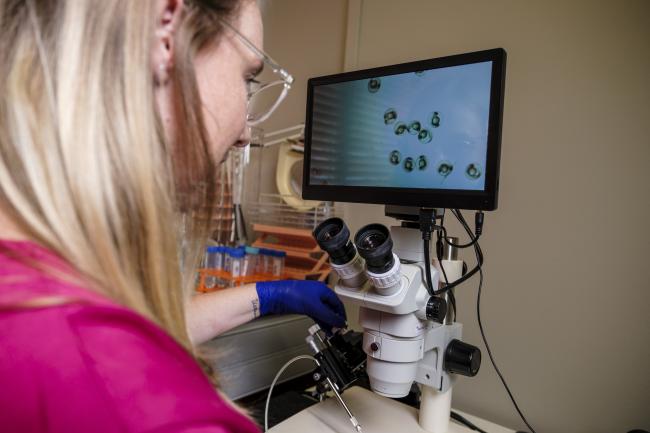


The USFM laboratories support cutting edge research
A world authority on tuberculosis
Tuberculosis remains one of Africa's most devastating diseases, and the Faculty of Medicine and Health Sciences is a global leader in tackling it. Our Division of Molecular Biology and Human Genetics hosts three SARChI chairs in TB research and the Stellenbosch node of the DST/NRF Centre of Excellence for Biomedical TB Research. The Desmond Tutu TB Centre further drives impact by advancing TB and HIV policy for vulnerable communities. Together, these efforts represent one of the continent's most concentrated investments in TB science.

TB-CHAMP video (presented at the Union World Conference on Lung Health 2023)
Our faculty hosts a large community of NRF-rated researchers and several SARChI chairs, offering over 100 Master’s and PhD programmes

Celebrating 70 Years of Impact: Internationalisation

The entrance of the Psychiatric Department
Mental health: understanding the mind, resilience, and risk
Our Department of Psychiatry leads research into psychiatric conditions affecting communities across the African continent — from schizophrenia and PTSD to anxiety disorders and substance use. The MRC Unit on Risk and Resilience in Mental Disorders, the SARChI Chair in PTSD, and the Mental Health Information Centre (active since 1995) together engage the full spectrum of mental health. At a time when Africa's mental health burden is only beginning to receive global recognition, our work contributes critical evidence, expertise and leadership to strengthen mental health care, policy and resilience across the continent.
Epidemic response: alerting the world
When COVID-19 emerged, researchers at Tygerberg Campus helped the world understand the virus. The FMHS Centre for Epidemic Response and Innovation (CERI), led by Prof Tulio de Oliveira, was named one of MIT Technology Review's 2022 breakthrough technologies for its role in identifying and tracking variants. CERI is also part of the South African mRNA Vaccine Consortium — selected by the WHO as the first COVID-19 mRNA Technology Transfer Hub, recognised by visits from President Cyril Ramaphosa and WHO Director-General Dr Tedros Adhanom Ghebreyesus in 2022.

Students conducting research
Science in service of the people who need it most
All our research is directed toward addressing the priority health concerns identified in South Africa's National Development Plan, the African Union's Agenda 2063, and the United Nations' Sustainable Development Goals. This alignment is not incidental — it reflects a deliberate conviction that research must serve people.
Seventy years on, we continue to produce science rooted in the continent's realities, connected to the world's best institutions, and finding its way into the clinics, wards, and communities where it is needed most.
Next: Student community
From discovery to setting our students up for success