
Inaugural Lecture: Professor Hafizah Yousuf Chenia
Contact information
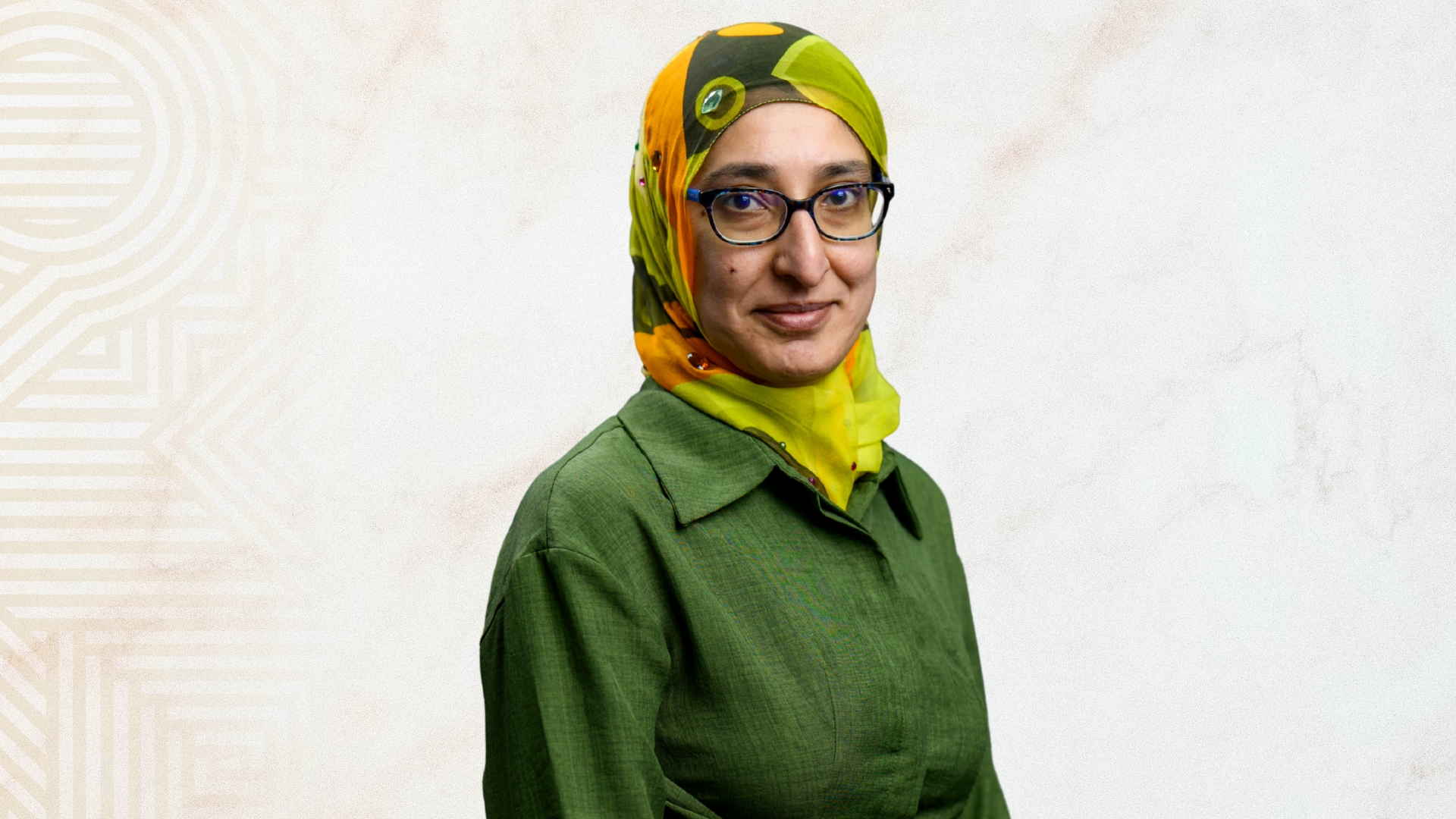
Join us for Prof Hafizah Yousuf Chenia's professorial inaugural lecture – Nature’s whisperers – looking beyond antibiotics to silence microbial conversations, hosted by the Faculty of Science.
Professor Hafizah Yousuf Chenia
Group leader: MARQ-BioNano
Department of Microbiology
Faculty of Science
Title: Nature’s whisperers – looking beyond antibiotics to silence microbial conversations
Event details
Date: Tuesday 23 June 2026
Time: 17:30 SAST
Venue: STIAS, Wallenberg Research Centre, 10 Marais Street, Stellenbosch
Format: Hybrid event
RSVP here for in-person attendance.
RSVP here for online attendance.
Nature’s whisperers – looking beyond antibiotics to silence microbial conversations
Microorganisms communicate, cooperate and adapt through complex social interactions that enable them to colonise surfaces, form biofilms, coordinate virulence, and survive hostile environments. In her inaugural lecture, Prof Hafizah Y. Chenia explores how understanding and disrupting these microbial ‘conversations’ may provide innovative alternatives for addressing one of the most urgent global challenges of our time: antimicrobial resistance.
Drawing on more than two decades of research, the lecture traces an evolving scientific journey from studying antimicrobial resistance mechanisms in clinical pathogens to exploring microbial ecology, marine microbiology, anti-virulence therapeutics and nanobiotechnology as interconnected approaches to sustainable infection control. Central to this work is the concept of silencing microbial communication through quorum-sensing inhibition and biofilm disruption, thereby reducing pathogenicity without relying exclusively on bacterial killing.
The lecture highlights the therapeutic potential of marine and plant-associated microorganisms, including coral-associated bacteria, sponge symbionts, seaweed-associated microbes and bacterial endophytes, as sources of anti-quorum-sensing, anti-biofilm, antimicrobial and anti-cancer compounds. It further explores biologically synthesised nanoparticles and nanoparticle-based antifouling technologies designed to prevent microbial colonisation in medical, aquaculture and marine systems in environmentally sustainable ways. The ecological dimensions of antimicrobial resistance are also examined, including how resistomes, plasmids, integrons and horizontal gene transfer drive the dissemination of resistance across interconnected human, environmental, agricultural and aquatic systems. From both a global and South African perspective, the lecture discusses how microbial ecology, biotechnology innovation and research-led education can contribute to priorities in health, water security, aquaculture, ocean economy initiatives, and scientific capacity development.
Interwoven throughout this scientific narrative, Prof Chenia reflects on her journey as a microbiologist, educator, mentor and research leader, illustrating how research, teaching, postgraduate supervision and educational innovation have shaped her approach to scholarship and scientific leadership. Ultimately, the lecture argues that listening to microbial ‘whispers’ may help shape a more sustainable and resistance-aware future for medicine, biotechnology and environmental stewardship.
Biography
Prof Hafizah Y. Chenia is a professor in the Department of Microbiology at Stellenbosch University (SU). She obtained her BScHons and MSc degrees cum laude and completed her PhD in Microbiology at the former University of Durban-Westville, where her early research focused on antimicrobial resistance mechanisms in Neisseria gonorrhoeae. She began her academic career at SU in 2002 before joining the University of KwaZulu-Natal in 2008, where she established a research programme in microbial ecology, anti-virulence therapeutics, antimicrobial resistance, and marine biotechnology. She rejoined SU in 2025.
Prof Chenia’s research explores innovative strategies to combat microbial pathogenicity by targeting bacterial communication, biofilm formation and virulence rather than bacterial survival alone. Her work integrates microbial ecology, natural product discovery, marine microbiology, nanobiotechnology and translational biotechnology to develop sustainable alternatives to conventional antibiotics. Her research group investigates quorum-sensing inhibition, anti-biofilm compounds, coral probiotics, biogenic nanoparticles, antimicrobial resistance ecology, and nature-inspired therapeutic approaches derived from marine and plant-associated microorganisms.
She has authored more than 70 peer-reviewed publications, supervised numerous honours, MSc and PhD students, and maintains active international research collaborations spanning Africa, Europe, Asia and South America. Prof Chenia holds a C2 rating from the National Research Foundation and has received recognition for both her research and educational leadership, including participation in the American Society for Microbiology’s Leadership Programme for International Educators. She is currently enrolled in SU’s Scholarship of Educational Leadership course. Beyond her research contributions, she is deeply committed to postgraduate mentorship, active learning, blended-learning innovation, and the responsible integration of generative AI into higher education teaching and learning.
Through her scholarship, teaching and mentorship, Prof Chenia continues to advance sustainable microbiology, resistance-aware therapeutics and biotechnology innovation in support of global health and environmental sustainability.