
Inaugural Lecture: Professor Anass Bayaga
Contact information
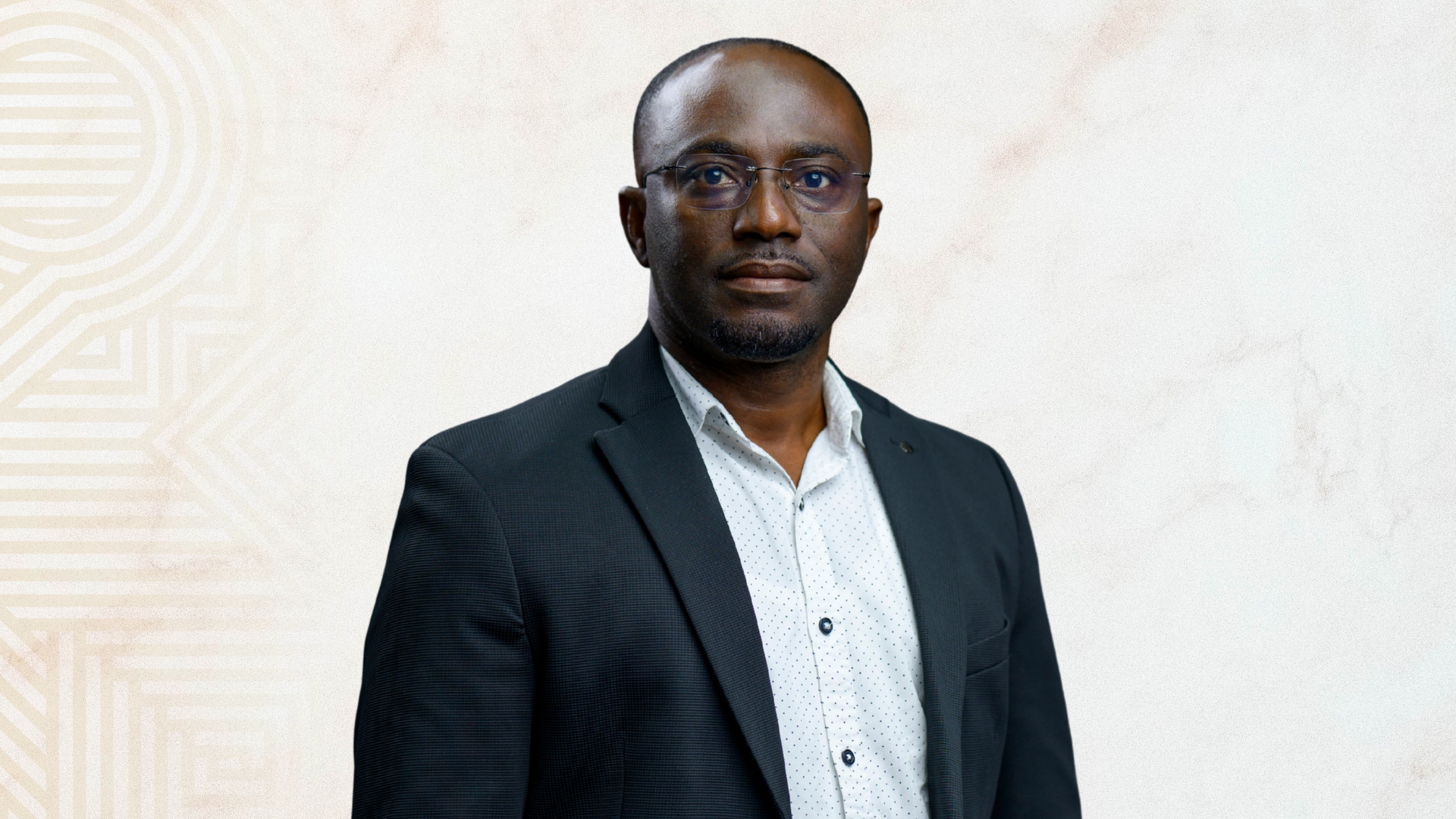
Join us for Prof Anass Bayaga's professorial inaugural lecture – From numbers to neural pathways: redesigning mathematical cognition in the age of human–AI convergence, hosted by the Faculty of Eduction.
Professor Anass Bayaga
Acting director: Digital Innovation and Learning Institute
Curriculum Study
Faculty of Education
Title: From numbers to neural pathways: redesigning mathematical cognition in the age of human–AI convergence
Event details
Date: Tuesday 18 August 2026
Time: 17:30 SAST
Venue: STIAS, Wallenberg Research Centre, 10 Marais Street, Stellenbosch
Format: Hybrid event
RSVP here for in-person attendance.
RSVP here for online attendance.
From numbers to neural pathways: redesigning mathematical cognition in the age of human–AI convergence
In his inaugural lecture, Prof Anass Bayaga examines how mathematics education must respond to the growing convergence of human intelligence, machine intelligence and emerging cognitive technologies. The lecture departs from a familiar educational problem: A learner may produce a correct answer, but without being able to explain the reasoning through which the answer was reached. This distinction between performance and understanding anchors Prof Bayaga’s central argument about the future of teaching and learning.
The lecture contends that technological advancement in higher education risks outpacing cognitive advancement. Artificial intelligence (AI), learning analytics, automation and immersive technologies have expanded what institutions can deliver, yet many systems still reproduce conventional models of learning. As a result, access, speed and efficiency may be improved, but without proper engagement with how learners reason, visualise and remember, how they correct misconceptions, and how they transfer knowledge to unfamiliar problems. The task, therefore, is not simply to digitise education, but to design learning environments that are cognitively meaningful, contextually responsive and ethically grounded.
Tracing the movement from automation to personalisation, immersion and cognitive interaction, the lecture explains why mathematics remains foundational to AI. Machine-learning systems develop through recursive cycles of attempt, feedback, adjustment and refinement. Human learning follows a comparable pattern, yet retains distinctive dimensions of meaning, agency, experience and context at the same time. Intelligent systems can make aspects of learning more visible and responsive, provided that they are used to deepen understanding rather than merely accelerate performance.
Prof Bayaga’s contribution sits at the intersection of neurocognitive science, AI and human–computer interaction. His research trajectory moves from mathematical cognition and learner misconceptions, through metacognition, dynamic visualisation and technology-enhanced learning, to AI-enabled and adaptive systems. The lecture identifies three risks that must be addressed: cognitive misalignment, generic AI that adapts to performance without recognising cognitive difference, and ethical or equity failures arising from biased data and decontextualised design.
The lecture concludes with a proposed future agenda that centres on cognitive augmentation, responsible human–AI collaboration, ethical neurotechnologies, and interdisciplinary research across the fields of education, computing and cognitive science. In African and other resource-constrained settings, this requires systems that recognise linguistic, cultural and educational diversity while protecting human agency. Ultimately, the future of mathematics education will not be defined by the amount of technology introduced, but by the extent to which intelligent systems help people think more deeply, question more critically and learn more meaningfully.
Biography
Anass Bayaga is a full professor in the Department of Curriculum Studies of the Faculty of Education at Stellenbosch University (SU) and serves as acting director of the Faculty’s Innovation and Learning Institute. With more than 18 years of higher education experience, his career spans teaching, research, postgraduate supervision, academic leadership, curriculum innovation and international collaboration.
His scholarship is situated at the intersection of mathematical cognition, neurocognitive STEM (science, technology, engineering and mathematics) enhancement, human–AI interaction and data-informed modelling. Prof Bayaga’s research examines how learners develop, represent and apply mathematical and scientific knowledge, with particular attention to spatial visualisation, numerical cognition, mental rotation, metacognition, problem-solving and technology-mediated learning. The thread that runs through all his work is the question: How does thinking develop, and how can it be strengthened through pedagogical, technological and computational interventions?
Prof Bayaga holds a PhD in Information Systems from the University of Cape Town as well as a PhD in Education from the University of Fort Hare. He also obtained the degrees MCom in Information Systems, MEd, and BEdHons in Mathematics. His interdisciplinary knowledge base was further strengthened by postgraduate studies in Data Science and Business Analytics through the University of Texas at Austin, and postgraduate training in Actuarial Science through the University of Leicester.
Before joining SU in 2025, he held senior academic and leadership positions at the University of the Western Cape, Nelson Mandela University, the University of Zululand, and the University of Fort Hare. Across these roles, he contributed to programme development, curriculum renewal, research capacity building, quality assurance and the strategic integration of emerging technologies into teaching and learning.
His research record includes more than 80 peer-reviewed outputs on education, information systems, artificial intelligence (AI), and STEM learning. His work has appeared in journals such as Education and Information Technologies, Computers in Human Behavior Reports, Computers & Education, Telematics and Informatics Reports, Discover Education, and Frontiers in Education. His recent studies use structural equation modelling, artificial neural networks, PLS-SEM (partial least squares structural equation modeling), epistemic network analysis and predictive analytics to investigate AI-enabled learning, STEM cognition, technology adoption and educational equity. His work is driven by a commitment to educational futures in which intelligent technologies augment human judgement and connect global advances in AI with the realities of African classrooms, institutions and communities.
Prof Bayaga is a former Fulbright research scholar who was hosted by George Washington University in the United States. Other international engagements include collaborations with Michigan State University and Appalachian State University (both in the United States), Umeå University (Sweden), Coventry University (United Kingdom), and the African Institute for Mathematical Sciences in Ghana. He is also a founding member and co-leader of the Digital Transformation and Emerging Technologies Thematic Group of the Consortium for European and African STEM Education (CoEASE).
His postgraduate supervision spans mathematical cognition, AI in education, mobile and adaptive learning, robotics, computational thinking, and cloud computing. He also contributes to the broader sector as editorial board member and guest editor of journals, and as peer reviewer and evaluator of research, including for projects linked to the Council on Higher Education and the Academy of Science of South Africa. Additionally, Prof Bayaga is a member of the Association for Computing Machinery (ACM), a global learned society, as well as of the Mixed Methods International Research Association (MMIRA).