

New SAMRC/SUN Preeclampsia Research Unit to tackle life-threatening pregnancy condition
- The SAMRC has established a new Extramural Research Unit at Stellenbosch University, led by Prof Catherine Cluver, to advance research on preeclampsia, a major cause of maternal and neonatal deaths worldwide.
- The unit builds on over a decade of internationally recognised research at SU, including clinical trials, the PROVE Biobank, and global collaborations, while promoting interdisciplinary innovation and skills development.
- Its core aim is to develop better prevention, diagnosis, and treatment strategies for preeclampsia to reduce its significant global burden, especially in low- and middle-income countries.
The South African Medical Research Council (SAMRC) has established a new Extramural Research Unit (EMU) focused on preeclampsia at Stellenbosch University’s (SU) Faculty of Medicine and Health Sciences, advancing efforts to address one of the leading causes of maternal and neonatal death globally.
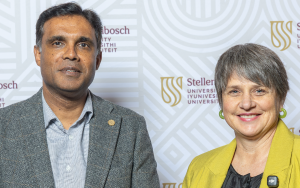
The SAMRC/SUN Preeclampsia Research Unit, led by Professor Catherine Cluver, is one of seven new EMUs launched by the SAMRC as part of a national effort to strengthen South Africa’s health research capacity and accelerate innovation.
Preeclampsia is a major contributor to maternal and neonatal morbidity and mortality worldwide, with an estimated 46 000 to 70 000 maternal deaths and approximately 500 000 foetal and newborn deaths each year. The burden is particularly severe in low- and middle-income countries, and currently, the only definitive treatment remains delivery.
“It is a tremendous honour to be selected as a South African Medical Research Council Extramural Research Unit,” says Cluver. “This award will support our ongoing efforts to discover new therapeutics and diagnostics for preeclampsia, promote evidence-based medicine, and continue developing the next generation of researchers.”
The Unit builds on more than a decade of research at SU, where the Preeclampsia Research Unit has become internationally recognised for its work. Its activities include the leading PROVE Biobank, cutting-edge clinical trials to test new treatments to prevent and manage preeclampsia, and contributions to global evidence through collaborations with organisations such as the World Health Organisation and the Cochrane Library.
The research programme brings together a wide range of expertise, including clinicians, scientists, imaging specialists, and public health experts, reflecting a strong commitment to interdisciplinary collaboration and innovation.
According to Professor Ntobeko Ntusi, President and CEO of the SAMRC, the establishment of Extramural Units is central to advancing the organisation’s mission.
“To ensure that the SAMRC has a meaningful impact on improving lives, we must foster cohesion in the South African health research ecosystem. Extramural Units enable integrated, interdisciplinary research that drives scientific excellence, new discoveries, and the development of the next generation of highly skilled researchers,” says Ntusi.
The SAMRC/SUN Preeclampsia Research Unit will focus on developing strategies to prevent and treat preeclampsia, improve understanding of the condition, and ultimately reduce its global burden.
“We hope that our research will contribute to reducing the devastating impact of preeclampsia, particularly in low- and middle-income settings,” says Cluver.
Related stories
Awards and milestones
Top lecturers take centre stage at TLA celebration
An accomplished audience recently gathered at the Stellenbosch Institute for Advanced Study (STIAS) for Stellenbosch University’s (SU) annual “Celebrating...

Media release
President Ramaphosa honours SU academics for global contributions to healing and science
Two of Stellenbosch University’s (SU) leading academics have been recognised with some of South Africa’s highest national honours. President Cyril Ramaphosa...

Arts, languages and social sciences
Dazzling gala commemorates Afrikaans dictionary’s centenary and ties with SU
A century of work to document the Afrikaans vocabulary in all its rich diversity was recently celebrated on the campus of Stellenbosch University (SU)...