

Stability without equity is fragile, Baroness Valerie Amos warns in 7th Social Justice Lecture
- Baroness Valerie Amos warned that apparent global stability masks deep fractures of poverty, conflict and eroding rights.
- Social justice cannot wait for perfect conditions; it must be the foundation for peace and prosperity.
- Stellenbosch University marked its entry into the ILO’s Global Coalition for Social Justice with a lecture on World Day of Social Justice.
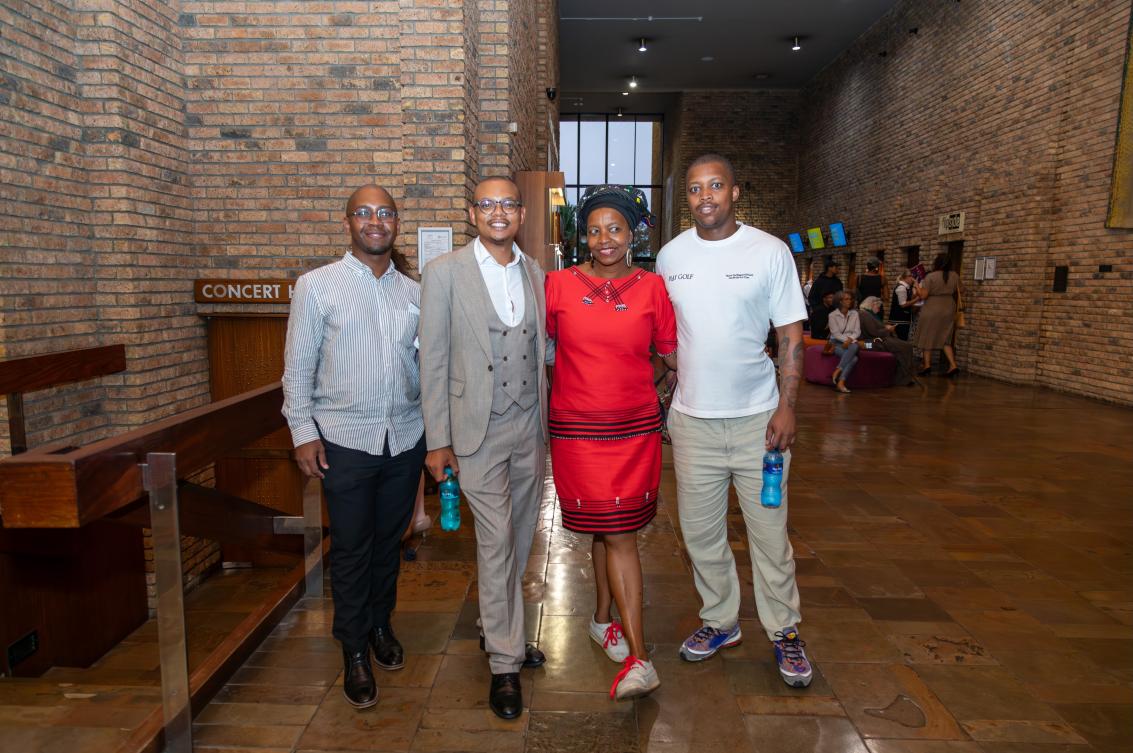
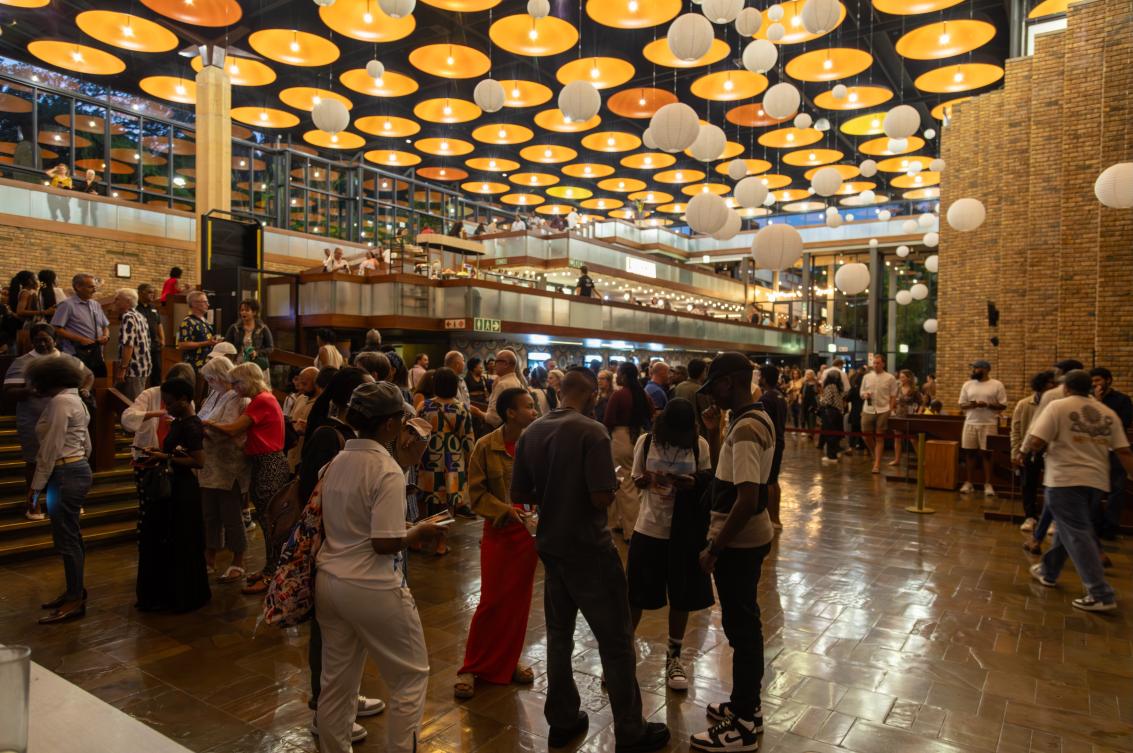
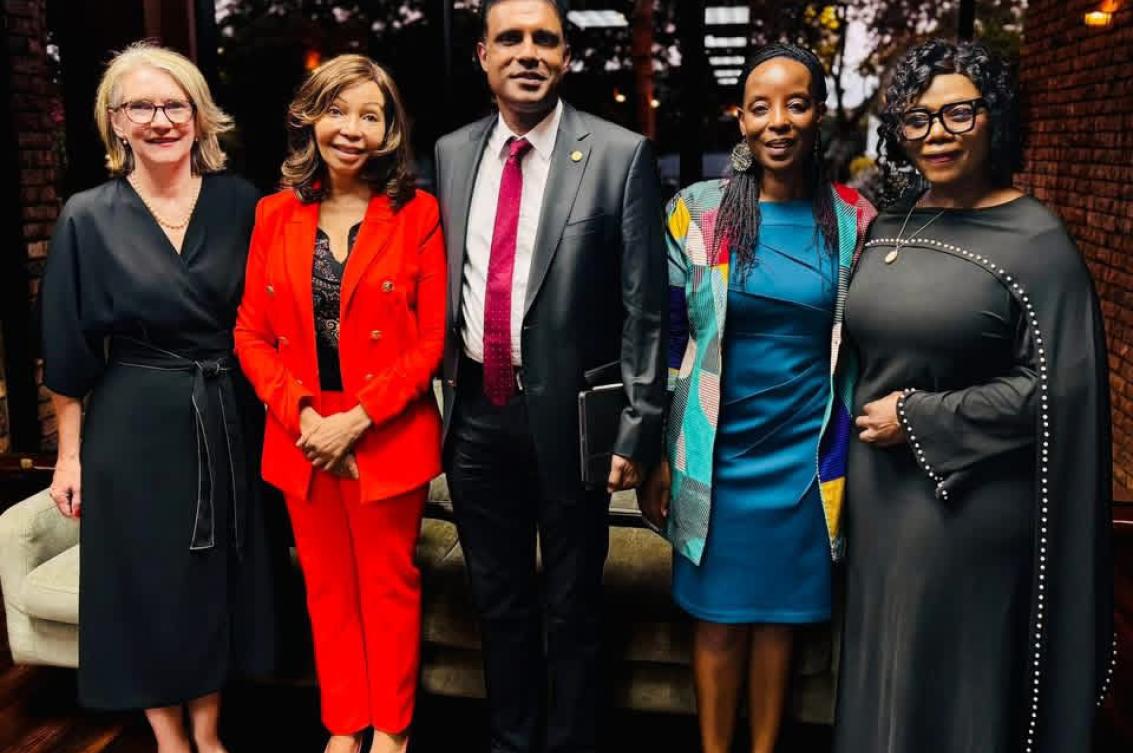
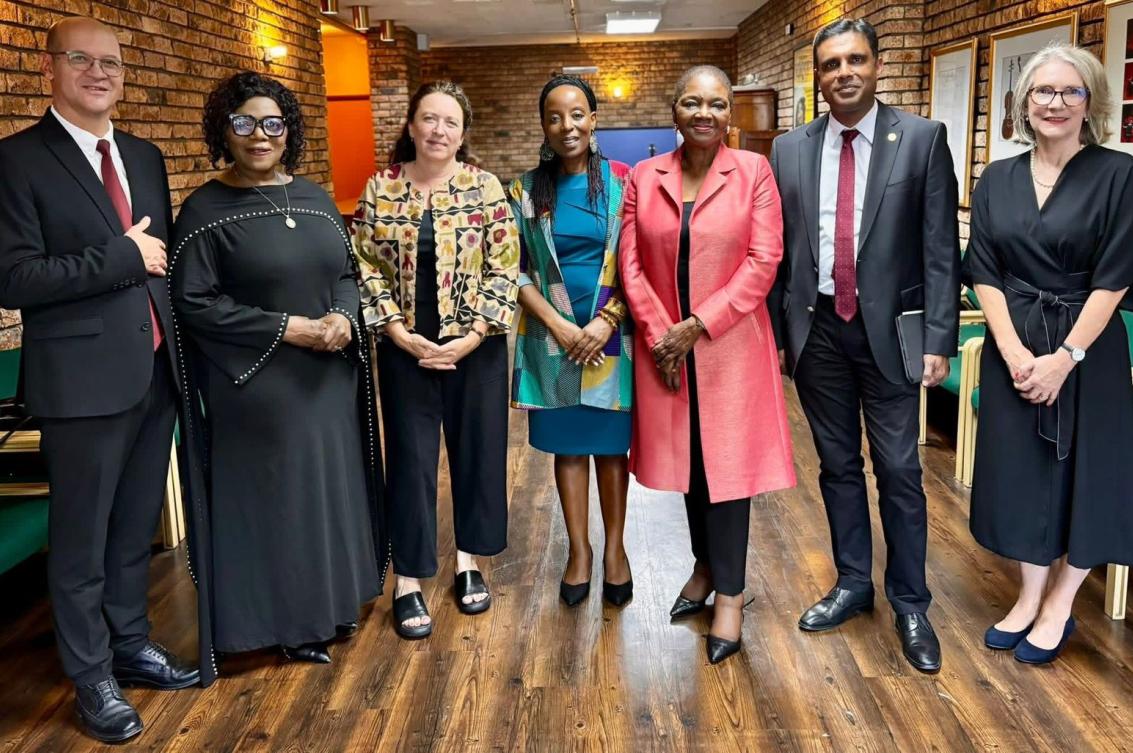
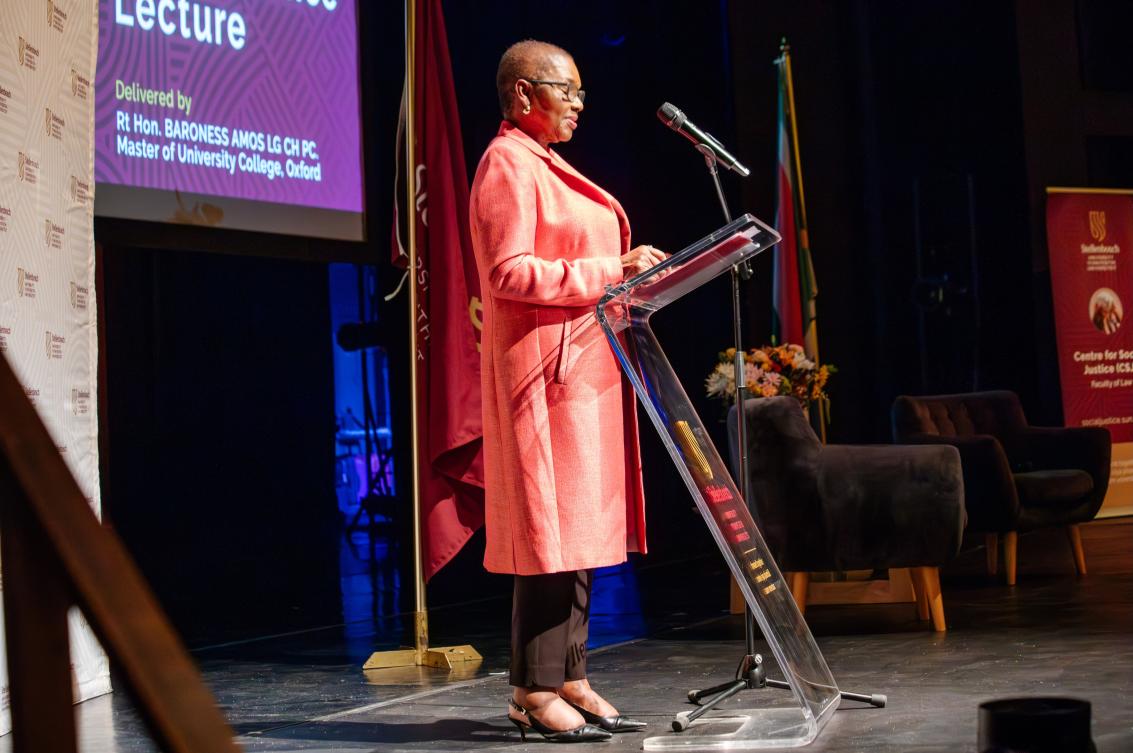
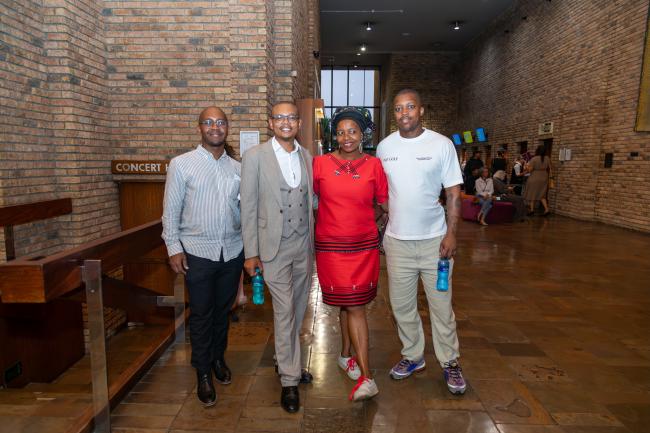
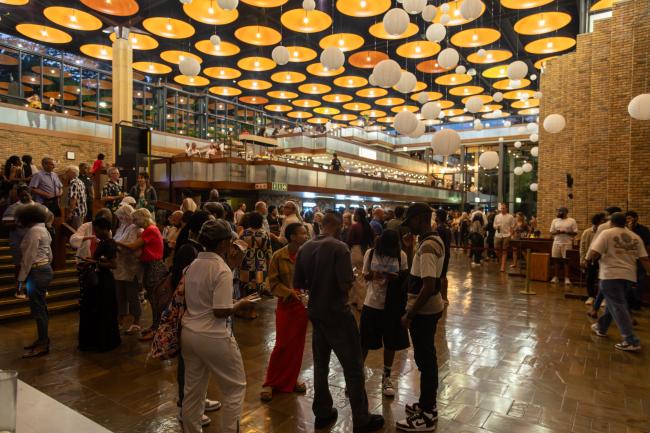
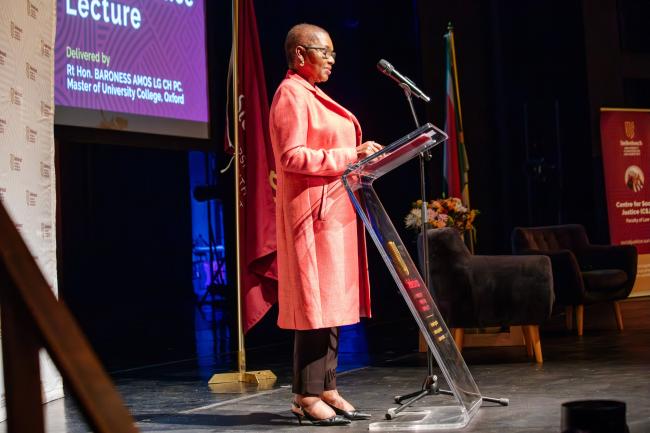
On World Day of Social Justice, the Baxter Theatre Centre in Rondebosch became a forum for a sober reckoning with the state of the world. Delivering Stellenbosch University’s (SU) Seventh Annual Social Justice Lecture, Baroness Valerie Amos challenged her audience to confront what she called the “illusions of stability” that conceal deep structural fragility. Hosted by the University’s Centre for Social Justice (CSJ) in partnership with the Baxter Theatre Centre and broadcast live on SAfm, the lecture marked the CSJ’s first public event since SU formally joined the International Labour Organisation’s Global Coalition for Social Justice.
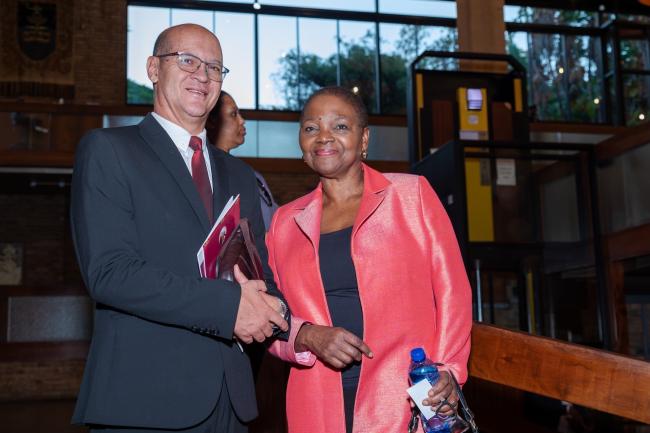
In his opening address, SU’s Rector and Vice-Chancellor, Prof Deresh Ramjugernath, framed the annual lecture as “a moment of collective pause” in a world unsettled by inequality, exclusion and declining trust in institutions. Apparent global stability, he warned, often masks deep structural fractures. True peace and prosperity cannot rest on uneven foundations. Universities, he argued, carry a responsibility to interrogate power, cultivate leaders of integrity and make belonging a structural commitment, ensuring that excellence and inclusion advance together.
A constitutional vision under strain
Baroness Amos, a British politician and academic who has also served as the United Nations (UN) Under-Secretary-General for Humanitarian Affairs, began her lecture by returning to South Africa’s constitutional promise. Having worked in the country during the early years of democracy, she described witnessing “the courage it took to embrace reconciliation whilst refusing to forget a painful history”. South Africa, she said, remains one of the most explicit constitutional embodiments of social justice in the world, rooted in substantive equality, socio-economic rights and what has been termed transformative constitutionalism.
“Social justice here is inseparable from an understanding of historical injustice,” she observed. Unlike contexts where the impact of slavery or colonialism is still contested, South Africa’s Constitution acknowledges that “you don’t start from a level playing field”. Courts have affirmed that justice requires the state to remedy past disadvantage. It is, she said, a work in progress.
Yet even as social justice has entered global language, its lived reality remains uneven. Human rights and social justice are intertwined but not identical. Human rights set a baseline of dignity. “Social justice goes further,” she said. “It demands not just that we declare rights on paper, but that we create the conditions for those rights to be realised equitably.”
Poverty, conflict and hollow norms
From this foundation, the Baroness turned to what she described as three major obstacles to embedding social justice today: poverty, conflict and the absence of a rights-based approach.
Global poverty persists despite unprecedented wealth. “We should be ashamed that over 700 million people in our world live in extreme poverty,” she said. Statistics may show growth, yet they fail to capture the daily realities of exclusion. Citing Nelson Mandela’s warning that “as long as poverty, injustice and gross inequality persist in our world, none of us can truly rest”, she added pointedly: “Too many leaders are not restless enough.”
In South Africa, where the Gini coefficient remains among the highest in the world, inequality is not abstract. It is lived in the absence of energy, jobs, food security, health care and education. Poverty robs people of agency and fuels polarisation. When growth fails to translate into dignity, faith in institutions erodes.
Conflict, she argued, shatters any pretence of stability. With more than 120 million people forcibly displaced worldwide, wars in Ukraine, Gaza, Sudan and elsewhere are not distant crises but humanitarian catastrophes that entrench poverty and erode rights. She spoke candidly of her time as UN Under-Secretary-General for Humanitarian Affairs, recalling visits to Syria where aid was weaponised and cities unravelled with alarming speed.
International norms such as the Responsibility to Protect remain vital, she said, but without political will they become hollow. The paralysis of the UN Security Council, the selective enforcement of rules and the erosion of trust in multilateralism have left smaller and more vulnerable countries exposed. “What we are witnessing is not just the collapse of norms, but the collapse of collective willingness to uphold them.”
The third obstacle lies in responses that treat people as passive recipients rather than agents of change. A rights-based approach insists on participation, accountability and non-discrimination. It requires that women be central to peace processes and that local communities shape solutions affecting their lives.
Five imperatives for an unsettled age
Amos distilled her reflections into five imperatives. Firstly, face the truth of history. Colonialism, slavery, apartheid and genocide are not closed chapters but living legacies. “Acknowledgement must precede healing,” she said, invoking the lessons of South Africa’s Truth and Reconciliation Commission.
Secondly, centre marginalised voices. True solidarity does not erase difference; it builds unity through inclusion.
Thirdly, build coalitions across difference. Polarisation thrives in silos. Social media amplifies division. Justice movements succeed when they forge broad alliances.
Fourthly, invest in the long term. “Delivering social justice is not a sprint. It is a marathon.” Political cycles may be short, but social transformation demands sustained commitment.
Finally, maintain hope without naivety. Hope, she said, is not passive optimism but a practice cultivated daily. “Let us name the illusions of stability for what they are without succumbing to despair,” she urged, calling on the audience to pursue justice now, “in the messy, complicated, complex, sometimes chaotic, urgent present”.
A searching dialogue
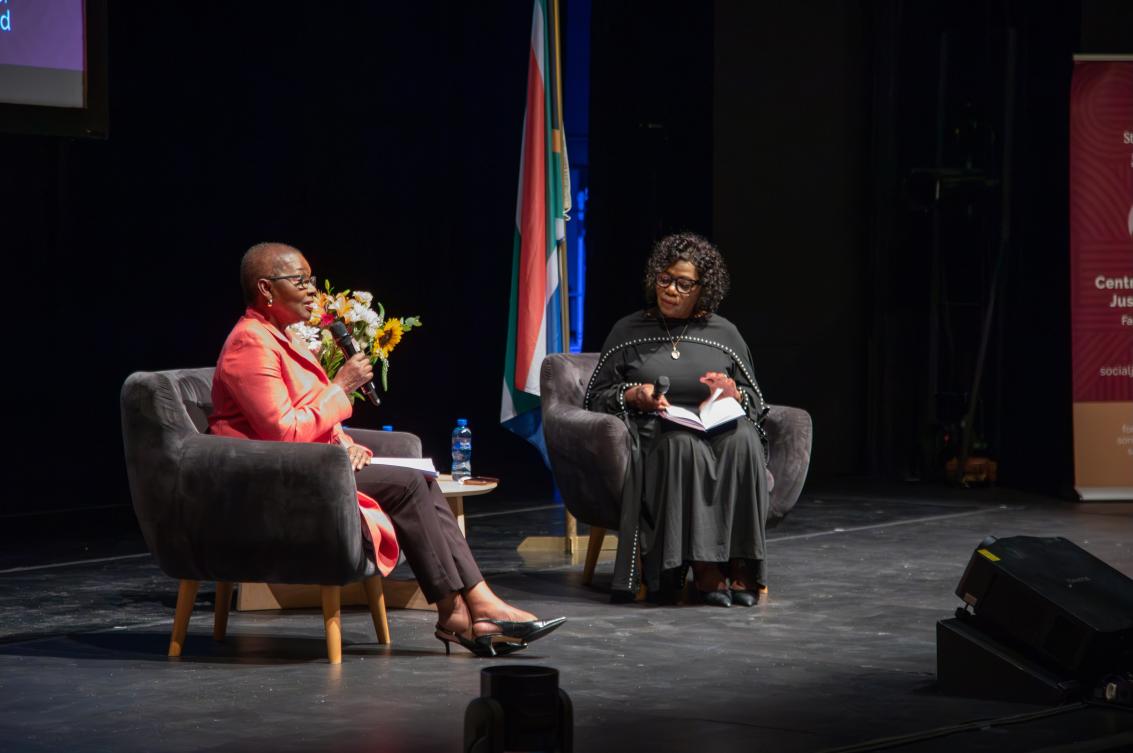
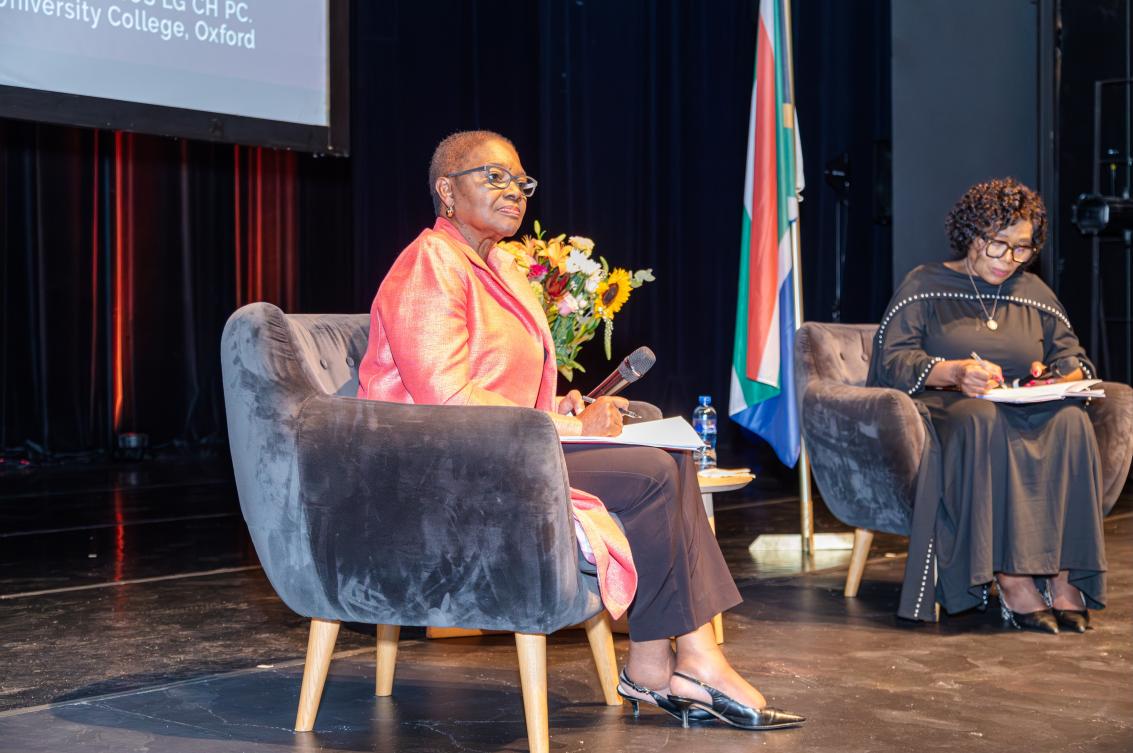
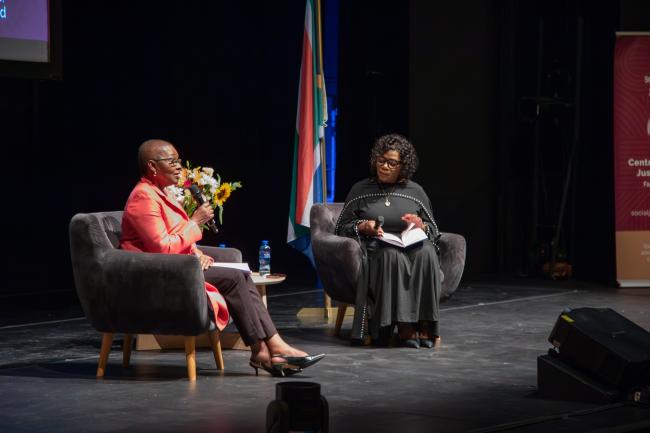
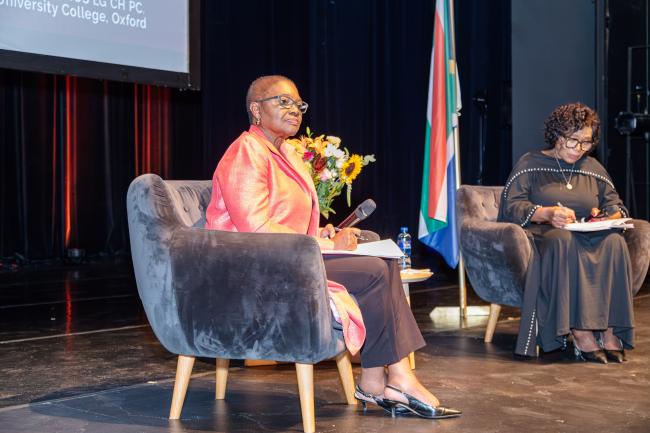
In an enlightening question-and-answer session facilitated by Prof Thuli Madonsela, Director of the CSJ, students and members of the public pressed the speakers on inequality, gender-based violence and generational disillusionment.
Reflecting on hostile reactions to discussions of kindness and justice, Madonsela asked why some reject the very idea of social justice. Amos suggested that those who feel abandoned by institutions struggle to see how justice has worked in their favour. Without confronting history honestly, remedial measures are too easily framed as punishment rather than repair.
Amos emphasised that redress is not about individual blame but collective responsibility for systems that produced enduring advantage and deprivation. Poverty, she said, “crosses identity boundaries”, and social justice must put “all people front and centre”.
Both Madonsela and Amos pointed out that law alone is insufficient. Constitutional guarantees must be accompanied by long-term statecraft, civic pressure and a national dialogue on culture and values, particularly around violence against women and children.
In her closing remarks Prof Juanita Pienaar, acting Dean of the Faculty of Law, noted that Ramjugernath highlighted in his opening address that social justice is not a monologue – it is an ongoing conversation. “In this conversation the voice of a global leader, a champion for social justice as part of the team, is critical. It is in this light that the contributions of Baroness Valerie Amos are direction-giving: The rule of law cannot be abandoned. Where there are gaps and shortcomings, we need to acknowledge and address them. All of us have a role to play – and we need to do so now,” Pienaar concluded.
As the 7th Social Justice Lecture ended, the significance of the moment was clear. With SU now a partner in the Global Coalition for Social Justice, the event marked not only an intellectual engagement but a renewed institutional commitment. In a world unsettled by polarisation and instability, the work of social justice, Amos made plain, cannot be deferred.
Related stories
Media release
New internship programme at SU clinics opens doors for aspiring medical receptionists
For many young South Africans, earning a qualification is only the beginning of a difficult journey. The next hurdle is finding the work experience employers...
Media release
Stellenbosch University researchers and international partners develop global ‘Declaration on Multilingual Healthcare’
Patients who do not speak the same language as their healthcare providers are disadvantaged worldwide when it comes to accessing healthcare services and...

Events
Prof Mesias Alfeus’s vision brings global finance congress to Africa
The announcement that Stellenbosch University (SU) will host the 14th World Congress of the Bachelier Finance Society (BFS) in 2028 – the first time the...