
New cohort of Future Professors receive a warm welcome at introductory conference
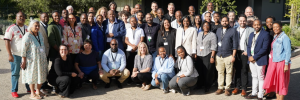
- Thirty-four mid-career academics from all 26 public universities gathered in Stellenbosch for the Introductory Conference of the DHET Future Professors Programme, Phase 1 for Cohort 4.
- Distinguished professor Jonathan Jansen challenged participants to claim the identity of a scholar and reflect on the deeper purpose of universities.
- The programme, funded by the Department of Higher Education and Training and hosted by Stellenbosch University, aims to prepare the next generation of academic leaders for South Africa’s professoriate.
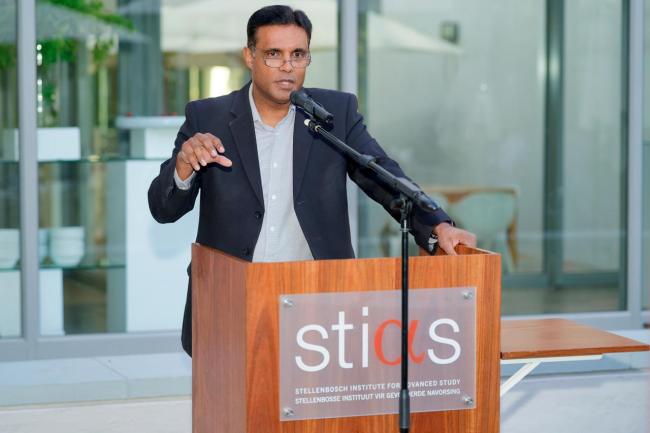
At a time when universities worldwide are grappling with rapid technological change, evolving knowledge economies and shifting public expectations, a group of early mid-career academics gathered at the Stellenbosch Institute for Advanced Study (STIAS) to reflect on a deceptively simple question: What does it mean to become a scholar?
The occasion was the Introductory Conference of the Department of Higher Education and Training’s (DHET) Future Professors Programme (FPP), Phase 1, for Cohort 4. Hosted at STIAS and facilitated by Stellenbosch University (SU), the two-day gathering brought together 34 top fellows from across South Africa’s 26 public universities, alongside senior scholars and sector leaders. Five SU academics are part of Cohort 4.
The FPP is one of six national collaborative initiatives supported by the DHET. Phase 1, administered by SU, focuses on preparing top mid-career academics for advancement to senior academic ranks, responding to persistent inequalities in representation at associate and full professor levels.
Over two years, fellows participate in a structured programme that combines leadership seminars, professional coaching, writing retreats, mentorship and international research engagement.
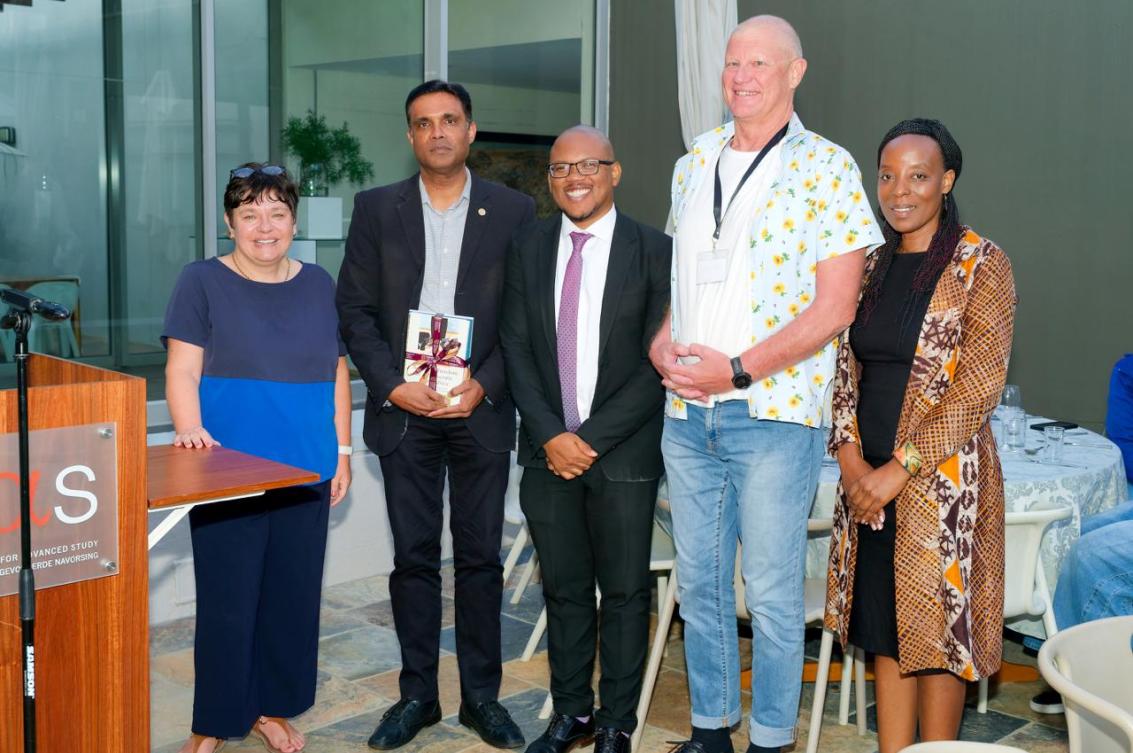
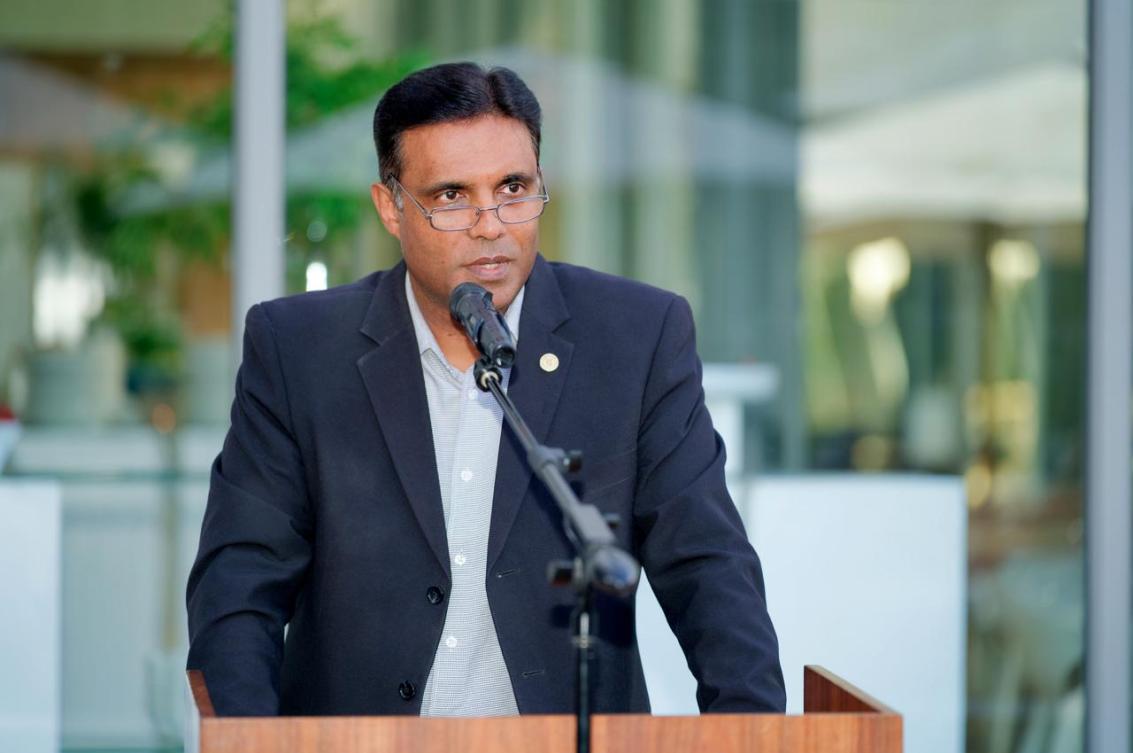
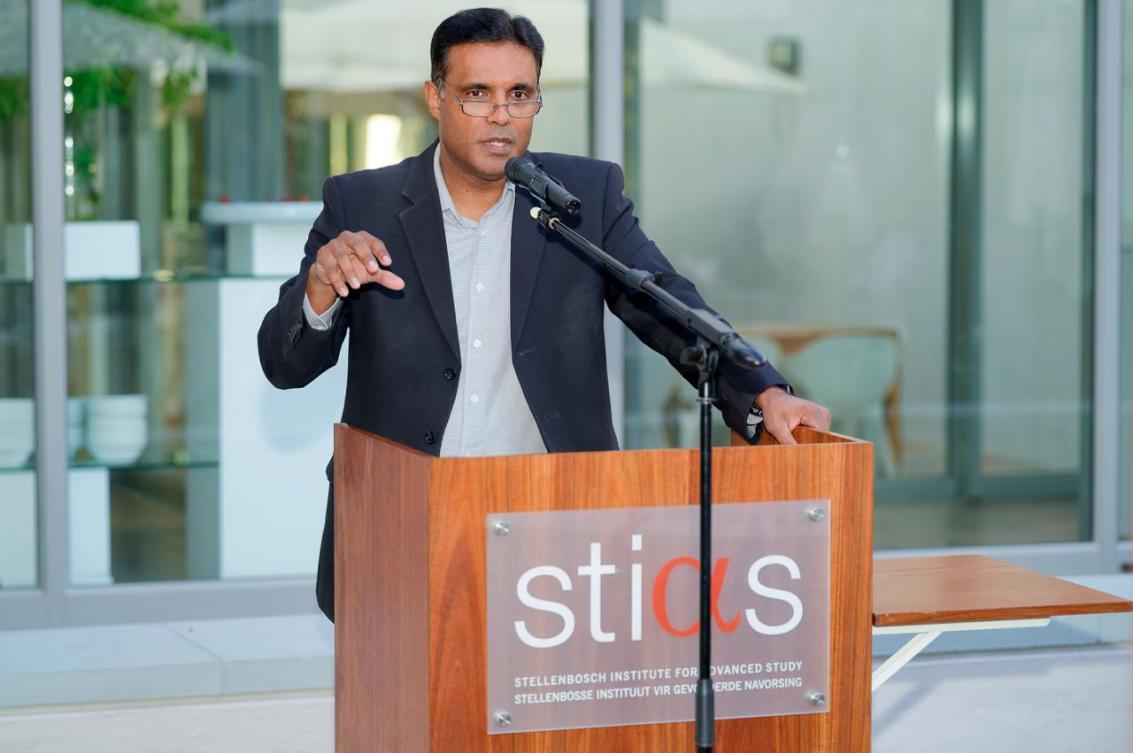
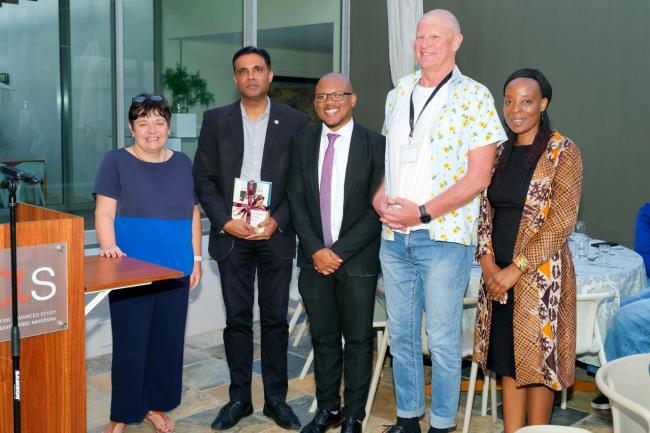
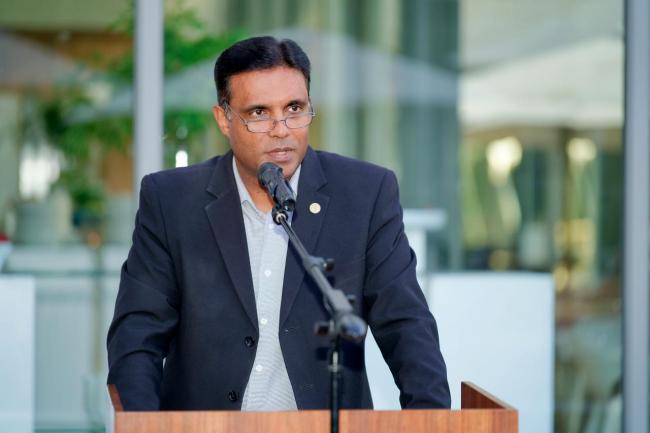
Welcoming the new FPP cohort at a dinner, SU Rector and Vice-Chancellor Prof Deresh Ramjugernath described the initiative as a strategic investment in the future of South African universities.
“To be selected from 118 nominations across all 26 public universities in South Africa is a significant achievement,” he told the fellows. “Your selection reflects both your scholarly excellence and the confidence that the sector places in your leadership potential.”
Ramjugernath said mid-career academics occupy a pivotal position in shaping the academy. “You shape research culture. You influence teaching quality. You mentor emerging scholars. And increasingly, you help define institutional direction.”
He added that the professoriate of the future would need to be interdisciplinary, digitally agile, socially responsive and globally connected. “This programme creates the space for you not only to advance your scholarship, but to help redefine what it means to be a professor in the decades ahead,” Ramjugernath concluded.
Becoming a scholar, not simply an academic
The intellectual centrepiece of the conference was a keynote address by Prof Jonathan Jansen, distinguished professor in the Faculty of Education at SU, titled “On Becoming a Scholar”.
Speaking to the fellows at STIAS, Jansen returned repeatedly to one crucial distinction: the difference between being an academic and becoming a scholar. Drawing on decades of mentoring younger academics, he argued that titles and ranks are secondary to the deeper intellectual project that defines scholarly work.
“We’re not here to become lecturers or professors or deans,” he said, recalling advice he once gave a group of early-career academics. “We’re here to develop as scholars.”
For Jansen, the future of universities ultimately depends on the calibre of their professors. He urged fellows to develop a clear scholarly identity early in their careers. Scholars, he suggested, should be known for a distinct intellectual contribution rather than a diffuse range of unrelated publications.
“You want to be known for one thing,” he told the audience, encouraging them to focus deeply on a specific field of inquiry.
Equally important, he said, is the cultivation of a scholarly voice – one that is measured, self-critical and grounded in deep engagement with existing literature. “You must be immersed in the literature in your field,” Jansen said. Scholars should know the leading journals, follow new research closely and constantly test whether their work remains at the cutting edge.
He also warned against academic isolation, arguing that exposure to world-class peers is essential to intellectual growth.
“You are only as good as the company you keep,” he said, urging fellows to build strong networks and seek opportunities to work alongside leading scholars locally and internationally.
Returning to first principles
During a high-level panel discussion, the conference shifted from the development of individual scholars to a broader conversation about the purpose and future of universities.
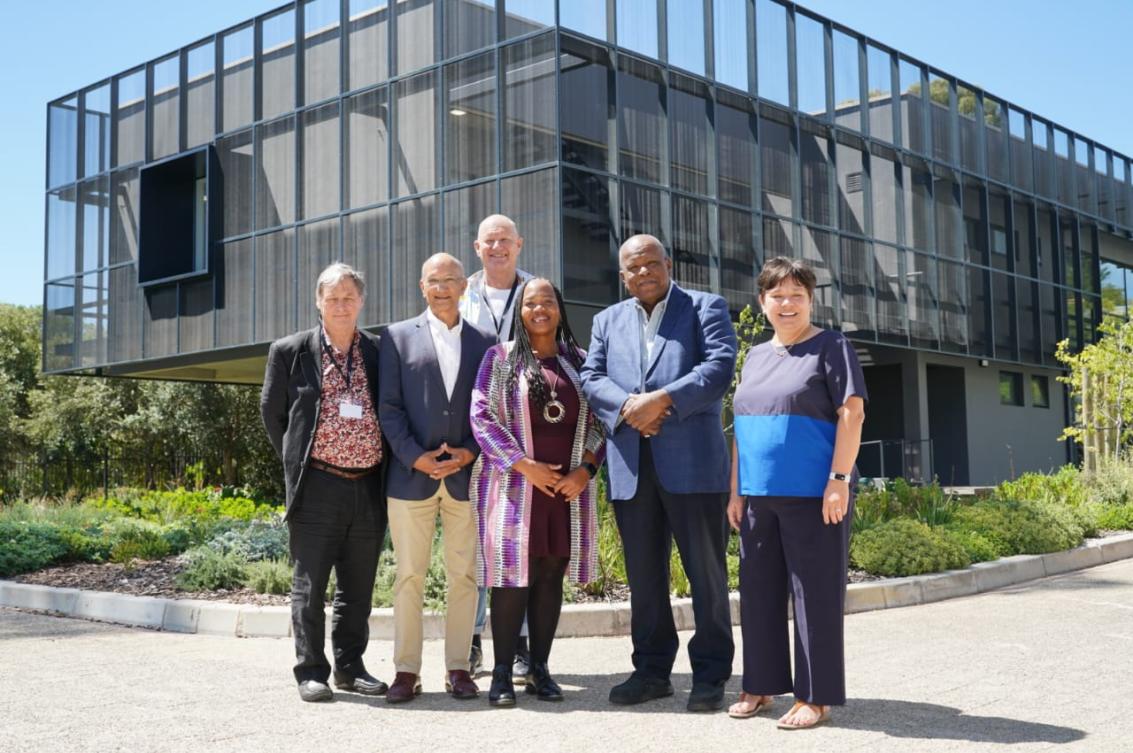
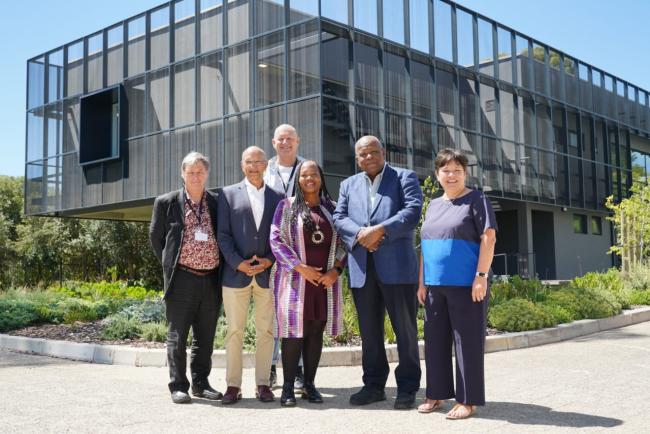
Chaired by Jansen, the conversation brought together Dr Thandi Mgwebi, Vice-Chancellor of Walter Sisulu University; Profs John Higgins and Daya Reddy from the University of Cape Town; and Prof Neil Roos from the University of Fort Hare.
Titled “Back to First Principles: The Purpose and Future of the University”, the experts were asked a foundational question: What makes a university different from other institutions in public life?
Reddy responded by emphasising the concept of scholarship, describing it as the preserving, transmitting, generating and questioning of knowledge. At the centre of this work, he argued, lies academic freedom – accompanied by responsibility to act ethically, maintain recognised standards and serve the public good.
Higgins approached the question from a different angle, arguing that universities occupy a unique position in society because they determine what counts as knowledge. By granting degrees, he said, universities sit at the shifting boundary between knowledge and opinion. Academic freedom, in this sense, is both essential and fragile. It is an ideal that must continually be defended against pressures ranging from political ideologies to the commercialisation of research.
Mgwebi challenged the increasingly common view of universities as instruments of economic policy. Universities, she argued, should be understood instead as “civilisation institutions”. They cultivate the intellectual and moral capacities that allow societies to reason, debate and imagine alternative futures. These long-term contributions, Mgwebi warned, can be undermined when institutions are pushed to deliver short-term outputs or measurable economic returns.
Roos warned of the dangers of a metric-driven research culture. In some contexts, he argued, the pressure to publish has produced what he described as a “fake intellectual economy”, in which work is generated primarily to satisfy performance indicators rather than to ask meaningful questions. Universities should ask “meaningful, deep, substantial questions” about the world and remain open to global scholarly exchange, Roos argued.
“No university has thrived on academic or national autarky,” he said, cautioning that attempts to close institutions off – whether through immigration restrictions, hostility towards foreign scholars or narrow ethnic logics – risk turning universities into what he called “monoversities”.
Reddy echoed this concern with a remark that has become widely cited in discussions about the global nature of scholarship: “A university is not a country.”
Universities, he said, form part of an international community of scholars, students and ideas. Nationalist pressures on staffing and admissions represent “one of the biggest threats to progress in our university system”. Universities are not tribes defined by loyalty or conformity, he added, but spaces where scepticism, argument and the testing of ideas must prevail.
Running through the discussion was a shared concern about the weakening of academic voice in university governance. As future heads of department, deans and vice-chancellors, Jansen told the fellows, the responsibility for shaping institutions will soon rest with them.
“Here’s my question to you,” he said in closing. “Will you do things differently?”
For the scholars gathered at STIAS, the two-day conference marked the beginning of a demanding journey. Over the next two years, the programme will provide mentorship, leadership training and international engagement opportunities.
Yet the central message of the conference was less about career advancement than about intellectual responsibility. The future of South Africa’s universities, speakers suggested repeatedly, will depend not simply on the number of professors they produce, but on the quality of the scholars they become.
SU participants in the 2026/’27 FPP:
- Prof Jamie Cripwell, Associate professor in applied thermodynamics and separations technology in the Department of Chemical Engineering.
- Dr Suzanne Grenfell, Senior lecturer in the Department of Geography and Environmental Studies.
- Prof Lenine Liebenberg, Associate professor in the Division of Medical Virology and chief researcher in the Immunology Research Programme in the Centre for Epidemic Response and Innovation (CERI).
- Prof Gerald Maarman, Associate professor in the Division of Medical Physiology at the Faculty of Medicine and Health Sciences.
- Prof Reuben Pfukwa, Associate professor in the Department of Chemistry and Polymer Science.
Related stories

Institutional news
Celebrating a partnership that invests in Africa's future
As the Gerda Henkel Foundation celebrates its 50th anniversary this year, Stellenbosch University (SU) reflects on the impact of its own decade-long partnership...
Institutional news
Connecting the dots: Prof Liezl van Dyk’s vision as new DVC: Academic
Stellenbosch University’s (SU) new Deputy Vice-Chancellor: Academic, Prof Liezl van Dyk, sees patterns everywhere: in 14-year chapters, prime numbers and the...

Media release
Cape Winelands Airport and SU forge strategic partnership for smart and sustainable development
Cape Winelands Airport and Stellenbosch University (SU) have entered into a cooperation agreement aimed at advancing innovation under the shared themes of...