
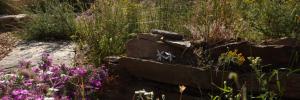
SU Botanical Garden backs improved global plant data ecosystem
- Stellenbosch University Botanical Garden (SUBG) is contributing to a global effort to improve the way researchers and conservationists document and share living plant collections, joining international researchers from over 50 botanic gardens worldwide in a call for a reliable, more coordinated ecosystem to support plant conservation and scientific research.
Stellenbosch University Botanical Garden (SUBG) is contributing to a global effort to improve the way researchers and conservationists document and share living plant collections, joining international researchers from over 50 botanic gardens worldwide in a call for a reliable, more coordinated ecosystem to support plant conservation and scientific research.
A recently published perspective piece, co-authored by the late Dr. Donovan Kirkwood, former Curator of the SUBG, and acting Curator Annerie Senekal, alongside other researchers, critiques existing data-sharing practices and proposes the development of a global metacollection. This refers to a collaborative approach to conservation where living plant specimens of a specific group, species, or genus are maintained across multiple, separate institutions.
According to amedia release from the University of Cambridgeat least 105 634 plant species – approximately one-third of all plant species in the world – are grown in the world’s 3 500 botanic gardens. Ex situ collections from known wild localities are crucial for conservation, species and ecosystem restoration, and nearly all scientific research. Nearly 40 percent of the world’s plant diversity is at an elevated risk of extinction, and these living collections form a critical safety net to prevent it.
While Botanic Gardens Conservation International (BGCI) has already laid the foundation for a better data system, the authors contend that coordinated and sustained investment is now needed to create a resilient and trusted global resource.
The perspective piece follows a momentous paper published one year ago in Nature, Ecology and Evolution, which presented findings from a global survey of living plant collections spanning over a century. The study recognised SUBG for being one of only two botanical gardens that have actively increased their wild and conservation-grade plant collections in recent years – an exceptional achievement given the garden’s compact footprint of just 1.7 hectares.
In a separate article, Kirkwood previously emphasised the scale of the challenge facing ex situ conservation efforts. He noted that while at least 750 000 threatened plants globally require ex situ conservation support, South Africa’s ex-situ conservation target equates to more than 3 000 plant species. The progress of South African ex situ conservation across all institutions, however, is limited to fewer than 500 threatened species. This highlights the capacity constraints and serves as a reminder that the species that require urgent support are even more poorly represented, and institutional capacity is already under pressure.
Kirkwood was deeply committed to biodiversity conservation throughout his career. His most noted success came with Marasmodes Undulata, a shrub that was once down to three surviving plants in the wild. Through careful propagation from a small seed bank, hundreds of plants were eventually established and reintroduced into natural habitats.
The urgency of such efforts is particularly pronounced in the Cape Flora Region, one of the world’s most threatened biodiversity hotspots. Of the 10 744 plant species found in the Western Cape alone, nearly 40 percent are classified within Red List categories of conservation concern. Many species, including those listed as Vulnerable or Critically Rare, may exist as only a few hundred individuals, leaving them highly susceptible to further loss.
This context intensifies the urgency of the proposed meta-collection, which may be critical for the conservation of plants on the brink of extinction.
Following Kirkwood’s passing, SUBG has continued its conservation and research activities under the guidance of Senekal. They continue to be actively engaged with global organisations such as the BGCI, contributing to international knowledge exchange while advancing their own conservation programmes as capacity allows.
Apart from being the most active botanical garden to pursue conservation work, SUBG is determined to uphold Kirkwood’s legacy. Just this past year, the SUBG, under the guidance of Kirkwood, helped to establish a fund for a dedicated Botanical Art collection at SU – a first in South Africa. Not to mention Kirkwood’s impressive work establishing a corporate satellite garden for ex situ plant collections – work that continues in his absence.
“Living plant collections hold immense value for conservation and research, but their impact depends on how effectively knowledge is shared. Strengthening global data infrastructure allows botanical gardens, regardless of size, to contribute meaningfully to safeguarding plant diversity for future generations,” said Senekal, emphasising the importance of improved data systems.
In addition to its scientific work, SUBG is advancing innovative initiatives, including the establishment of a dedicated Botanical Art collection at Stellenbosch University, the first of its kind in South Africa, and the development of a corporate satellite garden for ex situ plant conservation – both of which remain active projects.
Related stories
Media release
From intern to curator: Annerie Senekal becomes first female to lead Stellenbosch University Botanical Garden
For many visitors, the garden is a place of calm, offering a welcome pause from the bustle of the busy town life. But the Botanical Garden is far more than a...

Impact
Biotechnology driving a greener future
Professor Marinda Viljoen-Bloom, a microbiologist at Stellenbosch University (SU), has spent over thirty years transforming micro-organisms into impactful...

Innovation and entrepreneurship
Innovus TTO exploring the legal framework powering the sports industry
Sport is not just about the game; it intersect with fashion, entertainment, media, health, gaming and consumer goods Intellectual Property (IP), such as patents...