
Conservation Parasitology in Action 2023-2025
- Broad Biome Survey: Research across the Fynbos and Karoo biomes (2023–2025) explored parasite diversity within three endemic South African rodent species.
- Scientific Discovery: Laboratory analysis and microscopy led to the identification of various mites, fleas, and lice, including the description of several new chigger species.
- Award-Winning Research: The postgraduate cohort earned multiple top honors for their presentations at both departmental research days and international parasitology congresses.
From 2023 to 2025, the Parasitology and Evolutionary Genomics Group at Stellenbosch University conducted a comprehensive survey of parasite biodiversity across the Fynbos, Succulent Karoo, and Nama Karoo biomes. Led by Professors Sonja and Conrad Matthee, the team sampled endemic rodents—O. unisulcatus, R. pumilio, and M. namaquensis—to explore species richness in the Western Cape.
Through international collaboration and advanced microscopy, the project identified diverse taxa, including newly discovered chigger species, mites, fleas, and nematodes. This research has already produced two major publications and earned the postgraduate cohort numerous awards at the 5th International Congress on Parasites of Wildlife, marking a significant milestone in South African parasitology.
Photo story: Parasite biodiversity in the Fynbos, Succulent Karoo and Nama Karoo biomes in the Western Cape, South Africa
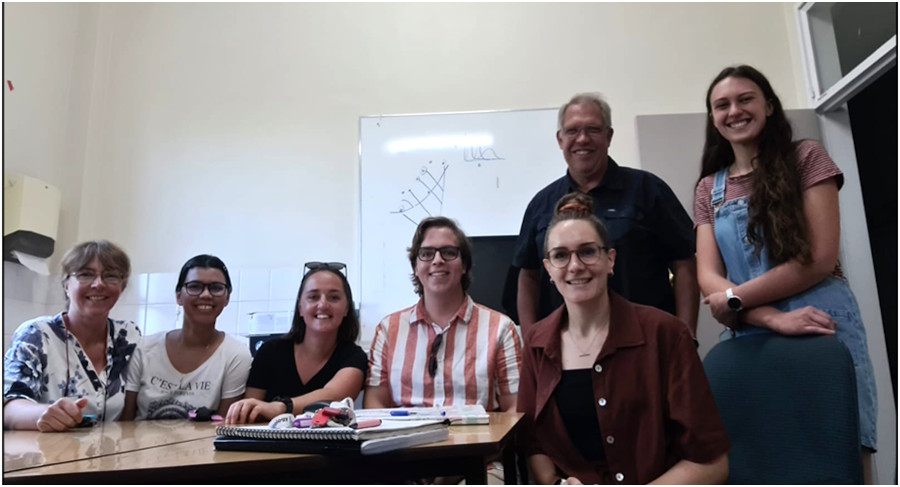
Image 1: The 2024 cohort of postgraduate students in a combined Parasitology and Evolutionary Genomics Group research meeting. Back row: Prof. Conrad Matthee and Jemma Mitchell. Front row (left to right): Prof. Sonja Matthee, Alyssa Little, Inge Raubenheimer, Ernst Schlemmer, Jessica Kipling (absent: Lola Singo, Charlotte Spanjaard).
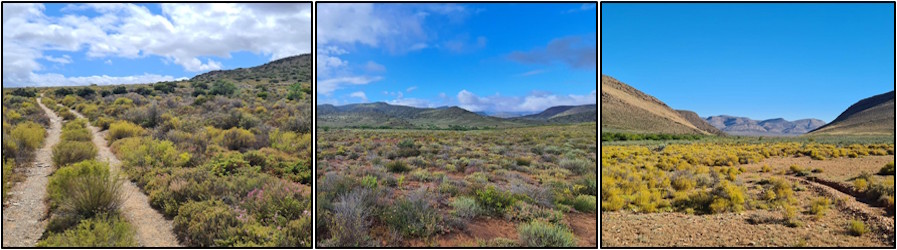
Images 2-4: The three biomes (Fynbos, Succulent Karoo and Nama Karoo) in the Western Cape where rodents were sampled from during the biome project. This project aimed to explore parasite abundance and species richness from rodents across three biomes in the Western Cape. Sampling covered twelve localities between 2023 and 2025 within the Fynbos, Succulent Karoo, and Nama Karoo Biomes.
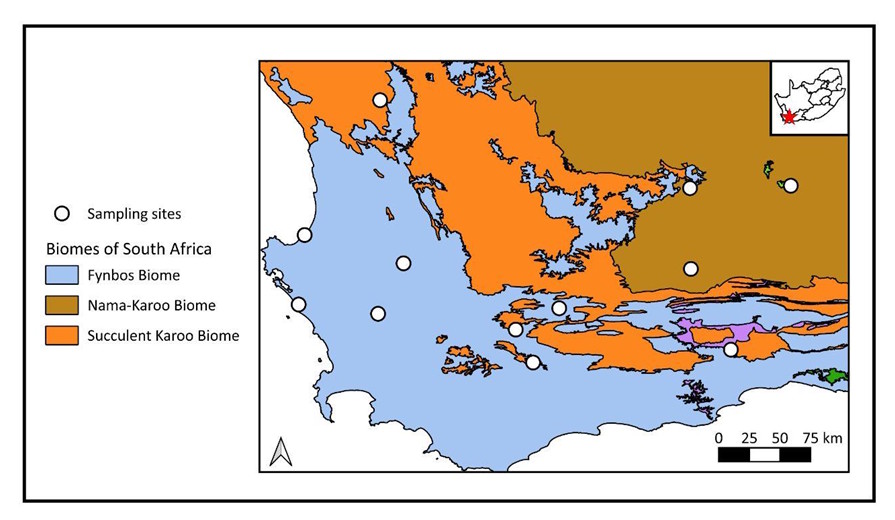
Image 5: The sampling sites that three rodents (listed below) were sampled from for the Biome project in the Western Cape (indicated as a red star), South Africa from 2023-2025.
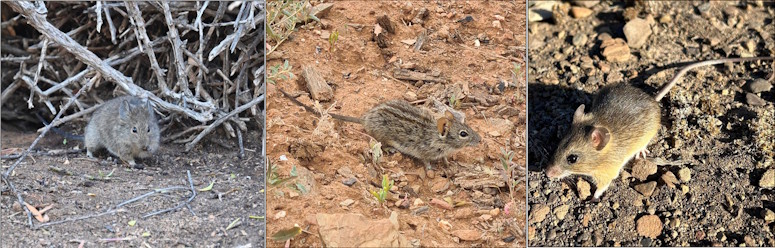
Images 6-8: Three South African endemic rodents that were the host species for the lab’s Karoo Biome project. Left to right: Otomys unisulcatus, Rhabdomys pumilio, Micaelamys namaquensis.
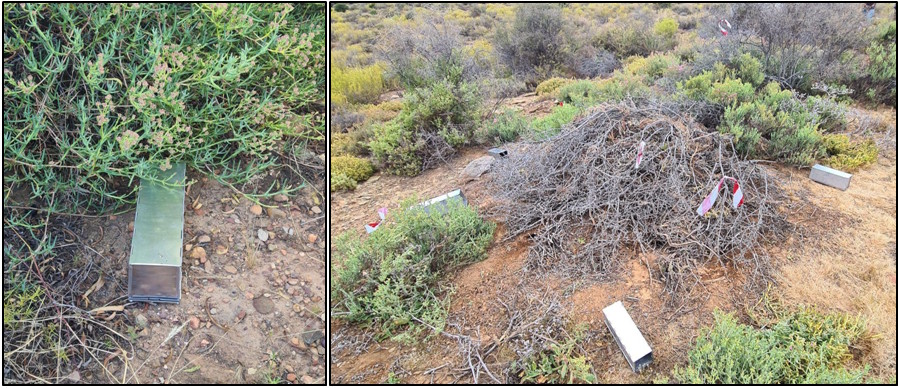
Images 9-10: The procedure for trapping rodent species involved setting out Sherman live traps baited with a peanut butter and oat mix near vegetation identified to be presently occupied with rodent nests.
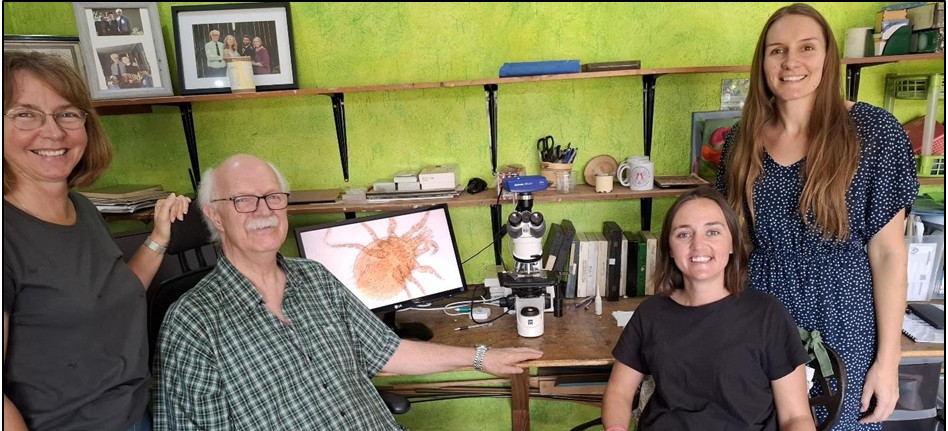
Image 11: Professor Sonja Matthee (left), and Professor Eddie Ueckermann (centre left) alongside PhD students Inge Raubenheimer (centre right), and Jessica Kipling (right) during a research trip to Pretoria in March 2025 to identify mesostigmatic mites (as seen on computer monitor) from South African endemic rodents.
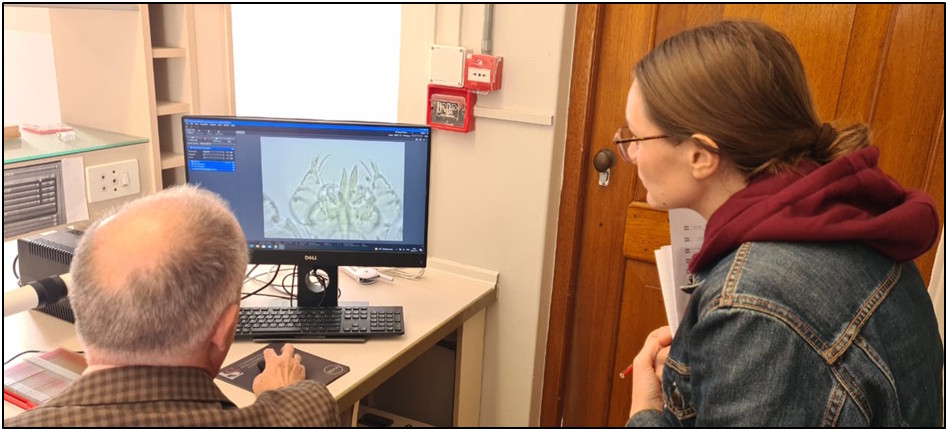
Image 12: Professor Alexandr Stekolnikov (left) and Jessica Kipling (right) in the parasitology research laboratory at Stellenbosch University, viewing slide-mounted trombiculid larval mites (chiggers) with the microscope imaging system during Prof. Stekolnikov’s research trip in May 2025.
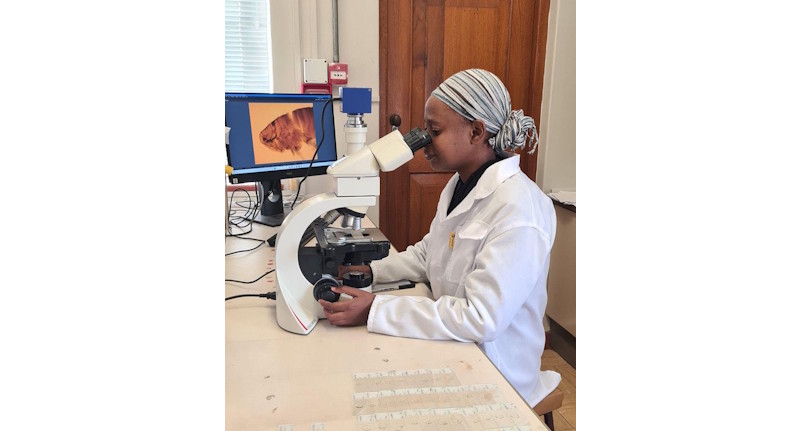
Image 13: Lab work included identifying mounted parasites using relevant identification keys, light microscopy and imaging software as demonstrated by Lola Singo.
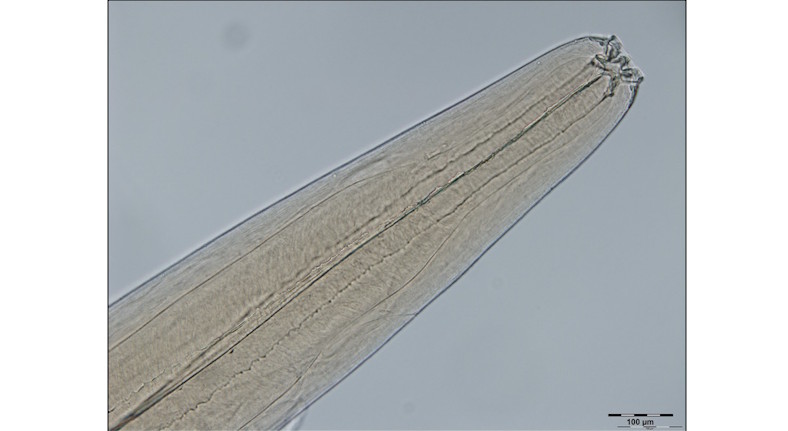
Image 14: Apical view of a male Gastronodus sp. (nematode) collected from a rodent as part of the biome project (200x magnification).
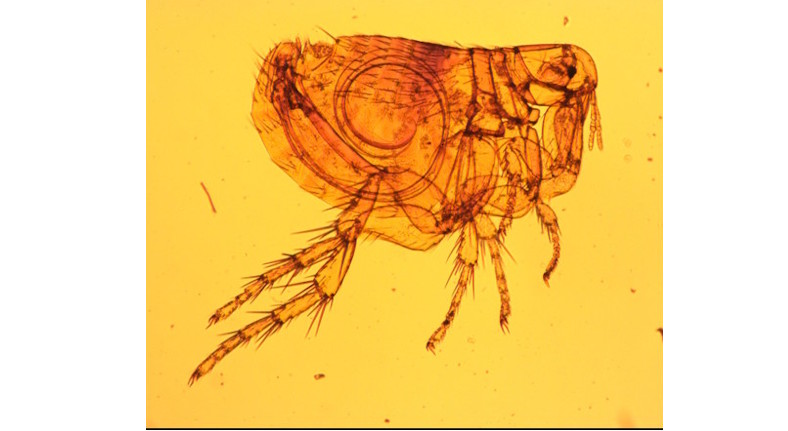
Image 15: A flea, Xenopsylla piriei, collected from Otomys unisulcatus and mounted in the laboratory. This flea is a male, as noted from the reproductive structures that can be seen inside the abdomen (100X magnification).
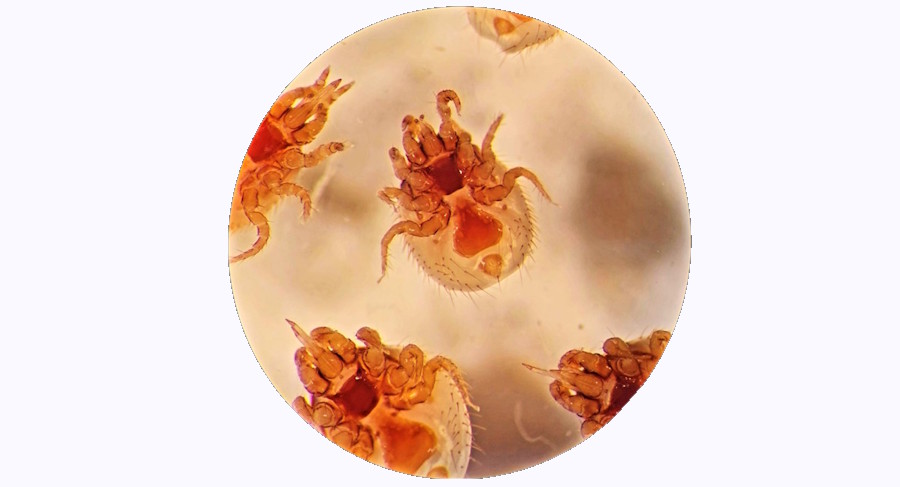
Image 16: Several female Laelaps muricola mites viewed under a dissection microscope. These parasitic mites are abundant on small mammals in southern Africa and were removed from Rhabdomys pumilio as part of the biome project (50x magnification).
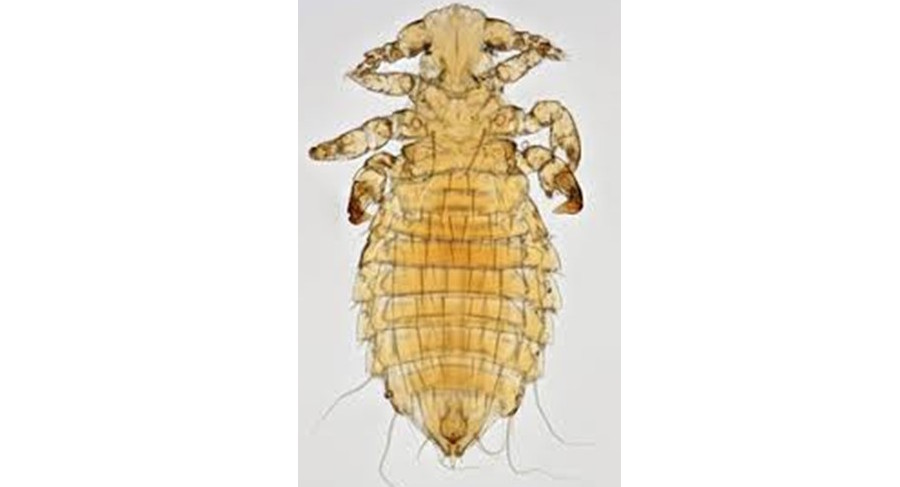
Image 17: A detailed view of a male sucking louse (Polyplax myotomydis) recorded from Otomys unisulcatus (100x magnification)
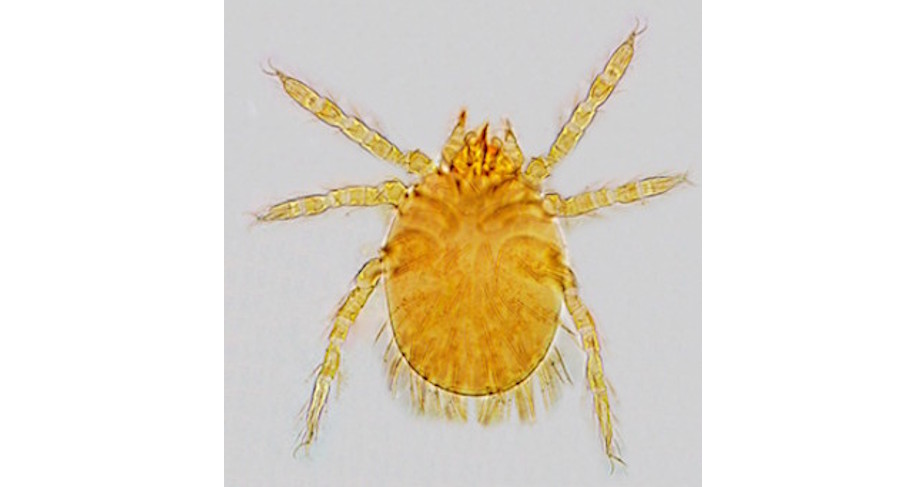
Image 18: The parasitic larval stage of a trombiculid mite, known as a chigger, recorded from Otomys unisulcatus (400x magnification).
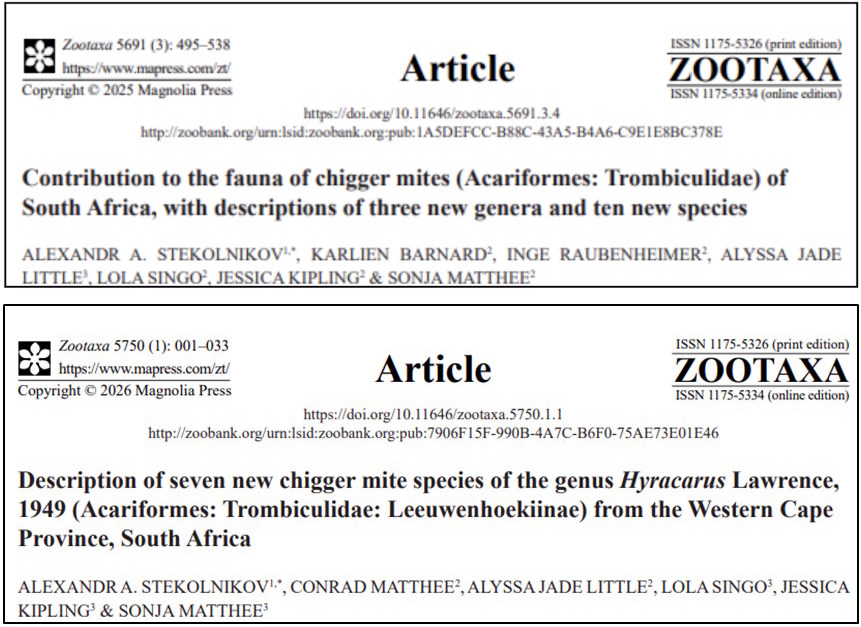
Images 19 and 20: The first two publications produced from data generated in this study. These papers describe several new chigger species from the three focal rodent species in South Africa.
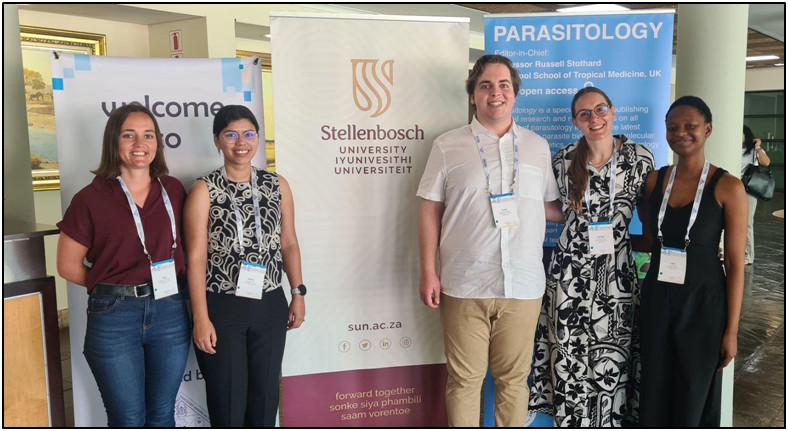
Image 21: The 2025 cohort of postgraduate students presenting at the 5th International Congress on Parasites of Wildlife. From left to right: Inge Raubenheimer, Alyssa Little, Ernst Schlemmer, Jessica Kipling and Lola Singo.
Successes
Department Research Day 2024/2025:
2024 – Inge Raubenheimer - first place departmental research day MSc presentation.
2025 - Lola Singo - third place departmental research day MSc presentation.
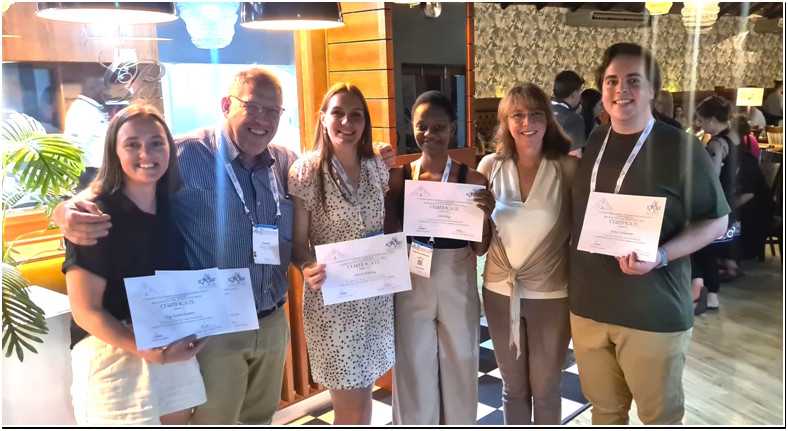
Image 22: Prize giving at the 5th International Congress on Parasites of Wildlife, from left to right: Inge Raubenheimer (first place junior poster and second place junior presenter), Prof. Conrad Matthee, Jessica Kipling (third place senior presenter), Lola Singo (third place junior presenter), Prof. Sonja Matthee and Ernst Schlemmer (second place junior poster).