
At Stellenbosch University’s Department of Conservation Ecology and Entomology, our team tackles pressing environmental challenges by developing innovative, sustainable solutions for agriculture and forestry. We have implemented integrated pest management strategies that have notably reduced chemical pesticide use in local orchards and vineyards. Our research on native pollinator conservation has influenced regional policies and improved crop yields while preserving biodiversity. We have also developed water management models supporting ecological balance in water-scarce areas, benefiting local farming communities directly.
Our department actively engages with local conservation organisations and international partners to translate research into real-world impact. We train postgraduate students who now lead community-based projects to restore native habitats and protect critical ecosystems. Our innovative approaches in biodiversity management have led to the creation of new conservation protocols that are now considered best practice. Through education, hands-on research and community outreach, we are building a resilient future for the environment and the communities that depend on it.
General enquiries
+27 21 808 4775 | +27 21 808 3304
[email protected]
Physical address
J.S. Marais Building (AgriSciences)
Corner of Neethling and Victoria street, Stellenbosch

By integrating science, innovation, and practical solutions, we prepare the next generation of conservation leaders to safeguard ecosystems while supporting sustainable agriculture and development.
"Our research on native pollinator conservation has influenced regional policies and improved crop yields while preserving biodiversity.”
Undergraduate programme
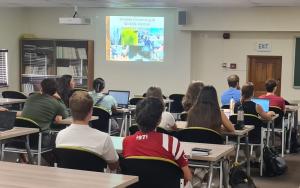
The Conservation Ecology programme forms the core of the undergraduate training in the Department of Conservation Ecology and Entomology and is specifically designed to train the future generation of conservation practitioners.
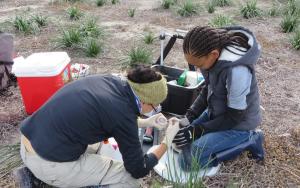
The BSc in Conservation Ecology is a 4-year degree. This programme offers the knowledge and skills to comprehend ecological processes and manage conservation practices. Students participate in hands-on learning through field trips and advanced modules.
Postgraduate programmes
At postgraduate level the department offers three degrees at MSc level and three at PhD level. At each level the three specialisation fields are Conservation Ecology, Entomology and Nematology.


Research
The Department of Conservation Ecology and Entomology at Stellenbosch University is dedicated to advancing biodiversity conservation and sustainable ecosystem management across diverse landscapes. Our research spans vegetation ecology and restoration, vertebrate conservation and wildlife management, and the ecological role of parasites in maintaining healthy hosts and ecosystems. The department also investigates symbiotic interactions among plants, insects, and microbes, while developing integrated pest management strategies to balance agroecosystems. Applied physiological ecology provides mechanistic insights into insect life cycles, complemented by landscape ecology studies that preserve connectivity and structure in natural and modified environments. With a strong focus on insect conservation and agroecology, the department integrates ecological, economic, and social principles to safeguard ecosystem functioning, mitigate the impacts of land-use intensification and climate change, and promote resilient agricultural and forestry systems.
Museum
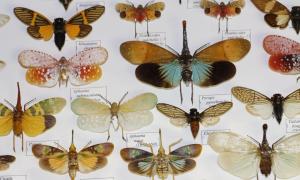
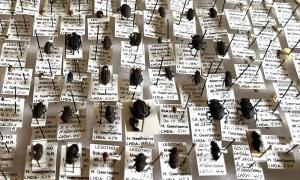
The Stellenbosch University Entomology Collection (SUEC), established in 1918, represents a century of scientific dedication to documenting South Africa’s insect diversity. With over 12,000 specimens—including Africa’s largest leafhopper and fynbos moth collections—the SUEC serves as a vital resource for taxonomy, ecological research, and student training. Its holdings, enriched by landmark contributions from leading entomologists and postgraduate projects, continue to advance knowledge of fynbos biodiversity and agriculturally important insects. Explore the full story to learn more about its history, scope, and scientific significance.
Short Courses
View Short Course training (workshops) offered in the department.
Latest news
Media release
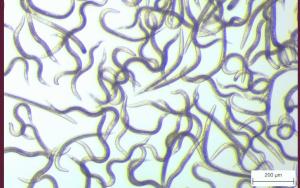
South Africa’s Tiny Duo with Big Agricultural Promise
Hidden beneath the soils of South Africa’s grain fields, scientists from the Agricultural Research Council uncovered a remarkable insect-parasitic nematode that...
Media release
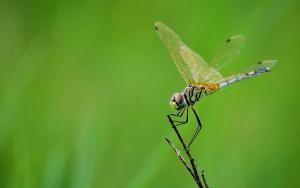
Insect body size is not constrained by atmospheric oxygen
Two researchers from Stellenbosch University (SU) were part of the team, led by researchers from the University of Pretoria (UP) and Adelaide University, that...
Conservation and forestry
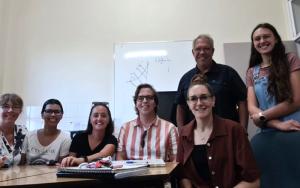
Conservation Parasitology in Action 2023-2025
From 2023 to 2025, the Parasitology and Evolutionary Genomics Group at Stellenbosch University conducted a comprehensive survey of parasite biodiversity across...
How do insects breathe? — And other fascinating things you may not know about bugs
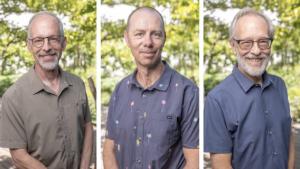
Harrison with John Terblanche of the Centre for Invasion Biology at Stellenbosch University and Arthur Woods of the Division of Biological Sciences at the University of Montana, is at STIAS to write the definitive book on how insects breathe.
They described the astonishing systems for gas exchange that insects use. They explained that unlike the cardiovascular systems used by mammals (breathing air into lungs, with gas transport coupled to blood flow), insects breathe using tracheal systems, air-filled tubes that divide finely throughout the body, delivering oxygen and removing carbon dioxide almost directly from individual cells and mitochondria. Read more...
“Insects are incredibly cool and charismatic. There are more identified insect species than all the other taxonomic groups put together. They have found novel ways to make their living in the world,” said Jon Harrison of the School of Life Sciences, Arizona State University.