

Faculty of Engineering Students to Represent South Africa at Global Space Competition
- Seven postgraduate engineering students will represent South Africa at the global Mission Idea Contest in Tokyo with their innovative SLINQI satellite concept. Designed as a practical, real-world solution, SLINQI proposes a pair of small satellites positioned on the far side of the moon to capture radio-based images of space, enabling the detection of cosmic signals that cannot be observed from Earth.
- The competition offers the team an opportunity to showcase South African engineering talent on an international stage while benchmarking their skills against global peers. Beyond the event, the team aims to bring back new knowledge and inspiration, contributing to the growth of local expertise in space science and engineering.
Seven postgraduate students from the Faculty of Engineering have been selected to represent South Africa at the Mission Idea Contest (MIC), a global space engineering competition held in Tokyo, Japan.
The team’s entry, the Stellenbosch Lunar Interferometric Network for Quasi-static Imaging (SLINQI), is a satellite mission concept they developed as a side project under the supervision of Dr Arno Barnard, a senior lecturer in the Department of Electrical and Electronic Engineering.
The SLINQI Concept: Imaging Space from the Moon
Nortier Geyer, an MEng (Electronic Engineering) student and the team’s spokesperson, confirmed that the concept, while developed for the competition, is “designed for real-world application”.
Geyer explained the vision for SLINQI is a shoebox-sized satellite that would travel to “the far side of the moon, free from Earth’s noise”. There it would work together with another identical SLINQI satellite to create detailed ‘snapshots’ of space, using radio waves instead of light”.
He explains that this would let the team detect cosmic signals that can’t be picked up from Earth. It would also help them explore parts of the universe we’ve never been able to study clearly before.
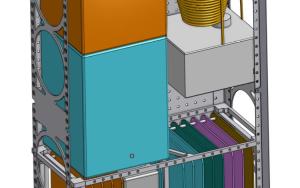
Fig. 1: A diagram of the Stellenbosch Lunar Interferometric Network for Quasi-static Imaging
A Global Stage for South African Innovation
Team members Nortier Geyer and Jandré Frey will present the SLINQI concept at the competition on 1 November.
According to Dr Barnard, the competition gives students a platform to benchmark their skills against top students from other countries. “It also shows the world that South Africa is a serious player in the global space and engineering community,” he said. He described the students as a motivated, multidisciplinary team skilled in aerospace systems, robotics, electronics, and problem-solving.
Rei Kawashima, committee chair for international relations for the MIC, stated that the contest’s goal is “to open the door to a new facet of space exploration and exploitation”. Projects are judged on originality, societal impact, scientific value, and the feasibility of their engineering solutions.
The team hopes to learn from the experience and bring back valuable insights. Dr Barnard said they want to “return with new ideas and inspiration to share with South African students, so that the students can see themselves contributing to global space exploration one day”.
Read the original article by Onthatile Mahlangu, SMF News here.
Related stories

Engineering and technology
A Smarter Way To Manage Home Energy During Load-Shedding
For many South African households with solar panels and batteries, the hard part isn’t installing the hardware. The harder part is deciding when to charge the...
Engineering and technology
When Mobile Networks Fail, A Phone Can Still Reach Your Group
At a concert, sports event, or outdoor gathering, people often assume their phones will work when they need them. In practice, that can fall apart fast. If too...
Engineering and technology
Engineering Open Day returns to a reimagined space
Grey skies and a passing thunderstorm did little to deter prospective students and their families from attending the Faculty of Engineering’s 2026 Open Day on...