
Where are you now… and what have you been up to?
The Graduate School at Stellenbosch University would like to catch up with its PANGeA network alumni.
Please send us some news about how you have been, where you are now and what you have been doing since graduating…
- Have you published any academic work? Or received any awards?
- Have you moved to a different country? Changed career?
Please send us the details!
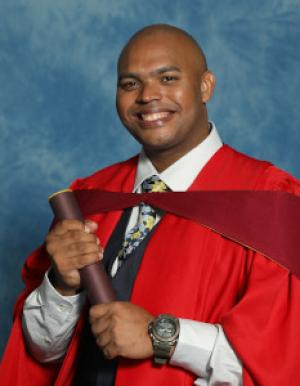
Dr Kyle Bester
Faculty of Military Science
I graduated with my Doctorate in Military Science on March 31, 2023, a major accomplishment for me and my family. My goal has always been to make a positive impact through my research, which focused on analysing cybersecurity awareness among military officers in the South African National Defence Force (SANDF). As a result of my work, I have been invited to speak on television broadcasts and featured on radio to discuss the growing threat of cyber attacks in South Africa and the importance of maintaining national cybersecurity. This has helped to raise awareness and highlight the need for increased cybersecurity measures in vulnerable sectors across the country. Currently, my research is centered on advancing cyber-psychology by exploring the security behaviour of university students when faced with potential cyber threats or attacks. My goal is to delve into the human psychology behind cybersecurity to dispel the belief that users are the weakest link in the cybersecurity chain.
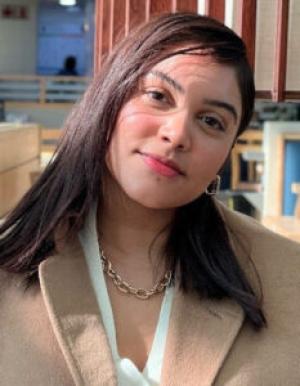
Dr Miché Thompson
Department of African Studies and Linguistics
During my first year at the Graduate school, the environment was optimistic, collegial, and warm. The first semester was packed with workshops, seminars, and scientific writing courses that equipped the 2016 PhD cohort with much needed research skills and tools.
Additionally, we were given a comfortable and conducive workspace which fostered a close-knit group of future academics who would forever remain in contact beyond the PhD journey.
I graduated in 2018 with a PhD in Linguistics.
A month after graduating from Stellenbosch University, I became a permanent full-time lecturer in Linguistics at the University of Cape Town, and I am currently on a tenure track.
I am grateful to the Graduate School for the ample opportunities and toolkits which I still employ in research and supervision to this day. But I am especially grateful for having met a group of diverse academics from various social science backgrounds with whom I still fondly keep in touch on social media.
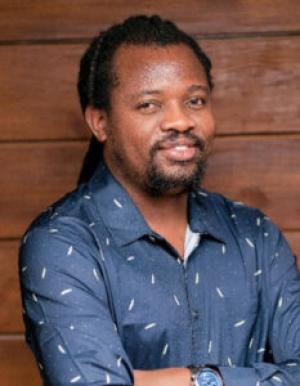
Dr Wesley Macheso
Department of English
Completing my PhD (English Studies) at Stellenbosch University opened up several career prospects and platforms for advancement. The skills and knowledge I gained during my research have so far enabled me to publish four research articles in Department of Higher Education and Training accredited journals, and I have more that are still under review. I was also able to secure a postdoctoral fellowship in the Faculty of Arts and Social Sciences at Stellenbosch, which has allowed me to work on new areas of research in my field. The fellowship also came with the opportunity to offer elective courses in the English Department, and this was a great learning experience. Most importantly, I secured a teaching position at the University of Malawi, where I am currently based.
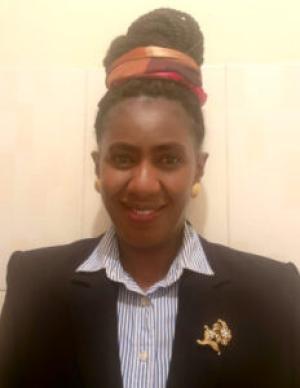
Dr Pauline Liru
Department of Sociology
My PhD (Sociology) journey at Stellenbosch University provided me with endless possibilities for career advancement. The collegial environment at Stellenbosch enabled me to create networks with scholars within and beyond the African continent, who have become lifelong research partners. The rigorous training and research culture at Stellenbosch – enabled by the well-resourced library facilities – allowed me to mature as a researcher and get recognition as an expert in climate change and sustainable livelihoods, through the publication of several articles in high impact journals. After graduating, I secured a tenure track opportunity to teach at the University of Nairobi. I am grateful to Stellenbosch University and the PANGeA network for giving me intellectual wings to fly.
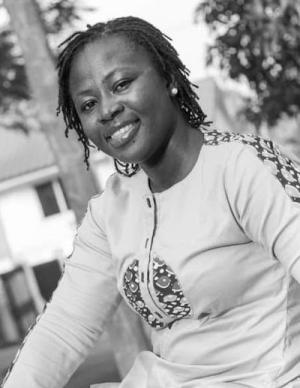
Rosina Sheburah Essien
Geography and Environmental Studies
Rosina Sheburah Essien has dedicated her postgraduate career to understanding the complexities of urban development in Africa, particularly focusing on urban resilience and environmental management in her home country, Ghana. Motivated by this passion, Rosina pursued her PhD in Geography and Environmental Studies at Stellenbosch University in South Africa from 2019 to 2021. She was awarded the 'Next Generation Social Scientists Africa Doctoral Fellowship,' which was funded by the University of Stellenbosch Graduate School, highlighting her early recognition as a promising scholar.
Her doctoral research, under the supervision of Professor Manfred Spocter in the Department of Geography and Environmental Studies, marked a significant shift toward urban environmental governance, culminating in a dissertation titled “Rethinking solid waste management in Accra’s open-air markets.” This work explored the complex interactions between formal and informal actors in urban waste management, emphasising the importance of local market institutions and informal partnerships for rethinking waste management strategies in African cities.
Read more
After completing her PhD, her career advanced rapidly. She secured a Postdoctoral Research Fellowship at the Institute of Statistical, Social and Economic Research (ISSER) at the University of Ghana, working under the supervision of Professor George Owusu and Professor Jennifer Robinson from University College London (UCL) on the European Research Council-funded project “Making Africa Urban: The Transcalar Politics of Large-Scale Urban Development” (2022-2025). This position allowed her to deepen her research on urban resilience and large-scale infrastructure projects. Her work on the World Bank-funded Greater Accra Resilient and Integrated Development (GARID) project has been central to her recent research publications, placing her at the forefront of academic discussions about urban resilience, transcalar governance, and the politics of infrastructure development in African cities.
Her expertise has also been recognized through her appointment as an Honorary Research Fellow in the Department of Geography at University College London (UCL) from 2022 to 2025, demonstrating her international standing and collaborative reach. In 2024, she further solidified her academic career by becoming a full-time lecturer in the Department of Geography and Resource Development at the University of Ghana.
Dr. Sheburah Essien's research output is both prolific and impactful. She has authored and co-authored numerous peer-reviewed articles in leading international journals, including Urban Studies, Urban Geography, World Development Perspective and African Studies. She has also been an active participant in the global academic community, presenting her research findings at major international conferences, including the Royal Geographical Society (RGS-IBG) conference in London, the European Conference on African Studies (ECAS) in Cologne and Prague, and the African Studies Association (ASA-UK) conference in Oxford.
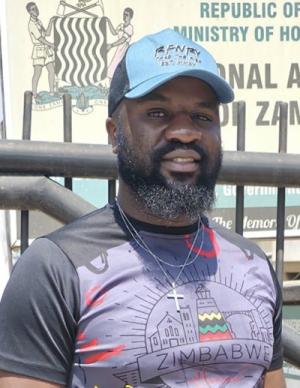
Teverayi Muguti
Department of History
Teverayi Muguti graduated with a PhD in History at Stellenbosch University on 25 March 2024. His doctoral thesis, titled “A History of Border Control and Trade Relations between Zimbabwe and Zambia, c.1963 – 2017”, focuses on a volatile and bellicose border relationship, analysing the different ways in which the dominant Zimbabwean state controlled the movement of people, goods, and services across its northern border. This is key to understanding how both the state and citizens navigated the border against the context of labour regimes, political isolation, war, and economic crises over time.
After graduation, he was nominated to do a consolidoc postdoctoral fellowship in the History department at Stellenbosch. In 2025, he was awarded the Africa Peacebulding and Development Dynamics (APDD) Individual Research Fellowship (IRF) grant by the Social Science Research Council, funded by the Carnegie Corporation of New York. Under the programme, he is undertaking a research project titled, ‘Exploring Human (in)Security and Uncertainty in ‘Ungoverned Spaces’: A Historical Analysis of Sengwa Island Livelihoods in Lake Kariba, c. 1950s to present.’ He was also awarded a Postdoctoral Research Fellowship at the University of the Free State (South Africa), where he is currently enrolled in the History department.
Read more
In terms of publications, he has published two book chapters, three journal articles, one book review and a blog article since he completed his PhD. He has also taken up a role as Editorial Assistant for the South Africa Historical Journal (SAHJ). Below are Muguti’s publications:
- (Special Issue Introduction), Co-authored with Tafadzwa Choto et. al., ‘Sport in Post- Colonial Zimbabwe: Introduction’, Sport in History (2025). https://doi.org/10.1080/17460263.2025.2576476
- Journal Article, “Recreation and Resourcefulness”: The Cue Sport of Pool and Livelihoods in Zimbabwe”, Sport in History (2025), https://www.tandfonline.com/doi/pdf/10.1080/17460263.2025.2501643
- Journal Article, Co-authored with Sandra Swart, “‘A Necessary Evil?’: (Southern) Rhodesia’s Diplomatic and Economic Relations with Zambia, 1963 to 1973”, Journal for Southern African Studies (JSAS), Vol 50, Issue 2, (2024), pp. 331-346. https://doi.org/10.1080/03057070.2024.2408982
- Book Chapter, Human-Wildlife Conflicts and Livelihoods in Binga District, Zimbabwe: Local Communities’ Lived Experiences, in Joshua Matanzima and Beavan Utete (eds.), Living with Wildlife in Zimbabwe: Navigating Conflict and Co-Existence (Cham: Springer, 2024)., pp. 41-57. https://www.springerprofessional.de/en/human-wildlife-conflicts-and-livelihoods-in-binga-district-zimba/27478954
- Journal Article, (with Joshua Matanzima et. al), ‘Socio- Economic Flux and Tonga Rituals in Rural Zimbabwe’, in Mankind Quarterly, Vol 64 (3), pp.431-446, (2024), ISSN: 0025-2344. https://mankindquarterly.org/archive/issue/64-3/11
- Book Chapter, “The River is a Natural Resource, Not A Border?” Understanding Tonga Borderland Community Responses to State Border Security Policy in Binga District of Zimbabwe, c. 1957 to 2017” in M. Mushonga, J. Aerni-Flessner, C. Twala, and G. Magaiza (eds.), Migration, Borders, and Borderlands: Making National Identity in Southern African Communities, (Lanham, Lexington, 2024) pp. 115-138. https://rowman.com/ISBN/9781666942811/Migration-Borders-and-Borderlands-Making-National-Identity-in-Southern-African-Communities
- Book Chapter, “Nexus Between Border (In)Security and Economic Development in Binga District since 2000”, in Kirk Helliker and Joshua Matanzima, (eds.) Tonga Livelihoods in Rural Zimbabwe, (London: Routledge, 2023), pp. 177 – 192. https://www.routledge.com/Tonga-Livelihoods-in-Rural-Zimbabwe/Helliker-Matanzima/p/book/9781032244358
BOOK REVIEW
The Materiality of Lake Kariba: Water, Livelihoods, Belonging and Conservation by Joshua Matanzima (Gateway East: Palgrave Macmillan, 2024), Anthropology Southern Africa, Vol 47, Issue 3, (2024), pp. 355-357. https://www.tandfonline.com/doi/abs/10.1080/23323256.2024.2411730
BLOG ARTICLE
With Sandra Swart, “Borders, Barriers and Bellicose Bedfellows: Economic and Diplomatic Relations between Southern Rhodesia and Zambia, 1963 -1973”, published by the London School of Economics on 7 December 2024. https://blogs.lse.ac.uk/africaatlse/2024/12/06/zambia-and-rhodesia-were-unlikely-economic-bedfellows-post-independence/