
Collections
The Stellenbosch University Botanical Garden houses many different plant collections ranging from indigenous and exotic species to bonsai. The Garden has recently implemented a new collections management system (IrisBG) which makes this information accessible to the public through Garden Explorer. The Garden's collections, amongst others, include the following:
Lorem Ipsum is simply dummy text of the printing and typesetting industry. Lorem Ipsum has been the industry's standard dummy text ever since the 1500s, when an unknown printer took a galley of type and scrambled it to make a type specimen book. It has survived not only five centuries, but also the leap into electronic typesetting, remaining essentially unchanged. It was popularised in the 1960s with the release of Letraset sheets containing Lorem Ipsum passages, and more recently with desktop publishing software like Aldus PageMaker including versions of Lorem Ipsum.
The Stellenbosch University Botanical Garden signed the International Agenda for Botanic Gardens in Conservation in 2013 and fully supports plant conservation by working towards the 16 targets set out by the Global Strategy for Plant Conservation (GSPC). SUBG is a Botanic Gardens Conservation International accredited Conservation Practitioner since 2018. The Garden is an active conservation practitioner and contributes to the conservation of species that are in real threat of extinction. The Garden also supports the work of other conservation practitioners and regularly collaborates with other organisations and individuals to contribute to species conservation and recovery. Much of our conservation work happens in partnership with and with support from other organisations and individuals. Here are some of our recent collaborators and funders that have contributed to making our conservation work more impactful.
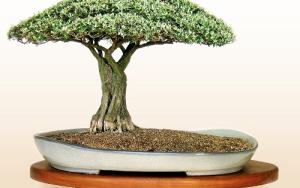
Although the collection started in the 1960's the bonsai and penjing only got a dedicated space in the Botanical Garden in 1972 when the collections of Becky Lucas and later Gerjo van der Merwe were acquired. The collection includes some excellent examples of African bonsai styles such as the flat-crown and baobab styles, as well as a variety of indigenous and exotic tree species, from wild olives (Olea europaea subsp. africana) to the redwood (Sequoia sempervirens). The collection houses some of the oldest bonsai from some of the first South African bonsai enthusiasts. The oldest bonsai on display is a Becky Lucas pine tree (Pinus sp.) dating from 1940 that is thought to be the oldest example of bonsai in Africa. Boland Bonsai Kai and their team of volunteers help with the specialist care needed to maintain this bonsai collection.
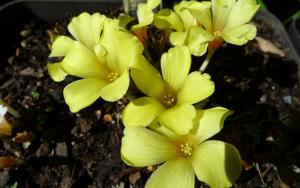
This collection of Oxalis was initiated by Prof. Leanne Dreyer in 2001, and has grown to currently include about 70% of southern African species. The collection also includes 5 non-South African species, about 10 recently described species. About another 16 species that are new to science and in the process of being described. It acts as both a reference and research collection, and houses almost all specimens included in the species-level molecular phylogenetic reconstruction of southern African Oxalis. It continues to act as a source collection for morphological and molecular systematic research on the genus, and includes a number of highly threatened species. Thus far 9 M.Sc. and 2 Ph.D students made use of this collection, and 19 research papers are linked to plants cultivated in it.
Lorem Ipsum is simply dummy text of the printing and typesetting industry. Lorem Ipsum has been the industry's standard dummy text ever since the 1500s, when an unknown printer took a galley of type and scrambled it to make a type specimen book. It has survived not only five centuries, but also the leap into electronic typesetting, remaining essentially unchanged. It was popularised in the 1960s with the release of Letraset sheets containing Lorem Ipsum passages, and more recently with desktop publishing software like Aldus PageMaker including versions of Lorem Ipsum.
Lorem Ipsum is simply dummy text of the printing and typesetting industry. Lorem Ipsum has been the industry's standard dummy text ever since the 1500s, when an unknown printer took a galley of type and scrambled it to make a type specimen book. It has survived not only five centuries, but also the leap into electronic typesetting, remaining essentially unchanged. It was popularised in the 1960s with the release of Letraset sheets containing Lorem Ipsum passages, and more recently with desktop publishing software like Aldus PageMaker including versions of Lorem Ipsum.
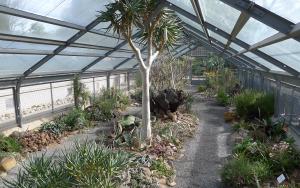
Many plants that are not adapted to Stellenbosch's climate are housed in one of the Botanical Garden's four glasshouses. The tropical glasshouse and the two arid glasshouses are open to the public while the second tropical glasshouse is only open to the public on special occasions. Orchids and other plants are regularly put on display in the tropical glasshouse.