
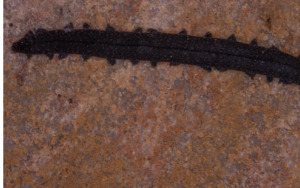
New velvet worm species a first for the Little Karoo
In March 2022, Stellenbosch University (SU) student Rohan Barnard was out and about on a farm in the Swartberg Mountains between Calitzdorp and Oudtshoorn...
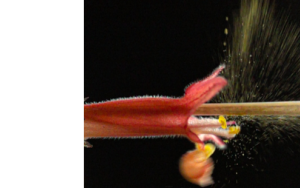
Explosive pollen wars: plants fight for pollen-space on pollinators
Scientists from South Africa and Brazil have provided empirical evidence that pollen grains of rival plants may compete with one another for space on...
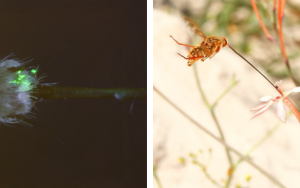
Quantum dots used to capture act of speciation
Using quantum dots as a tool to trace the pollen of the long-tubed iris, Lapeirousia anceps, evolutionary ecologists from Stellenbosch University have...
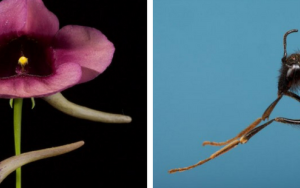
South Africa’s long-legged bees adapted to pollinate snapdragon flowers
New research from Stellenbosch University (SU) in South Africa shows that, in an extraordinary case of adaptation, the disproportionately long front legs of...
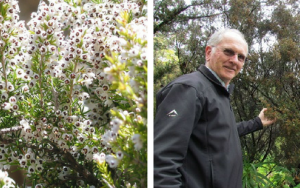
One Erica species colonised the Cape 10 to 15 million years ago
It is now official. The Cape Floristic Region's beloved Ericas' earliest ancestor originated from the Northern hemisphere and used Africa's highest mountain...
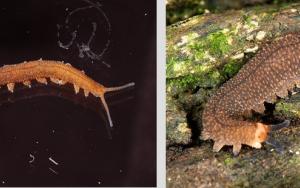
Five new velvet worm species from South Africa
Five new species of the enigmatic velvet worm – one of the most ancient Arthropods still living in forested areas of South Africa – have been described in a...
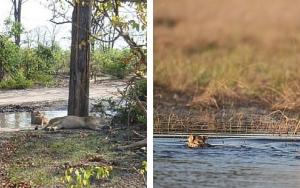
Are wetland lions a genetically distinct species?
Major palaeo-environmental changes over the past five million years may explain the surprising genetic differences between Africa's wetland and savanna lions.
R...