
Centre for Student Life and Learning (CSLL)
The Centre for Student Life and Learning (CSLL) is responsible for providing you with a holistic living and learning experience by focusing on the social dimension of community life and harnessing it to support your academics.
The Centre oversees co-curricular programmes for both residence and commuter student communities and fosters a values-driven environment within these communities and on campus aimed at developing Matie students as future South African leaders through a culture of continuous personal and leadership development programmes. It also supports student structures representing all students andis responsible for the accreditation of the numerous leadership development programmes on offer at the University.
The CSLL is committed to the growth and development of all students and the five units which make up the Centre are vital to achieving this goal.
The Unit for Commuter Student Communities (UCSC)
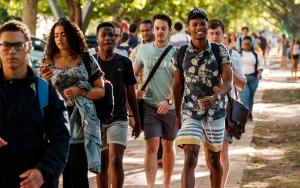
The Unit for Commuter Student Communities (UCSC) supports all SU students living in private accommodation through groups known as Commuter Student Communities (CSCs). If you are not living in a university residence, you’ll automatically belong to one of the University’s 11 CSCs - 10 on the Stellenbosch campus and 1 on the Tygerberg campus.
Your CSC gives you access to on-campus facilities such as student hubs, open dining halls in residences, and the option to book meals in The Neelsie using your meal quota which is linked to your student card (costs are added to your student account).
Each community is led by a team of elected student leaders (the House Committee) and supported by the UCSC. As commuter students themselves, these leaders understand your needs and are ready to help you settle in, make connections, and get the most out of university life.
The Unit for Residence Student Communities (URSC)
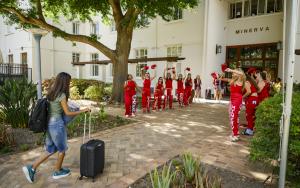
The Unit for Residence Student Communities (URSC) creates integrated learning communities by blending academic and social spaces to create a holistic educational experience for all students in university housing.
Each residence is managed by a Residence Head, who is supported by elected student house committees and mentors. This team is collectively responsible for providing support and development opportunities to residence students as well as access to further support and development opportunities beyond the scope of the team’s skills, expertise and knowledge. Residence or private accommodation communities concentrate on developing wholesome relationships among students to instil a sense of belonging, and prioritise holistic personal growth alongside academic success. In these communities, the focus is on fostering active listening, immersive learning, and empowering individuals within a nurturing and values-driven atmosphere.
LIVING IN A UNIVERSITY RESIDENCE
The University residence environment fosters a unique camaraderie among residents as they navigate shared living spaces and kitchens as well as communal bathrooms. The same is true if you live in shared private accommodation. Living on your own provides you with a sense of responsibility and autonomy, and will also help you learn to balance your academic pursuits with communal living while you undergo personal growth. To be fully prepared and equipped to live in residence, please have a look at the latest Residence Rules and Accommodation Rules.

The Unit for Student Governance (USG)
The Unit for Student Governance (USG) champions and instills ethical governance principles within student leaders serving on University governance structures. These governance principles are informed by ever-changing social contexts and developments with regards to governance challenges, issues and best practice in South Africa, Africa, and the rest of the world. Through leadership development training, students are equipped to address and formulate solutions to some of the governance complexities and challenges student leaders are confronted with today. They also acquire valuable competencies that are in line with SU’s Graduate Attributes.
The Unit for Leadership, Diversity and Inclusion (ULDI)
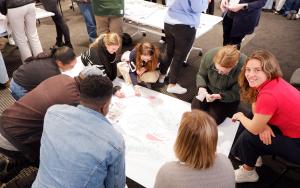
The aim of the Unit for Leadership, Diversity, and Inclusion (ULDI), which includes the Frederik Van Zyl Slabbert Institute (FVZSI), is to ensure that university students are provided with comprehensive leadership experiences through the development of Graduate Attributes.
The Unit’s work is underpinned by its objective to develop citizen leadership. Citizen leadership is both a vehicle allowing students to translate theory into practice and an orientation towards community change in which students become change agents, creating a better future. Through this unit, students will have the opportunity to engage on a national and international level with broader constitutional matters of diversity, equity, and inclusion, as experienced in the context of South Africa.
The Unit also offers a range of leadership development offerings for aspiring and current student leaders which are recognised on a student’s academic transcript. These offerings include masterclasses, thought-leader summits, short courses, workshops and portfolio training opportunities.
The Unit for Experiantial Learning (UEL)
The Unit for Experiential Learning (UEL) is there to help students learn and grow into socially conscious citizen leaders who are committed to the holistic development of themselves, others, and their environments. The Unit’s work is aligned with the country and the University’s social development goals and is presented with a social justice perspective.
UEL supports the CSLL, faculties, and divisions to include experiential learning and related opportunities in their work. This means creating learning experiences where students learn by doing, both inside and outside the classroom. These experiences help to transform students and equip them with specific graduate attributes needed for life beyond university.
The Unit does this by using teaching and learning models (pedagogical frameworks) and support systems that guide how initiatives are designed, implemented, evaluated, and recognised. In doing so, it helps to promote student success, a sense of belonging, and lifelong learning, in alignment with Stellenbosch University’s Vision 2040.
What is experiential learning?
You can think of experiential learning as ubuntu in practice – relational, reflective and relevant.
Learning becomes transformative when it is relational. When students engage with others and context and reflect on what those experiences mean for themselves and the wider world. Across community-based initiatives and global partnerships, students describe learning that moves beyond theory into shared action and mutual understanding. As one student reflected, “This was the first time learning felt relevant because I had to take responsibility, not just understand the theory.”
Grounded in Ubuntu, experiential learning is understood as learning with and through others. Through intentional design, structured reflection, and sustained learning from student voice (listening to our students), lived experience and reflection creates new patterns of thinking over time and extends in new ways of doing across contexts. What emerges is not a set of isolated activities, but a connected experiential learning ecosystem that builds capability, purpose, and a reflexive shared humanity, locally and globally.