

Interview: The impact of the Library’s services
- Below is an interview with Prof. Strever, Head of the Department and Associate Professor in the Department of Viticulture and Oenology at Stellenbosch University. He also coordinates innovation and entrepreneurship activities in the AgriSciences Faculty and he is a teaching fellow, specialising in entrepreneurship and artificial intelligence incorporation into Teaching, Learning and Assessment activities at the University.
Which services of the Library do you use often?
I work closely with our Faculty Librarian, in partnership to co-present a course for our second year students on library techniques and finding information, but also interwoven with a task involving comparing AI resources with ‘traditional’ library search techniques. This is done over four weeks of practicals. I also joined forces with Elizabeth Moll-Willard to present a postgraduate session with Engineering students on the use of AI in research.
I am involved in discussions with the Engineering Faculty in using the Makerspace for postgraduate projects, as well as in my entrepreneurship courses, where we intend to make use of the 3d printing and design facilities for prototyping work.
Further, I am also in discussion with Research Data Services on procuring climate data, which would potentially be of wider use in agricultural research and teaching.
What is the most significant way the library supports your research, and what would be the impact on your work if that service was no longer available?
The above-mentioned aspects would be very difficult to execute without the assistance of the library personnel, and use of the shared facilities. With regards to the facility (computer user area) that we use in the library/AI practical that we run – we do not have a facility in our faculty that can accommodate up to 50 students, so it would make that impossible to run if we don’t have the facilities.
How does the library’s expertise and support services help you save time in your day-to-day research work?
We share the practical slots with our faculty librarian, so it also takes some pressure and weight of our teaching and tutoring in that part of the second year course. The library tools and resources – especially the guides on research literature reviews, including systematic reviews, but also the AI use guides are extremely useful resources, which frees a lot of time when one has to look around to find resources.
How have library consultation services aided you in managing your research data, creating data management plans (DMPs), or ensuring data compliance?
I have not had extensive experience in this, but students I supervise make use of the DMP guides when completing their ethical clearance applications, and also when I write funding applications I use these resources.
What role does the library play in helping you navigate open access publication options/funding?
The library websites have great resources for navigating these publication options, which I have used in many occasions, as have my postgraduate students.
Do you feel the library staff is proactive in offering new services that align with your current research needs? Please give examples.
Yes, and I want to specifically mention Elizabeth Moll-Willard and Norman Hebler in this regard – they go out of their way to provide a state-of-the-art service to us with regards to being at the forefront of innovation in our research and teaching techniques, which I must commend.
If you had the authority to change one library service to better support your research, what would it be?
We need a more integrated solution than SunScholardata for data curation and hosting, and I know this do not (only) reside with the library, but I am currently navigating IT, library, information governance, DRD to find ways in improving research data management from a technical/storage/service perspective. As I mentioned – this is not a core ‘library function’ problem – but I do think the library – being a core component of RDM – could play a strong role in improving this for researchers.
Interview via e-mail correspondence with Prof Strever
Related stories
Institutional news
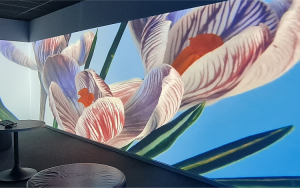
Beyond the Makerspace: Stellenbosch University's Immersive Technology Lab
The Pro AVL MEA magazine recently featured Stellenbosch University Library and Information Service's innovative 270° Immersive Technology Lab (ITL). Designed to...
Institutional news
Championing digital transformation to broaden access to knowledge
𝘓𝘦𝘢𝘥𝘦𝘳𝘴𝘩𝘪𝘱 magazine recently sat down with Ellen Tise, Chief Director of Library and Information Services at Stellenbosch University, to explore how the...
Institutional news
Be BOLD at the 2026 Library Symposium
This symposium will be a special occasion to celebrate the outstanding career of Ellen Tise, who has served as Senior Director of the Stellenbosch University...