
Journalism alumni awarded SA Akademiepryse
- Michélle van Breda received the Markus Viljoen Medal for her sustained, high-quality impact on Afrikaans journalism and women's media.
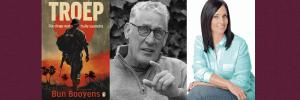
- Bun Booyens won the LW Hiemstra Prize for Non-Fiction for Troep, a book documenting personal, sensory accounts of military service.
- Prof. Herman Wasserman was shortlisted for the Hertzog Prize for poetry; awards will be officially presented on 2 October.
Two alumni of the Department of Journalism are winners of the prestigious Academy Awards for 2026.
On 22 April, the South African Academy of Science and Arts announced that the Markus Viljoen Medal for Journalism will be awarded to Michélle van Breda, editor of SARIE. This prize is awarded every three years for “long-term, high-quality work in Afrikaans journalism, whether in newspapers, magazines, television or radio”. According to a press release from the Academy, Van Breda’s contribution “to the Afrikaans media and cultural landscape” is of “invaluable value and has had a lasting impact on generations of readers”.
Bun Booyens, alumnus and former Rykie van Reenen fellow in the Department, receives the LW Hiemstra Prize for Non-Fiction for his book Troep: die dinge wat hoope saamdra. This prize has been considered every three years since 2001 for an “original non-fiction work in Afrikaans that is not limited to the subject specialist”, according to the Academy press release.
Van Breda told the Department by email:
“I accept the Markus Viljoen Medal with pride! It is not only wonderful recognition for the path - with all its ups and downs - that I have walked in journalism in recent years, but also for SARIE. For the role that women’s magazines, the editors and the editorial teams play in society. Recognition that is sometimes rare for these titles in the media world, despite women’s magazines’ resilience, creativity, impact across platforms, the ability to build valuable communities and keep the conversation going on in many areas. And for that I sincerely thank the Academy!”
Booyens described his book in a nutshell as a “regular journalistic book” about “people’s stories of things they experienced when they were 17 or 18 years old and had to report for military service. What do they remember 40 or 50 years later?”
In an email to the Department, he further replied:
What kind of stories were you looking for? Ordinary people’s. I just asked around and then you come across, let’s say, someone who stuttered and had to somehow get by in a fairly unsympathetic environment. For example, I wanted to know from a chef how you cook two thousand eggs for breakfast. I wanted to hear what it feels like to jump out of a plane with a parachute for the first time – and what goes through your mind when that parachute doesn’t open properly. I asked people about riding: where did you wait the longest for a lift. All such strong human stories.
Did they speak easily? Surprisingly easy, probably because my questions were not loaded. I wanted to get to the sensory things: What were the first things you saw when you got off the plane at the Border? Which item in your ration pack was the tastiest? How does it feel when a landmine explodes under your vehicle? How does it feel to come back home?
The reaction to the book? Overwhelmingly positive, even from people who simply closed that duty door behind them at the time. The one thing I did underestimate was the reaction of the people at home, especially the mothers and sisters. I truly realized for the first time the uncertainty and chronic stress they had to live with at the time.
Is there a Troop II coming? No, he has now cleared up.
Prof. Herman Wasserman, former head of department's debut collection Waterman was shortlisted for the Hertzog Prize for poetry. The prizes will be presented in Pretoria on 2 October.
![[Journalism] Michélle van Breda.jpg](https://files.su.ac.za/public/styles/responsive_300w/public/department-journalism/images/2026-04/journalism-michelle-van-bredajpg.jpg?itok=H40bTb4a)
Michélle van Breda
![[Journalism] Bun Booyens.jpg](https://files.su.ac.za/public/styles/responsive_300w/public/department-journalism/images/2026-04/journalism-bun-booyensjpg.jpg?itok=1MEoarfQ)
Bun Booyens
![[Journalism] Book cover (Bun).jpg](https://files.su.ac.za/public/styles/responsive_300w/public/department-journalism/images/2026-04/journalism-book-cover-bunjpg.jpg?itok=kPCb5tuY)
Troep
Related stories
Media release
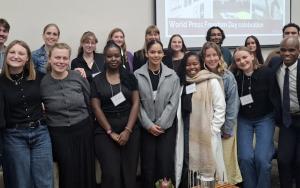
Press Freedom celebration calls for moment of reflection
Maintaining audience trust and building relationships are key to the continued resilience of journalism in the face of sustained threats.
This was one of the...
Media release
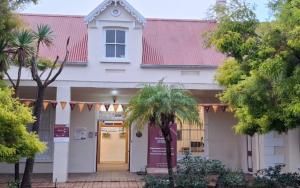
Open Day comes ‘home’ to the Department of Journalism
For the first time since the institution of Open Day at Stellenbosch University, the Department of Journalism opened its own building at 26 Crozier Street for...