
Prof Lingam Pillay
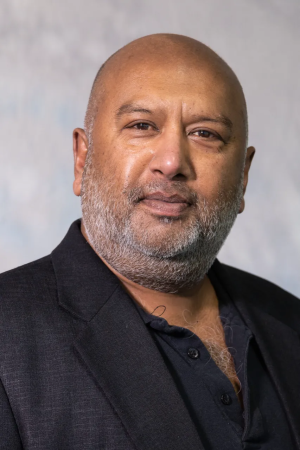
Associate Professor
Water/Wastewater Treatment & Reuse for Developing Economies, Membrane Technology, Novel water treatment processes.

 +27 21 808 4728
 Office: C212

Short Bio
Prof Pillay obtained his BSc (Eng), MSc (Eng) and PhD (Chemical Engineering) at the University of Natal (UN). He then joined the Pollution Research Group, Department of Chemical Engineering, UN, as a Senior Research Fellow. Prof Pillay subsequently moved to the Department of Chemical Engineering, ML Sultan Technikon (now Durban University of Technology), and was charged with the task of initiating research and developing a research culture in the department. In 2013, Prof Pillay joined the Department of Chemical Engineering, Stellenbosch University.
Research outputs include circa 33 publications in peer reviewed journals, 26 contract research project reports, 3 patents, and numerous presentations at local and international conferences. He has supervised / co-supervised over 45 postgraduates to date.
Research Interests
Prof Lingam Pillay’s research is in the field of water and wastewater treatment and reuse, with a particular emphasis on membrane technology and technologies for developing economies. His focus is strongly on technology development towards practical application.
Current research interests include:
- Membrane based potable water provision, with a particular focus on developing economies and rural communities.
- Decentralised immersed membrane bioreactors, for localised wastewater remediation and reuse.
- Reclamation and reuse of industrial effluents, agricultural processing wastewaters, and fishing industry wastewaters.
- Membrane distillation for the recovery of organics.
- Donnan Dialysis for aluminium and iron recovery from water treatment residuals.
- Electrochemical disinfection
- Electro deionisation (EDI) for ion removal from contaminated waters.
Technology Development and Outputs
Prof Pillay was one of the prime developers of the woven fibre microfiltration (WFMF) technology, a patented microfiltration technology aimed specifically at developing economies. To date WFMF has been demonstrated at over 1000 rural households as a point of use (POU) water treatment system. It has also been demonstrated for water provision at schools, for rainwater harvesting, and for backwash recovery in swimming pools. He was one of the founders of VulAmanz Water Treatment Systems (Pty) Ltd, a company set up to commercialise the WFMF technology. www.vulamanz.co.za
Teaching
- Particle Technology 316
- Environmental Engineering 414
- Design 488
- Experimental Methods D356