
The Department has the following research themes
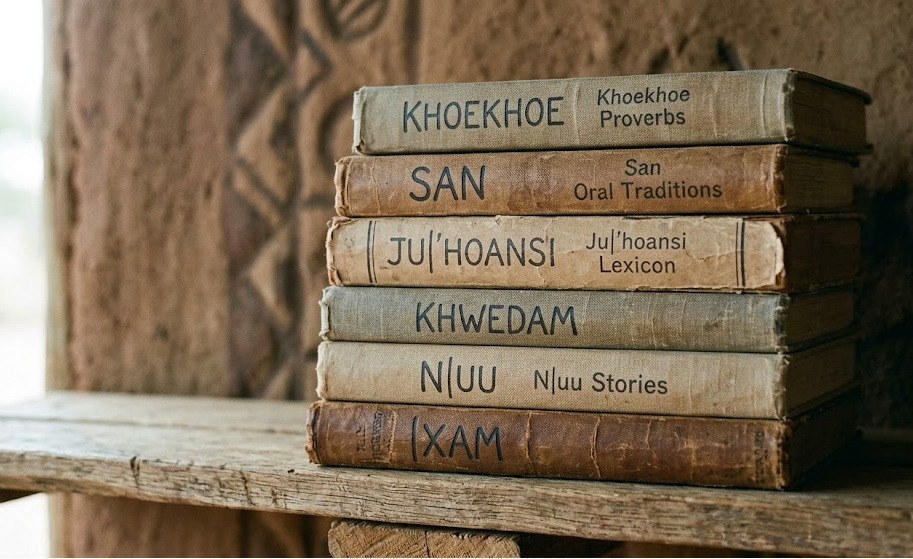
Endangered Southern African languages
Southern Africa, Botswana and Namibia have the highest number of Khoesan speech communities. Historically, Khoesan communities were small, causing them to be ethnic and linguistic minorities. They are marginalised, both linguistically and socially, and their languages are endangered. Some linguists, anthropologists and community organisations have developed a small number of language resources in Khoesan languages, but these efforts have as yet reversed neither the shift away from Khoesan languages nor language loss. Given the need for concerted scientific
effort to document and codify Khoesan languages, we study these languages and classify them, showcasing their diversity.
Team members:
Prof Mawande Dlali
Research partners

Language planning and multilingualism
We study language planning and language policy as a practice of regulating the structure of languages and linguistic behaviours of their speakers. Our interest lies on the rationale and ideologies that inform language planning. In our national context, we study how our country’s history has continuously shaped language policy-making and language use, starting with the role of missionaries up to contemporary entities such as the Pan South African Language Board (PanSALB), government departments and universities. We consider the political and socioeconomic implications of language planning, such as access to education and other social services, as well as best approaches to managing linguistic diversity to facilitate social justice in the aftermath of colonialism and apartheid. The role of education and fields of language practice such as translation and terminology development are also considered.
Team members:
Prof Dion Nkomo
Mr Lukhanyo Ngamlana
Dr Zameka Sijadu

Lexicography
We do research on dictionaries, focusing on their compilation, types, structure and use as pedagogical and reference tools in language learning and other language-practice disciplines such as translation. In South Africa’s multilingual contexts, we are interested in how lexicography has been shaped by language policy, as well as the role of dictionaries in supporting multilingualism. We also study the role of technology in dictionary making and its implications for dictionary use.
Team members:
Prof Dion Nkomo
Dr Simthembile Xeketwana

African language literature
The team draws on a variety of postcolonial theories, alongside other critical frameworks, to interpret and shed light on literary works within African language literature, allowing for deeper insights into themes such as identity, power, and cultural expression. In doing so, the team examines a wide range of textual genres in African languages and applies established theoretical approaches, including literary linguistics, to better understand how language and meaning interact within these works.
Team members:
Prof Mawande Dlali
Mr Thulani Simayile
Dr Simthembile Xeketwana
Sociolinguistics of African languages (including pragmatics)
We study various aspects of the use of African languages in multilingual societies, considering contemporary theoretical developments in sociolinguistics and pragmatics. We use a variety of theoretical frameworks such as Persuasion theory, Argumentation theory, Humour theory and Appraisal theory.
Team members:
Prof Mawande Dlali
Dr Zameka Sijadu
The teaching and learning of an African language as first or second additional language
We promote a research-informed and contextually relevant approach to teaching second and additional languages. This approach is rooted in the integration of linguistic theory, applied linguistics and educational practice in the language classroom. Particular attention is given to the acquisition of structurally complex African languages such as isiXhosa. A central focus is on task-based language teaching and syllabus design, where pedagogical methods are guided by principles of cognitive complexity, meaningful communication, and authentic language use (including languages for specific purposes, such as in the legal system). We also do research on translanguaging pedagogy, academic literacy and genre-based approaches, to enhance students’ ability to participate effectively in disciplinary discourses through African languages. These initiatives are part of our broader commitment to multilingualism, language policy redress, and social justice, positioning African language teaching as both an academic pursuit and a transformative effort that supports equitable access to and epistemic inclusion in higher education.
Team members:
Prof Mawande Dlali
Mr Lukhanyo Ngamlana
Dr Zameka Sijadu
Mr Thulani Simayile
Dr Simthembile Xeketwana
Translation studies
We study translation from practical and theoretical perspectives, analysing how translators grapple with linguistic and cultural differences when translating different text types between English and African languages. In the South African context, we explore how translation can contribute towards the promotion of multilingualism in education and other prestigious domains of language use. We also consider the role and impact of technology in translation practice.
Team members:
Prof Dion Nkomo
Dr Zameka Sijadu