
What is Food Science?
Food Science focuses on transforming raw agricultural produce into food products that are safe, nutritious, and appealing for human consumption. A Food Scientist is equipped with the knowledge and technical skills needed to convert these raw materials into the wide variety of safe, sustainable and attractive foods and beverages found on our supermarket shelves. They continuously work to improve the methods used in developing, processing, packaging, storing, and transporting food products.
Food Science is an exciting and dynamic field that integrates disciplines such as Chemistry, Biochemistry, and Microbiology to enhance the quality, safety, taste, and nutritional value of the global food supply. Students in this field also gain expertise in food preservation and processing, food analysis, product development, food packaging, and the implementation of food quality and safety systems.

General Enquiries
+27 21 808 3578
We'd love to connect


Our Academic Programmes
- BSc in Food Science
- MSc in Food Science
- MSc in Food and Nutrition Security
- PhD in Food Science
- DSc in Food Science
Our Vision & Mission
To be the most sought-after Food Science department in South Africa
To be a nationally and internationally competitive centre of excellence in Food Science
To foster a culture of scientific research, critical thinking and scientific debate;
Producing well-trained graduates who can successfully be employed within the food industry and are sought after for their knowledge, creativity and critical thinking, and;
To nurture education and research that is relevant to the needs of the food industry, the consumer and the environment
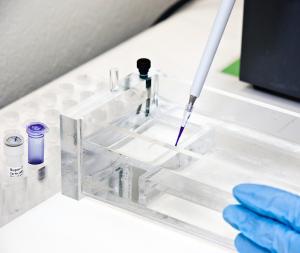
Undergraduate Programme
Click on the link to find out more about our four-year BSc in Food Science programme
Postgraduate Programmes
Click on the link to find out more about our postgraduate programmes
Exposure to the food industry?

You can choose a career in one of the largest and most indispensable industries in the world.
Food Scientists can be employed to do quality assurance, product development, research, technical support, sales, purchasing and production management. The food industry offers wide-ranging opportunities for entrepreneurs, while postgraduate studies can further develop your expertise and expand career opportunities across industry, research, and academia.
Food Science students gain close contact with the SA food industry through internships and regular visits by guest speakers. These opportunities provide students with the real-world exposure to industry professionals, which help develop the necessary skills needed for successful careers in the food industry.
Experiencing the cutting edge of research at Food Science, SU
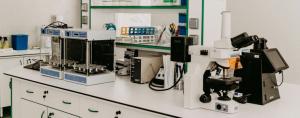
The Department of Food Science has a strong research culture based on the application of fundamental scientific principles and focusing on expanding our understanding of food as biomaterials. The research initiatives topics include chemical, nutritional, processing, sensory, microbiological and safety aspects. This is an exciting field that applies the basic sciences to improve the flavour, appearance, shelf-life, quality, safety and nutritional benefits of our food supply.
The Department prides itself in fostering strong student-staff interactions and thereby creating a stimulating research environment. We attract significant research funding annually – a sign of both the high quality research and the relevance of our degrees for the needs of today's global food industry.
Our History
In 1928 the need was identified for trained people to lead the fruit processing industry in the Cape. To this purpose Dr Izak Burger went on a world tour which included the fruit growing areas of California and Australia. In his report he recommended that an educational institution be established to train people to manage the processing of fruit for the export and local market. For various reasons in the early 1930's the report was shelved. Later efforts were thwarted by the outbreak of the war in 1939. It was only in 1946 that the idea was revived.
At the insistence of Dr Izak Burger, with the persuasion of the Rector, Professor Bobby Wilcocks, with the assistance of the then Department of Agriculture, and with funding from Imperial Cold Storage and the Deciduous and Dried Fruit Boards, the idea finally came to fruition. The first students were enrolled in 1951. In 1952, the creation of the first Department of Food Science in South Africa (and in Africa) passed through the Senate and University Council and Professor RI Nel, then head of the Fruit and Fruit Technology Institute (FFTRI), was appointed as special professor in Fruit Technology.

In 1954, the Food Science Building was completed. In 1955, the first two students received BSc in Food Science degrees: Johan Burger (son of Dr Izak Burger) became the managing director of Letaba Citrus Processors in Tzaneen, a position he held for years. In 2013, at the age of 80 he has not yet considered final retirement from the Food Industry. Jan Hofmeyr had a long career at Metal Box/Nampak R&D during which he made a significant contribution to the maintenance, improvement and safety of packaged foods in South Africa for local and export markets. This legendary Food Scientist sadly passed away in 2013 and as a tribute to his legacy Nick Starke of Nampak R&D donates an annual book prize for the best 1st year Food Science student at SU.
It is interesting to note that the first department of food science in Britain was set up at the University of Strathclyde, Glasgow, Scotland in 1958.
In November 2010 an extensive expansion and refurbishment of the Department was undertaken, thanks to an investment of R23 million by the Department of Higher Education and Training and Stellenbosch University's Hope Project.
Professor Nel has been followed subsequently as head of the Department by Professors Chris Smit (1960 - 1967), JJDoesburg(1968 – 1969), Brian Koeppen (1970 - 80), Gerard van Noort (1981 - 1993), Dawie Basson(1994), Trevor Britz (1995 - 2004), Corli Witthuhn (2005 - 2009) and Prof Gunnar Sigge, the current Departmental Chairperson, took over the reins in 2009.