
Stellenbosch University shares smart campus sustainability insights with Ghana energy delegation
- As African universities and institutions work towards more sustainable futures, collaboration and shared learning are becoming increasingly important. A recent visit by the Ghana Energy Commission to South Africa highlighted how smart campuses, digital energy systems and Energy Performance Certificates are helping institutions like Stellenbosch University improve efficiency, resilience and long-term sustainability.
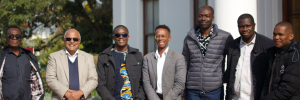
A team from the Ghana Energy Commission recently visited South Africa to share knowledge about Energy Performance Certificates (EPCs), smart energy systems, and building efficiency across Africa.
The South African National Energy Development Institute (SANEDI) organised the study tour, which brought together people from government, universities, and the building sector to share lessons and best practices on energy efficiency and sustainable infrastructure.
During their visit, the delegation visited Stellenbosch University (SU), the University of Cape Town, the City of Cape Town, and the Green Building Council of South Africa to learn more about how South Africa has implemented EPCs, its regulations, and practical lessons from the process.
At SU, Nadeem Gafieldien, Director of Environmental Sustainability at SU’s Campus Development, Infrastructure and Services (CDIS) division, spoke about the university’s journey toward sustainability and a smart campus. He explained how using EPCs has helped with campus upgrades, increased energy awareness, and improved efficiency over time.
Gafieldien shared how the university’s plan for smarter campuses connects sustainability with improved operations, data-driven decision-making, and integrated infrastructure. The group also discussed how smart utility systems, building management, and digital tools can improve energy tracking, resilience, and long-term planning.
The SU presentation also showed how smart meters and digital energy platforms are making EPCs more useful. Instead of just being paperwork, EPCs can now support ongoing monitoring and better decision-making about energy use.
GreenX leading the way
Jason Samuels, Chief Executive Officer of SU’s spinout company GreenXEngineering, talked about why it’s important to roll out changes in stages. He also described current work on digital EPC processes, smart meters, energy dashboards, and tools that help buildings meet standards and perform better over time.
Since becoming an authorised EPC contractor and inspection body in October 2023, GreenX has issued over 160 EPCs. They have completed the majority of these for educational institutions, including approximately forty EPCs for Curro Schools and four EPCs for SU.
South Africa still has a long way to go, as the current progress on EPCs is still slow, as only 8 200 buildings out of 60 000 have been certified in the first phase.
The group also talked about Ghana’s progress in preparing for EPCs. The Ghana Energy Commission has developed a training app, established implementation networks, and drawn on GiZ-supported programs and experiences in the UK and Australia.
Although both countries have similar approaches, Ghana’s proposed EPC framework differs in some respects. It covers residential, private, and public buildings, starting with those larger than 500 square meters.
After the visit, SANEDI sent a letter thanking Stellenbosch University for its help with the study tour. They said the university’s presentations, discussions, and site tour gave the Ghanaian team useful insights into South Africa’s EPC experience, including best practices, challenges, and opportunities in the building sector.
The visit also showed how universities can act as “living laboratories” for new ideas in sustainability and national energy systems. Everyone agreed that working together and sharing knowledge will be key as African countries build smarter, more energy-efficient buildings.
Related stories

Media release
People with Down syndrome must be included in conversations about their healthcare
People with Down syndrome and their families consistently value healthcare that is relational, respectful, and person-centred, rather than focused solely on...
Media release
SU scientist receives R14 million grant to tackle West Nile virus
As climate and environmental change continue to reshape ecosystems across the world, scientists are warning that mosquito-borne diseases may spread into new...

Media release
Many factors drive changes in human-wildlife relationships
Human populations are expanding and encroaching further into wildlife habitats, leading to dynamic and evolving relationships between humans and wildlife. As...