

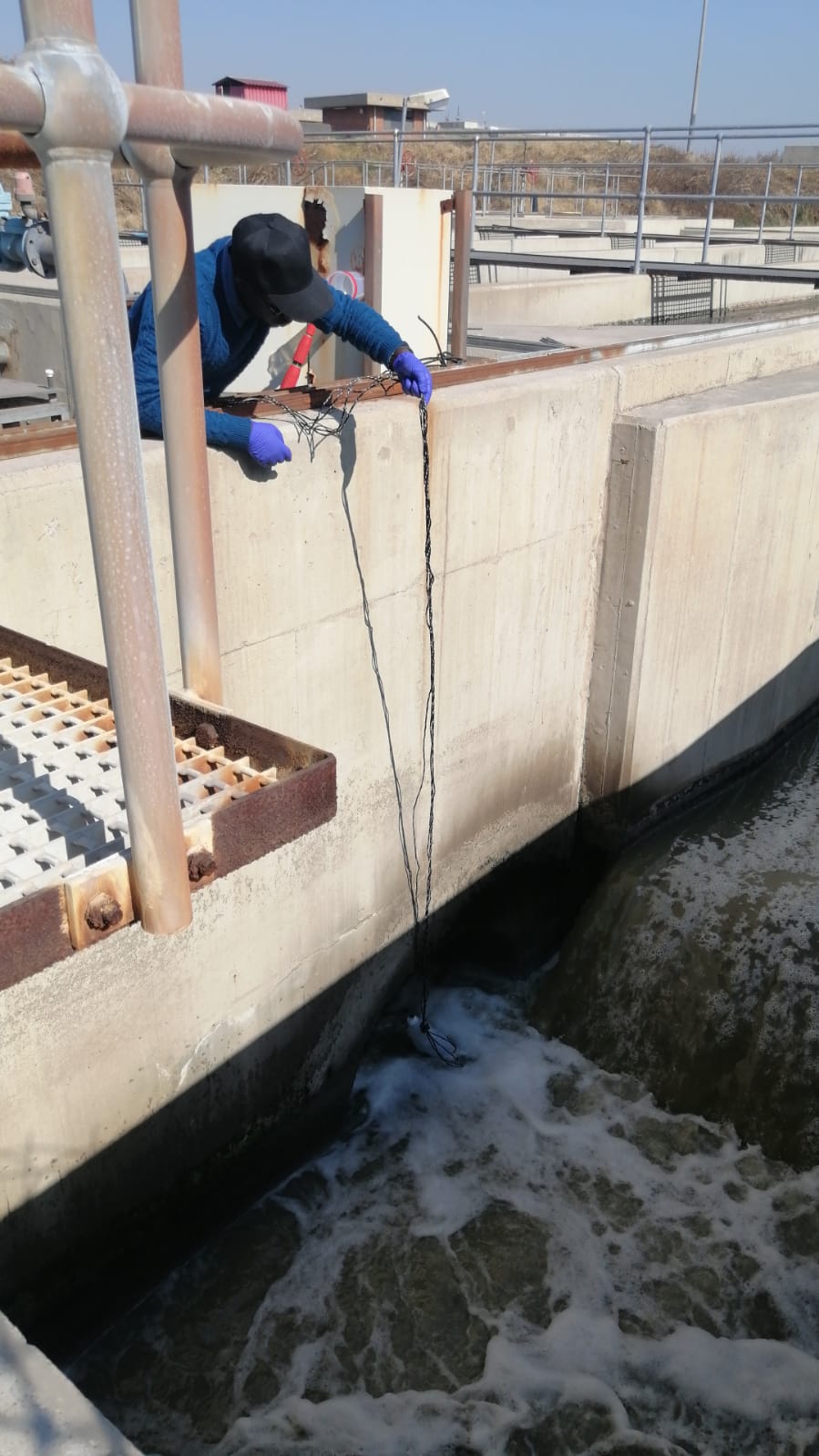
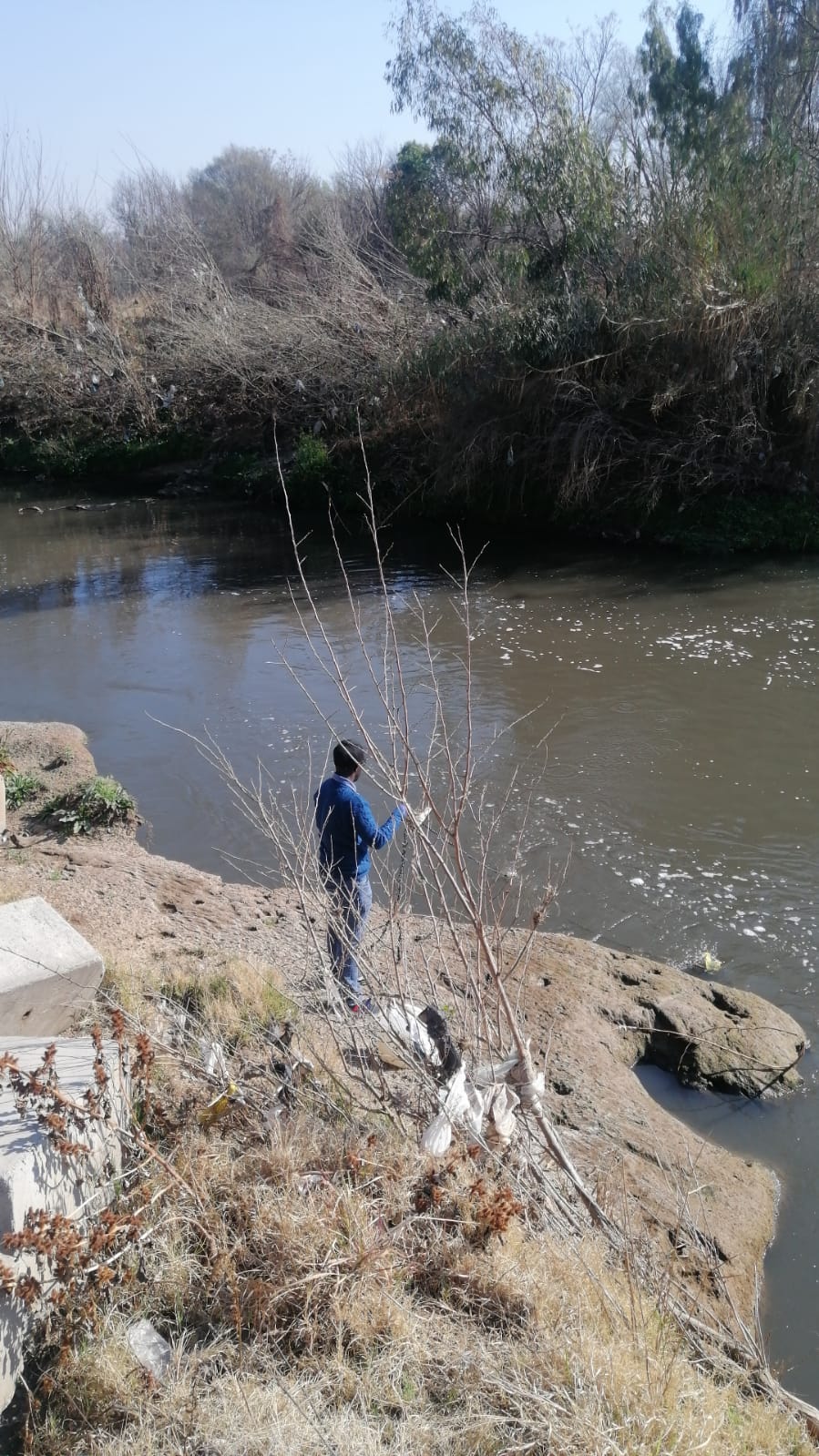
Researchers sampling downstream river water to assess the real-world impact of wastewater discharge on freshwater systems in a large city in South Africa.
Wastewater harbours high-risk antimicrobial resistance genes
- There is increased evidence that extracellular DNA – genetic material released from bacteria killed during the treatment process – may act as a previously underappreciated reservoir of antibiotic resistance.
- Researchers from Stellenbosch University found evidence of genetic material from two major bacterial groups, commonly known to exhibit high-risk resistance profiles, in wastewater samples from a large South Africa city.
In South Africa, wastewater treatment plants (WWTPs) and connected river systems could serve as reservoirs of antibiotic resistance, raising fresh concerns about how antimicrobial resistance moves through ecosystems and into human populations.
Antimicrobial resistance (AMR) refers to the ability of disease-causing microbes to withstand treatments. Antibiotic resistance—a type of AMR—occurs when bacteria no longer respond to antibiotics. If current trends continue, estimates suggest that by 2050 deaths from AMR will rise to about 10 million people per year.
In a study led by researchers from the NRF-DSTI research chair in African Microbiome Innovation at Stellenbosch University (SU), scientists investigated how antimicrobial resistance genes behave in WWTPs and rivers in a large urban city in South Africa.
Dr John Paul Makumbi, a medical microbiologist and first author on the paper published in Cell Reports this week, says antimicrobial resistance in the environment occurs naturally, as bacteria continue to evolve to protect themselves against harmful pathogens and other pollutants.
In the context of WWTPs, however, this natural process is accelerated, over-exposing bacteria to a toxic melting pot of untreated effluent from abattoirs, hospitals and industry, mixed with raw sewage and other pollutants.
Moreover, while the older WWTPs were designed to remove harmful chemicals and kill bacteria, they were not designed to remove extracellular DNA – genetic material released from bacteria killed during the treatment process. There is increased evidence suggesting that exDNA may act as a previously underappreciated reservoir of antibiotic resistance.
Because of the lack of such studies in Africa, and the potential implications for water reuse, Dr Makumbi and his co-authors conducted a microbiome study to get a sense of what is happening at WWTWs and connected river systems in South Africa.
From samples taken from nine Wastewater Treatment Plants and connected river systems in Tshwane, they found evidence of genetic material from two major bacterial groups, commonly known to exhibit high-risk resistance profiles. These bacterial groups survived the treatment processes typically used in WWTPs. Both the Pseudomonadota and Bacteroidota groups are commonly associated with multi-drug-resistant behavior.
Makumbi explains: “Even though the bacteria themselves are killed, we found extracellular DNA carrying resistant genes in the effluent. These genes could still be transmitted and shared with other bacteria in the environment, continuing the cycle of antibiotic resistance.”
In essence, WWTWs may serve as ecological “superspreaders” of extracellular DNA-mediated antimicrobial resistance, thus shaping the genetic landscape of wastewater and freshwater environments.
According to Makumbi, although some WWTPs in South Africa and elsewhere are currently being upgraded with advanced technologies such as UV-treatment to reduce antimicrobial resistance genes, progress remains slow.
“If we want to protect our waterways and public health, and contain the spread of superbugs in the environment, we need to protect and upgrade WWTPs. We should protect our WWTWs by pretreating effluent from high-risk sources such as abattoirs, hospitals and industry before it enters the system. The same logic holds for treating effluent before it hits the environment.
“Everyone will benefit from less polluted water entering our rivers,” he adds.
For Prof. Thulani Makhlanyane, holder of the DSTI-NRF research chair in African Microbiome Innovation, we need more studies on the intersection between water security and antimicrobial resistance: “Future wars will in part be based on water security and AMR. This is especially true in Africa where aging infrastructure, poor management, and an inability to sufficiently integrate science into policymaking, is compounding the problem. We hope that the findings from this study will add to the call for action to ensure water security,” he concludes.
The findings were published in the journal Cell Reports in an article titled “Persistence of high-risk antimicrobial resistance genes in extracellular DNA along an urban wastewater-river continuum”.
More about the DSTI-NRF South African research chair in African Microbiome Innovation
Our vision is to deepen understanding of Africa’s microbiomes to drive advances in public health, ecosystem resilience, and sustainable development. We study microbial communities across diverse African environments including human, animal, soil, and aquatic systems, applying state of the art multi-omics, bioinformatics, and systems biology.
More at https://africanmicrobiomeproject.org/
Related stories
Media release
South African fynbos soil delivers a new species of soil bacterium
Microbiologists from Stellenbosch University have discovered a previously unknown bacterial genus within the phylum Acidobacteriota. It is the first genus from...
Media release
New study led by South African scientists reveals how sea-ice microbes survive the Southern Ocean’s harsh winter, with implications for climate change
A study led by scientists from Stellenbosch University reveal that during winter the sea-ice around Antarctica harbors a reservoir of microbes of which most...
Media release
Gut health: why food alone won’t fix childhood stunting
Prof. Thulani Makhalanyane, holder of the NRF-SU research chair in African Microbiome Innovation in the Department of Microbiology, and Prof. Ronelle Burger...