

Prof Novel Chegou
International consortium launches effort to improve diagnosis of childhood tuberculous meningitis
- SU is leading PRECISE-TBM, a R40 million international project to develop rapid tests for earlier diagnosis of childhood TB meningitis (TBM).
- TBM is often diagnosed too late, leading to high rates of death and lifelong disability among affected children.
- Researchers will evaluate spinal fluid and blood-based rapid tests to improve diagnosis in resource-limited, high-burden settings.
Stellenbosch University (SU) is coordinating a large international research project aimed at developing rapid point-of-care tests to enable earlier diagnosis of tuberculous meningitis (TBM), the most severe and deadly form of tuberculosis in children. The project, PRECISE-TBM, is funded by the Global Health European and Developing Countries Clinical Trials Partnership 3 (EDCTP3).
TBM poses a severe threat to children, especially in high-burden settings where access to specialised healthcare is limited. While the disease can be treated, timely diagnosis remains a major challenge as symptoms are often non-specific, laboratory tests are complex, and it usually takes several visits to healthcare facilities before the disease is confirmed. These delays can have devastating consequences, with around half of affected children dying or suffering lifelong neurological complications.
To address this urgent need for more efficient diagnostics, a new international research project, PRECISE-TBM, was launched in May 2026 with R40 million (€2,16 million) in funding from Global Health EDCTP3. The four-year project, coordinated by SU researchers, aims to develop and evaluate rapid point-of-care tests that can support earlier diagnosis of childhood TBM.
The research project brings together six partners from Africa and Europe with complementary expertise in TB biomarker research, immunology, human genetics, diagnostic test development, clinical evaluation, and project management. It consists of Imagine Institut des Maladies Génétiques (France), LifeSADX (South Africa), LINQ Management GmbH (Germany), Stellenbosch University (South Africa), the University of Zambia (Zambia), and the University of Zimbabwe (Zimbabwe).
Faster TBM diagnosis for settings with limited resources
Diagnosing TBM remains difficult primarily due to the lack of accessible, easy-to-use diagnostic tools, especially those suitable for primary healthcare settings such as clinics and day hospitals, where most patients first seek care. PRECISE-TBM aims to change this by developing tests that are faster, easier to use and better suited to routine clinical settings in high-burden regions. If successful, the new tools could help healthcare workers identify children with TBM earlier and thus reduce the risk of severe outcomes.
“With simple diagnostic tools still lacking, children may visit healthcare facilities four to six times before TBM is diagnosed. These delays contribute directly to poor outcomes,” explains Prof Novel Chegou, SU professor in immunology and the PRECISE-TBM project coordinator. “A rapid diagnostic test would be a gamechanger, particularly in high-burden regions such as sub-Saharan Africa and Asia.”
Turning biomarker research into point-of-care tests
PRECISE-TBM builds on years of research at SU that has already led to two prototype diagnostic tests based on cerebrospinal fluid (CSF). During the project, these point-of-care tests will be evaluated in hospitals across South Africa, Zambia and Zimbabwe to determine how well they perform in real-world clinical settings.
While CSF-based tests can provide valuable diagnostic information, collecting cerebrospinal fluid requires a lumbar puncture – a specialised medical procedure that can be particularly challenging in children and requires trained healthcare personnel. To make TBM diagnosis more accessible, the consortium is therefore pursuing a second approach to develop a rapid diagnostic test based on a simple blood sample.
This blood-based test will then be evaluated alongside the CSF-based tests, with the aim of providing healthcare workers with additional options for rapid diagnosis in different clinical settings.
About PRECISE-TBM
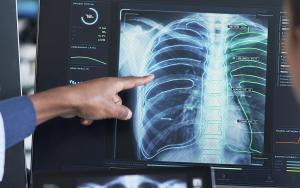
PRECISE-TBM is one of two Global Health EDCTP3-funded research projects currently coordinated by Stellenbosch University to advance tuberculosis diagnostics. Alongside AddiCAD, which combines AI-supported chest X-ray analysis with blood biomarker testing for pulmonary TB, the four-year project reflects a broader effort to develop faster, more accessible diagnostic solutions for high-burden settings.
The project is supported by Global Health EDCTP3 and its members.
Related stories
Media release
New research project aims to transform tuberculosis diagnosis with AI-powered technology
A new research project will combine fingerstick blood testing with artificial intelligence (AI) technology to improve tuberculosis (TB) detection in settings...

Media release
Early birth safer for mother and baby in high blood pressure pregnancies
A new Cochrane review published on World Preeclampsia Day (22 May) revealed that planned early birth for pregnant women with high blood pressure cuts maternal...

Media release
South African rugby stars headline SpeedCourt challenge showcase at Tygerberg
The steady academic hum of Stellenbosch University’s (SU) Tygerberg Campus was recently punctuated by the high-intensity energy of elite sport. Springbok...