
Prof Robbie Pott delivers inaugural lecture: From laboratory to lecture hall – growing bioprocesses and graduates
- Prof Robbie Pott’s inaugural lecture at Stellenbosch University celebrated his promotion to full professor and a decade of innovation in bioprocess engineering, highlighting his dual commitment to developing sustainable industrial technologies and fostering resilience in the next generation of engineers.
The Department of Chemical Engineering at Stellenbosch University recently celebrated a major milestone in the academic career of Prof Robbie Pott, who delivered his inaugural lecture titled From laboratory to lecture hall: growing bioprocesses and graduates on 5 June 2025. The lecture not only marked his appointment as full professor but also offered a glimpse into his decade-long journey of research, teaching, and innovation in the field of bioprocess engineering.
Academic journey
Prof Pott began his academic career at the University of Cape Town (UCT), where he completed his undergraduate degree in chemical engineering in 2008. After briefly working in the same laboratory, he pursued his PhD at the University of Cambridge in the United Kingdom. Following his doctoral studies, he returned to UCT as a postdoctoral research fellow before joining Stellenbosch University’s Department of Process Engineering (now Department of Chemical Engineering) as a lecturer in 2015. Since then, he has built a large and active research group in bioprocess engineering.
The focus of the inaugural lecture
In his lecture, Prof Pott explored the wide scope of bioprocess engineering, which involves developing processes to harness organisms to produce valuable products – from laboratory-scale studies to industrial applications.
“Organisms surround us, and they produce vastly more materials than we could hope to understand. Many of these materials have the potential to improve lives and generate new industries,” he explained.
But realising this potential requires more than just identifying useful organisms. The bioprocess engineer must design processes that work on multiple levels – from the microscopic scale, to the reactor scale, to the broader economic, societal, and environmental scale. Prof Pott guided the audience through key stages of bioprocess development: bioprospecting for organisms, designing bioreactors, developing separation systems to capture products, and creating commercially viable process designs.
“With the help of fantastic students, driven and supportive colleagues and collaborators, and often a bit of luck, bioprocess engineering can offer implementable solutions to real-world problems,” he said.
His lecture reflected on a decade of research that involved the contributions of more than 20 postgraduate researchers, illustrating how curiosity-driven research can be both rewarding and challenging.
Contributions to research and teaching
Prof Pott’s research contributes to bioprocess engineering by advancing technical knowledge in process development and optimisation, while also training the next generation of bioprocess engineers.
“My primary expertise lies in bioprocess engineering – which we can think of as the overlap between biological sciences and chemical engineering,” he explained.
On the technical side, his work addresses challenges in the design, scale-up, and optimisation of bioprocesses for the sustainable production of bio-based products. This includes work in fermentation process development, reactor design, and bioprocess integration – areas central to supporting the shift towards a circular bioeconomy.
“We have designed new bioreactors, new separation systems, applied old ideas in new spaces, and all the while evaluated value creation,” he added.
In parallel, Prof Pott is actively involved in research on engineering education, particularly how to prepare postgraduate students for the complex and interdisciplinary nature of modern work.
“I am investigating how supervisors can intentionally foster grit and resilience, which are critical attributes in postgraduate research and the world of work,” he said.
Personal reflections
Achieving the rank of full professor is a significant milestone for Prof Pott, though he emphasises that recognition has never been his primary motivation.
“It is, of course, very nice to be recognised and congratulated for successes, but my motivation has never really been driven by accolades or financial rewards. I find the work I do fascinating, and I enjoy the pursuit of knowledge and problem solving with my research students.”
Still, reaching full professorship before the age of 40 was a personal goal – one that was achieved not by chasing the title directly, but by focusing on good work and mentorship day after day.
Inspiration and future goals
Prof Pott’s interest in bioprocess engineering was influenced by his family background, where ecology, biology, and environmentalism were part of daily life.
“The living world has always been a fascination. And with engineering eyes, the living world is a rich source of inspiration and potential,” he shared.
Looking ahead, Prof Pott hopes to see some of his lab’s work evolve into commercial ventures.
“One of the next big goals I have is to see a spin-off company emerge from my lab’s work. I would love to see our products on the shelves, making a real difference in communities and industries.”
At the same time, every successful student remains a milestone in itself.
“Each student I take on and successfully supervise to graduation is a milestone I look forward to.”
Prof Pott’s inaugural lecture highlighted not only his academic journey, but also the broader impact of bioprocess engineering and postgraduate mentorship in shaping the future of sustainable technology.
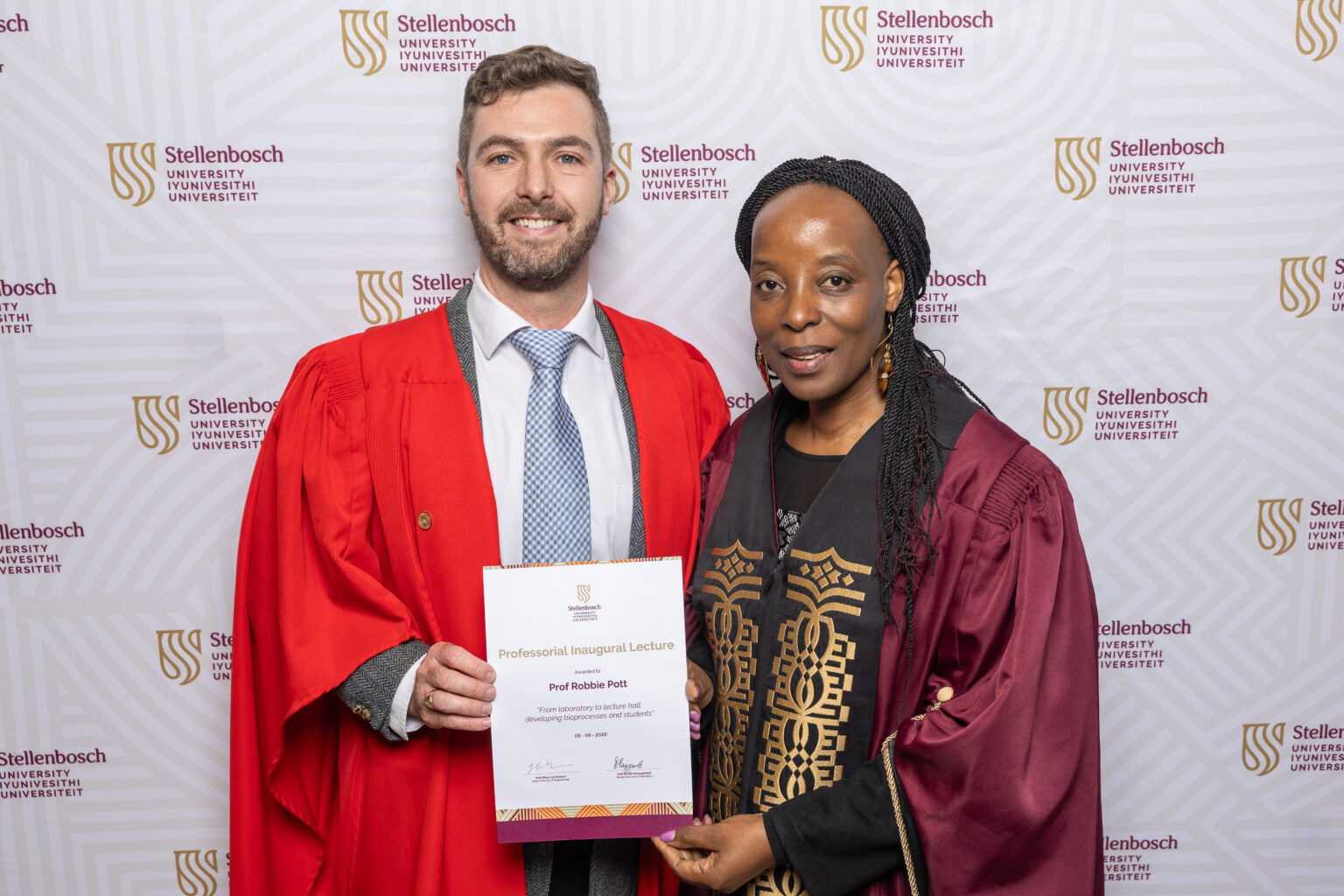
From left to right: Prof Robbie Pott and Prof Sibusiso Moyo (Deputy Vice Chancellor: Research, Innovation and Postgraduate Studies)
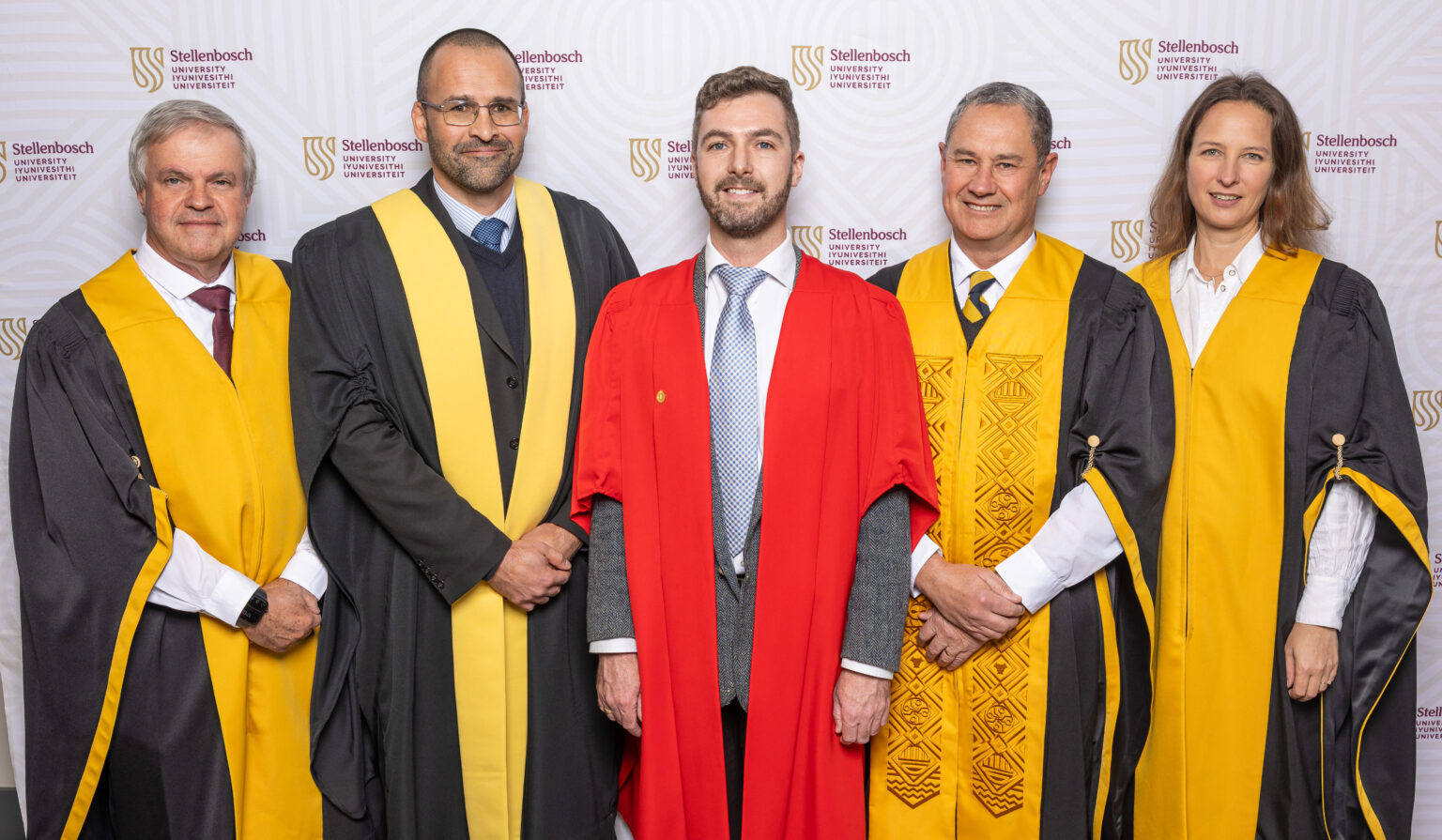
From left to right: Prof Corne Schutte (Vice-Dean Research and Industry Liaison), Prof Christie Dorfling (Chair: Department of Chemical Engineering), Prof Robbie Pott, Prof Wikus van Niekerk (Dean: Faculty of Engineering), Prof Celeste Viljoen (Vice-Dean Teaching and Quality Assurance)
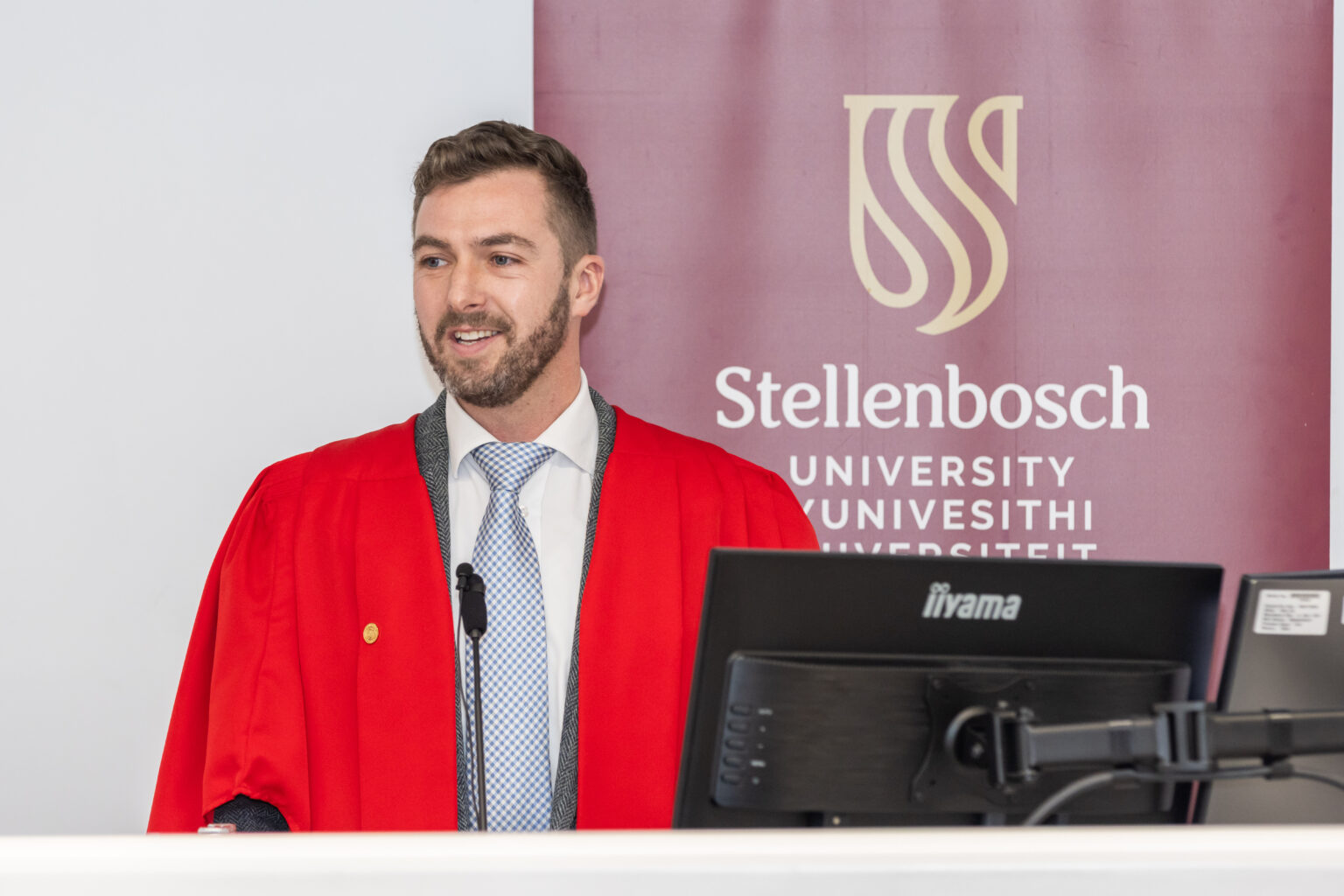
Prof Robbie Pott delivering his inaugural lecture titled: From laboratory to lecture hall – growing bioprocesses and graduates
Related stories
Engineering and technology
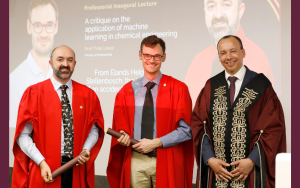
Two professors deliver inaugural lectures in chemical engineering
Prof Tobi Louw – A critique on the application of machine learning in chemical engineering
In his lecture, A critique on the application of machine learning in...
Engineering and technology
Alumni series: Engineering change – The inspirational journey of Bovinille Anye Cho
Bovinille’s journey into the world of chemical engineering began in a small rural town in the Southwest Region of Cameroon. Raised by his widowed mother after...
Engineering and technology
Alumni series with Natali van Zijl: From process plants to the human brain — Unlocking the potential of a Chemical Engineering degree
When Natali van Zijl began her journey at Stellenbosch University (SU) in 2015, she couldn’t have predicted that her path in chemical engineering would...