
Research conducted in the Department of Journalism span a wide range of areas and staff, postgraduate students, postdoctoral fellows and research fellows contribute to a rich and varied research culture. The Department also regularly hosts conferences, workshops and talks by visiting speakers.
Research projects

IDRC
This multi-national research projects aims to explore the drivers of information disorder in the Global South. It is a collaborative project, combining academic and action-oriented research, drawing on the expertise of teams based in Africa, Latin America, Asia and the Middle East and North Africa.
CSC
Science communication is a sub-field of media and communications research, that seeks to explore and theorise the multiple connections between science, society and communications technologies. The focus of the Chair is to study the role of communications in connecting scientific research with the broader project of social justice and engaged publics, and to action-research best practice in communications modalities that serve the advancement of scientific knowledge.
CINIA
In an era where the digital media ecology and social polarization fuels the rapid spread of disinformation, the Centre for Information Integrity in Africa (CINIA) stands at the forefront of safeguarding democratic values and societal trust across the continent. The proliferation of ‘fake news,’ misinformation, and harmful content on digital platforms poses significant risks to democracy, public health, and social cohesion. As such, the CINIA emerges as a crucial initiative designed to combat these threats through innovative research, interdisciplinary collaboration, and public engagement.
International collaborations
Journalistic Role Performance Project (JRP)
The Journalistic Role Performance Project (JRP) is a global study analyzing the gap between journalistic ideals and actual practice across 59 countries. Now in its third wave (2025–2029), a massive network of researchers examines how political and economic pressures shape news across all media platforms. By studying six core professional roles, the JRP provides a scientific map of how journalism functions and evolves within different global power structures.
Worlds of Journalism Study (WJS)
The Worlds of Journalism Study (WJS) is a global academic project that assesses the evolving state of journalism through large-scale surveys. Conducted in three major waves since 2007, the study tracks how professional views, working conditions, and roles are transformed by challenges like AI, populism, and the pandemic. By providing comprehensive data and reports, WJS offers a vital map of how journalists worldwide navigate today’s shifting technological and political landscapes.
Research Fellows
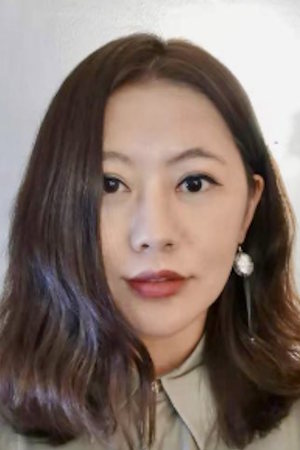
Dr. Grace Yuehan Wang is a young generational China expert and author with a global cultural mindset. She is an internationally known scholar on science, technology & innovation with a focus on the global south. She is an experienced consultant and the founder of a boutique advisory firm.
▶ Read more..
She was appointed as a visiting scholar at London School of Economics since 2023 and she has been a senior research fellow at the Department of Journalism, Stellenbosch University in South Africa since 2022. Dr. Wang earned her doctoral degree from the University of Southern California in Los Angeles, and was the Annenberg Chair Fellow in Communication, Technology, and Society for two years. Prior to that, she studied at Boston University and the University of California, Los Angeles. She was also a visiting researcher to the Media Law and Policy program at the University of Oxford and was awarded the Frank Andrews international fellowship for the 69th Annual Summer Institute in Survey Research Techniques at the University of Michigan, Ann Arbor. Dr. Wang was the South Africa National Research Foundation grant holder during 2021-2022. She was the only Asian recipient awarded the Joint Research Funding by Cape Higher Education Consortium / Western Cape Government (WCG) for her research proposal on digital economy in South Africa.
Dr. Wang's expertise emphasizes on artificial intelligence governance, technological innovation and digital economy in the Asia-Pacific region. Her long-term education and work experience in China, the United States, Africa and Europe & UK enable her to provide first-hand, in- depth, and multicultural analysis in regional & international development, technological innovation and global digital governance. Her book, Dragon Innovation, Shenzhen, Lessons for the West and Global South Countries from China’s Leading Technological Cluster, is one of the systematic analyses of Shenzhen & Greater Bay Area, a world-class innovation ecosystem in the global south.
Dr. Wang welcomes consultancy and academic collaborations with regard to regional / international development, technological innovation in the global south, digital economy and AI governance with governments, NGOs and global business entities.
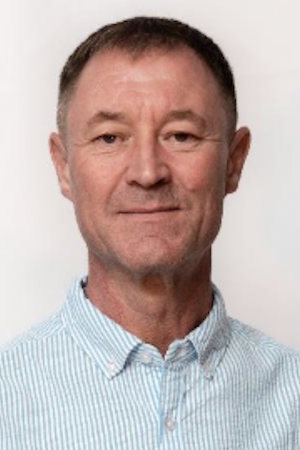
Dr André Gouws is an extraordinary researcher in the Department of Journalism at Stellenbosch and a senior lecturer in the Department of Arts and Cultural Sciences at Akademia in Centurion. Gouws holds an MA in Journalism and Media Studies (with distinction) from Rhodes University and a PhD in Journalism from Stellenbosch
▶ Read more..
University. Gouws conducts research on digital media, peripheral journalism and journalism education. He has presented several papers on his research at local and international conferences and published academic book chapters. Since 2023, he has been the public representative for the Forum for Community Journalists (FCJ) on the Press Council of South Africa. He has served as an executive member of SACOMM, the South African Communications Association.
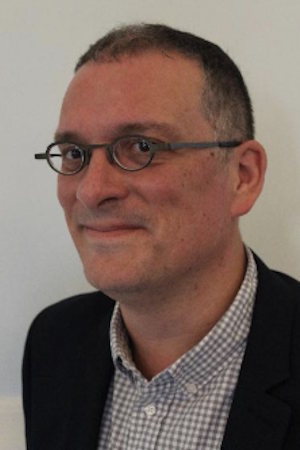
Dr Cobus van Staden is the co-founded and head of research of The China-Global South Project, a Ford Foundation-supported startup tracking China’s engagement across the developing world. He holds a PhD in media studies from the University of Nagoya in Japan, and conducted postdoctoral research at Stellenbosch
▶ Read more..
University’s Department of Political Science and the University of Johannesburg’s SARChI Chair for African Diplomacy and Foreign Policy. Subsequently he was a senior lecturer in the Department of Media Studies at the University of the Witwatersrand, and the program head for Africa-China relations at the South African Institute of International Affairs. His work focuses on Chinese messaging, soft power, and public diplomacy in Africa, as well as Asia-Africa media flows.
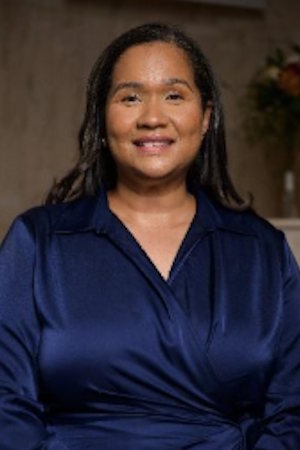
Florence de Vries, PhD, is a communication strategist with 20 years’ experience in journalism and strategic communication. She is the Head of Marketing and Communication at Stellenbosch University’s flagship Faculty of Medicine and Health Sciences. She also serves as director on the board of South African
▶ Read more..
NPO Ithemba Foundation. A passionate advocate for mental health awareness through research and writing, she has helped augment the fields of mental illness research and media studies leading several award-winning marketing campaigns. Her primary research interests centre on journalism, mental illness education and care ethics. She has a proven track record in designing impactful campaigns, building high-performing teams, and mentoring future industry leaders through the Oprah Winfrey Leadership Academy Foundation. Florence has also established herself as a published poet and author. She regularly writes for Daily Maverick and other respected outlets.
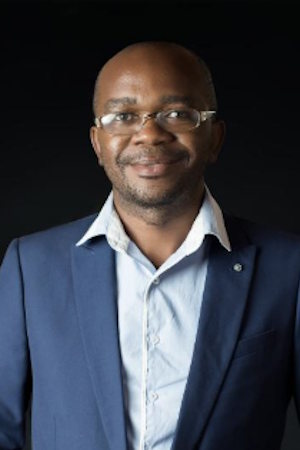
Dr Mphathisi Ndlovu is a Professor of Journalism and Media Studies at the National University of Science and Technology (Zimbabwe). He is also a research associate in the Journalism Department at Stellenbosch University (South Africa). He has 50 publications which include 3 edited books, 24 book chapters
▶ Read more..
and 23 journal articles. His research is centred on digital cultures, journalism practice, identity politics, memory activism, media theory, and Global South perspectives. His co-edited books are titled The Idea of Matabeleland in Digital Spaces: Genealogies, Discourses and Epistemic Struggles (2022), Remembering Mass Atrocities: Perspectives on Memory Struggles and Cultural Representations in Africa (2024), and Shifting Journalism Boundaries in Zimbabwe: Digital Disruption and Innovation at the Margins (2025). Mphathisi is a recipient of the following awards and research grants: The International Visitor Leadership Programme (IVLP) sponsored by the US Department of State (2024), the Africa No Filter (ANF) Academic Fellowship (2021), and the Alliance for Historical Dialogue and Accountability (AHDA) fellowship programme from the Institute for the Study of Human Rights at Columbia University (2022). Email: [email protected]
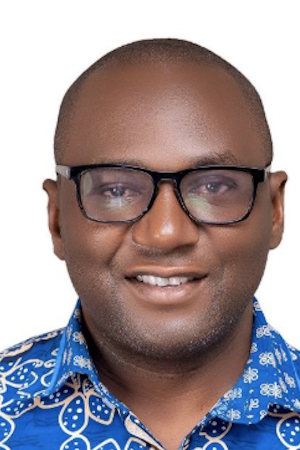
Dr. Ivan Nathanael Lukanda is a Senior Lecturer in the Department of Journalism and Communication at Makerere University and currently a Postgraduate Fellow at Stellenbosch University, where he earned his PhD in Journalism (2018). He is also a Research Associate at the Africa Centre for Media Excellence.
▶ Read more..
His academic career is enriched by prestigious fellowships, including the Andrew Mellon Africa Urbanities Project and the African Humanities Programme of the American Academy of Learned Societies.
Bridging academia and practice, Ivan previously worked as a freelance journalist for Uganda’s Sunday Vision and the Uganda Radio Network. His research focuses on science and technology communication, media freedom, communication for development, journalists’ safety, trauma in journalism, and the intersection of journalism with cultural identity. Specific research interests include public discourse on genetically modified food, environmental and climate change communication, scientist–media dynamics, women in science, and media in African urbanities.
At Stellenbosch, Dr. Lukanda continues to advance scholarship on food as identity, ethical journalism and trauma-aware media practices while mentoring the next generation of media professionals across the continent.
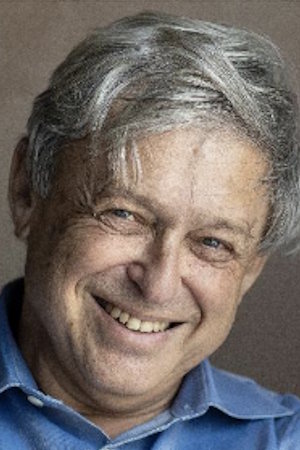
Ivor Shapiro is a Research Fellow in the Department of Journalism at Stellenbosch University. He currently leads an international, interdisciplinary study of “essential standards” for news reporting, which is co-hosted by the Centre for Information Integrity in Africa with Centre d’études sur les médias.
▶ Read more..
As a teenager in Cape Town, Prof. Shapiro was a freelance journalist and then worked for the anti-apartheid Christian Institute of Southern Africa. He studied at the universities of Cape Town and South Africa, worked as a narrative journalist in Toronto, Canada, and taught feature writing, ethics, and media law at Toronto Metropolitan University (TMU). He is a former chair of the ethics advisory committee of the Canadian Association of Journalists, principal investigator for Canada of the Worlds of Journalism Study, and chair of TMU’s School of Journalism.
Prof. Shapiro’s scholarship on journalists’ norms and practices has been published in leading international journals, and he is an editorial board member of Journalism Studies. His latest book is The Disputed Freedoms of a Disrupted Press (Routledge, 2024).