
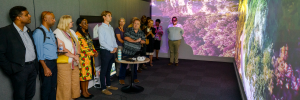
SU opens Africa’s first immersive technology lab
- A new immersive facility at the SU Library allows students and researchers to step inside complex data.
- The lab is the first of its kind at an African university, positioning SU at the forefront of immersive academic infrastructure.
- Designed as a shared, cross-disciplinary space, it supports teaching, research and innovation across faculties.
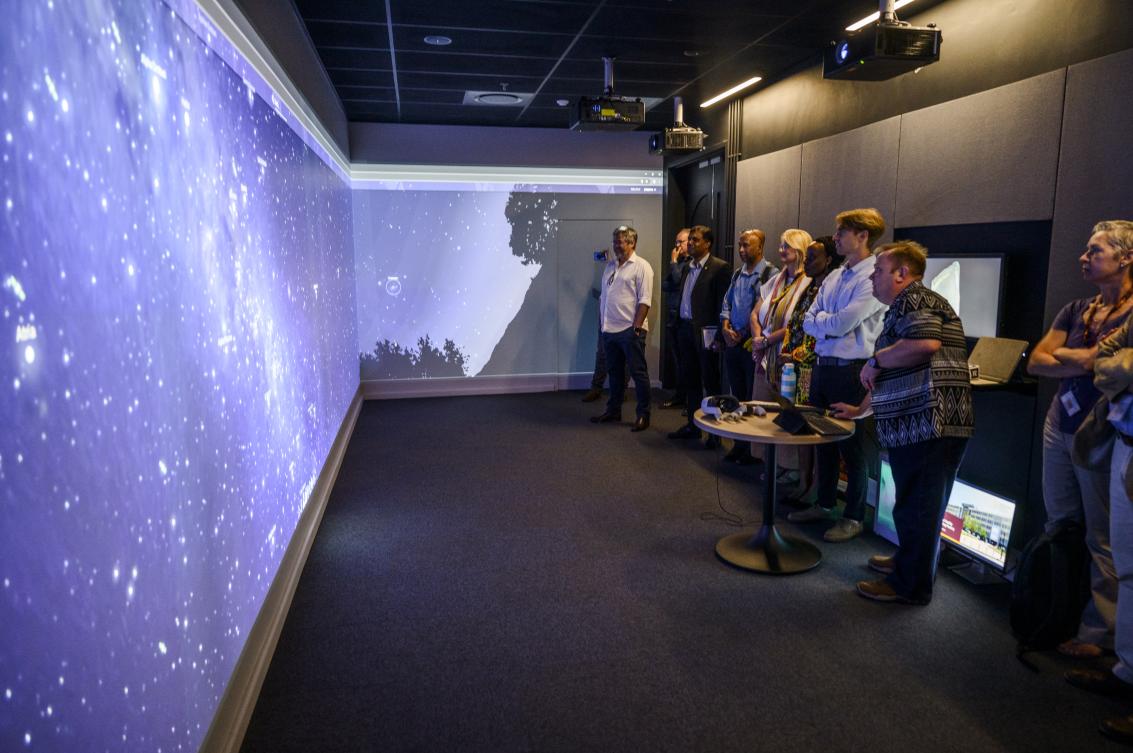
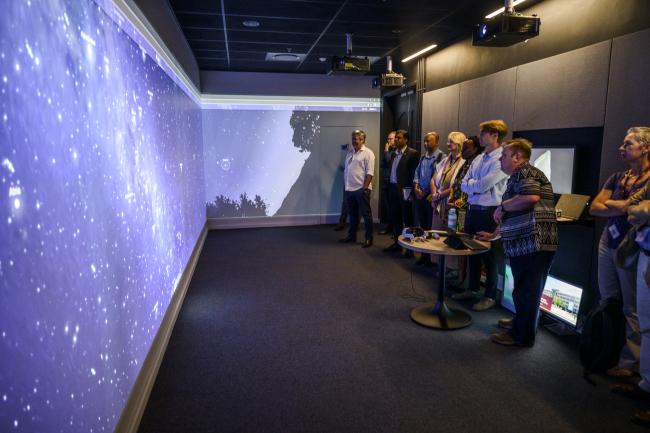
Imagine standing beneath a star-filled night sky rendered in real time or watching a lecturer guide students through the inner workings of the human brain at larger-than-life scale. Picture engineering students walking through a virtual construction site, or climate scientists turning invisible greenhouse gas data into something you can see, move through and understand. This vision is no longer theoretical; it is part of the everyday academic environment at Stellenbosch University (SU).
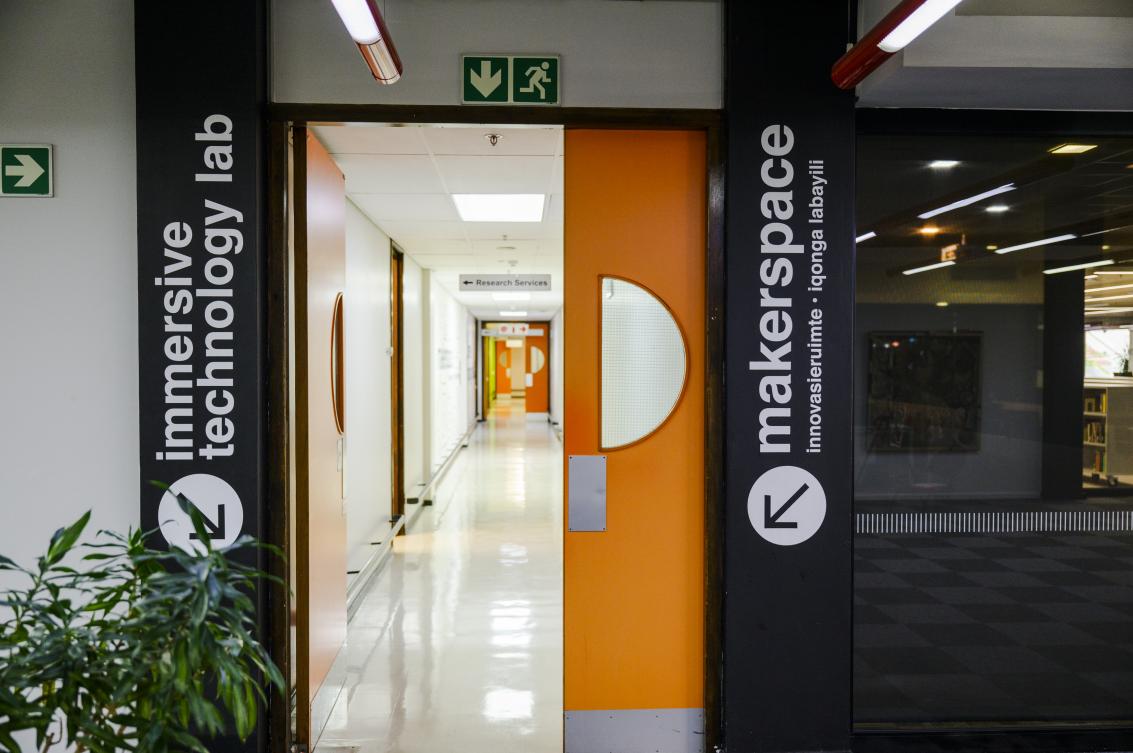
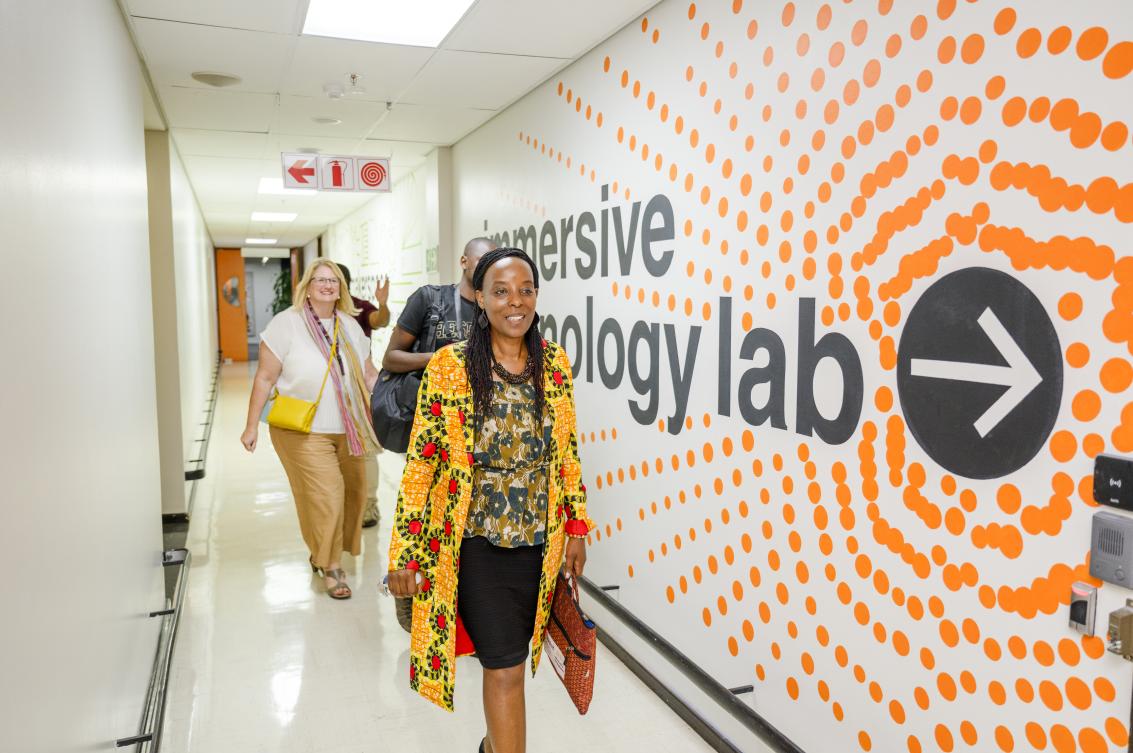
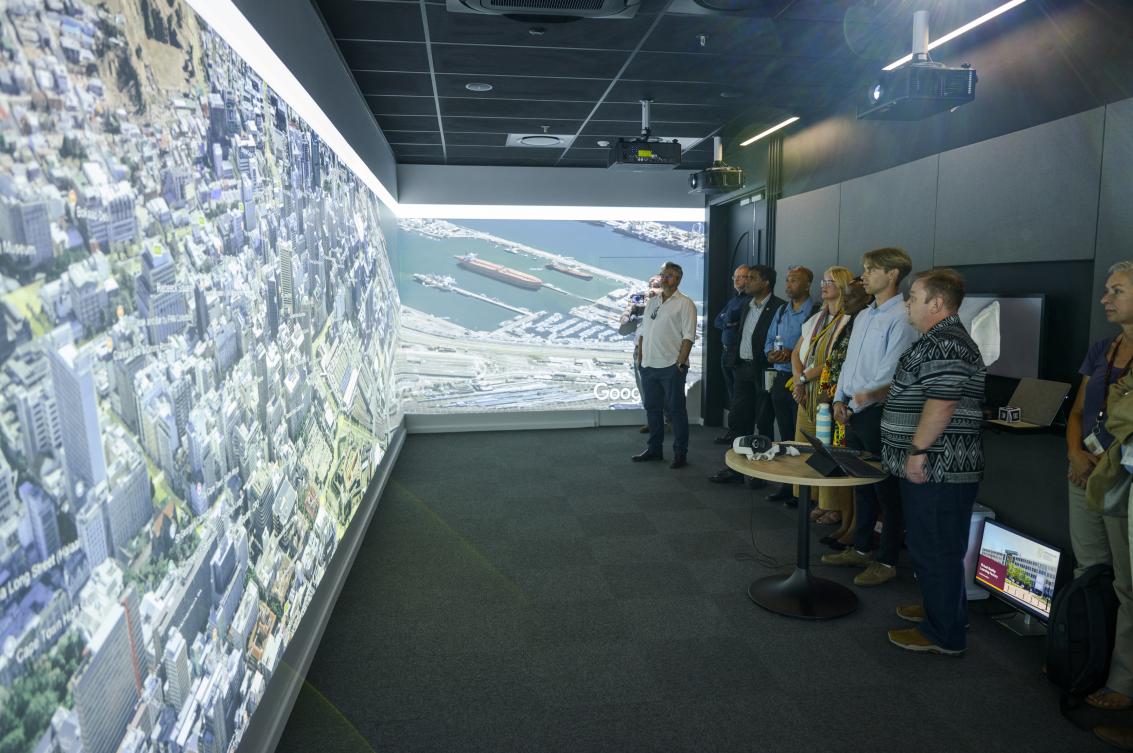
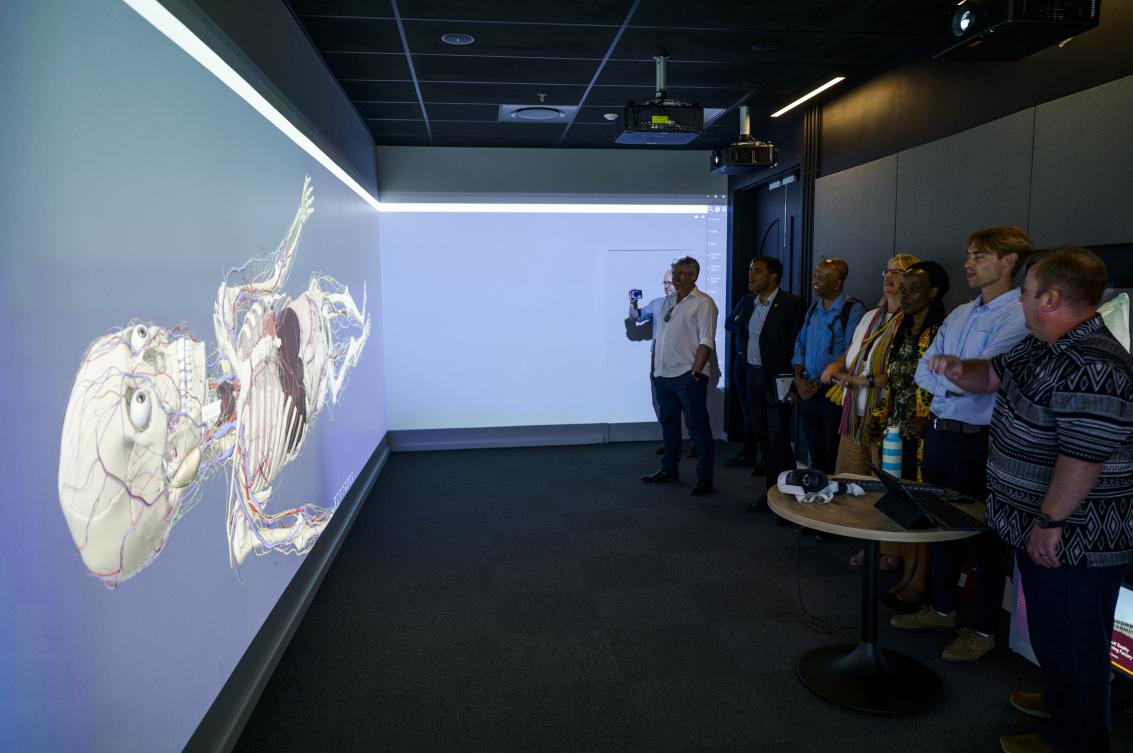
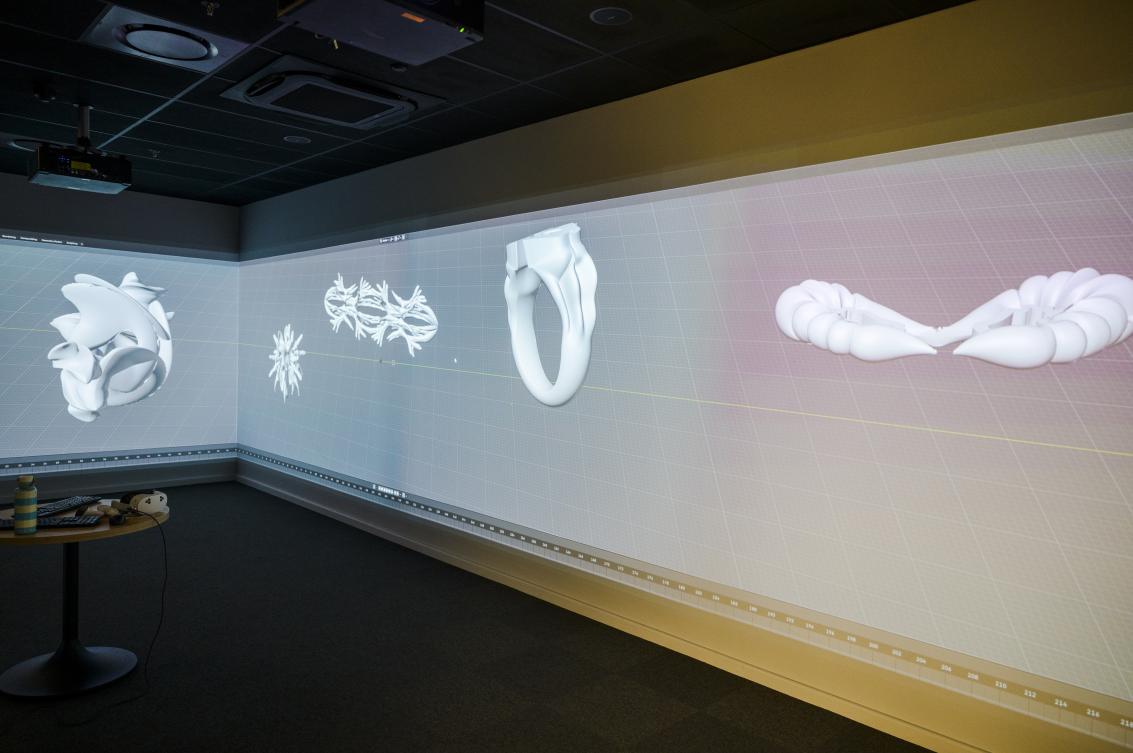
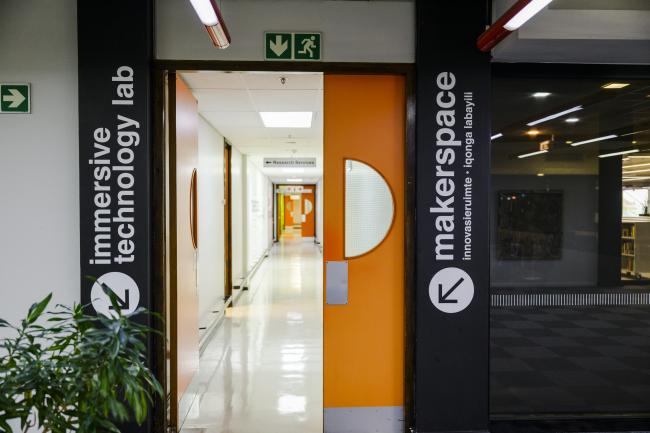
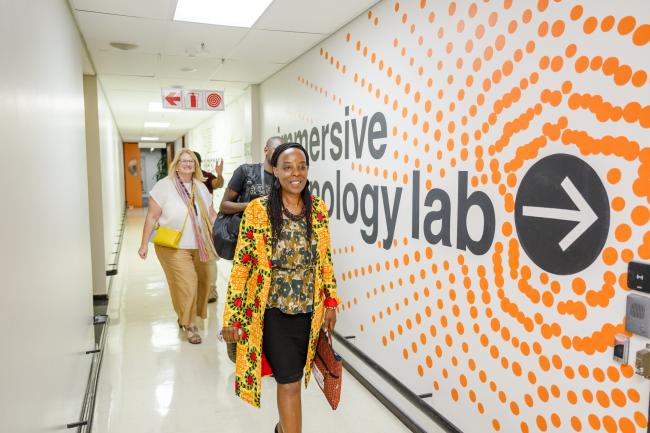
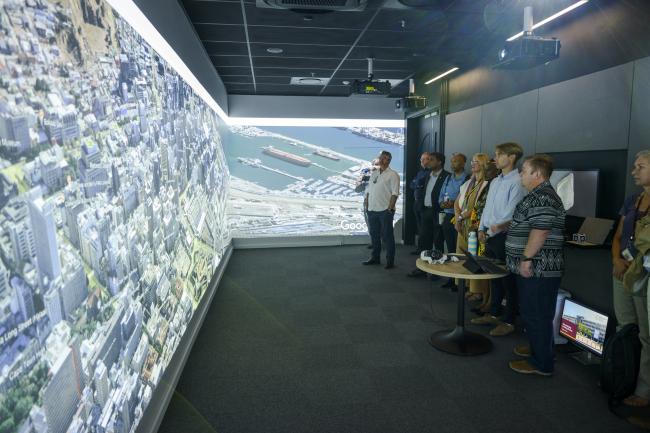
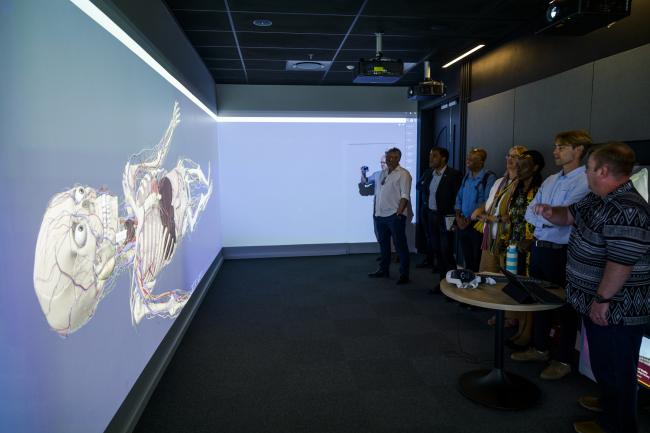
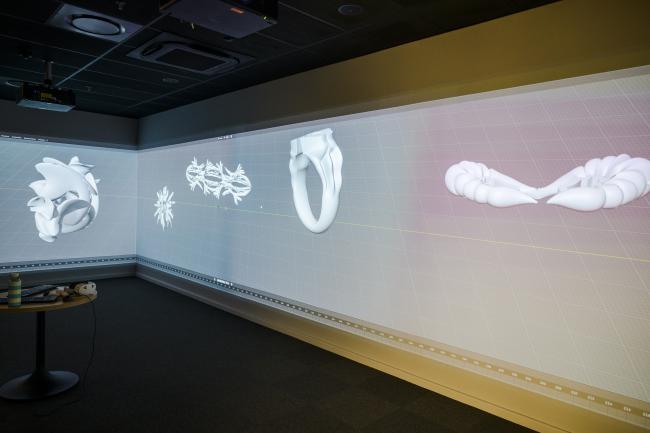
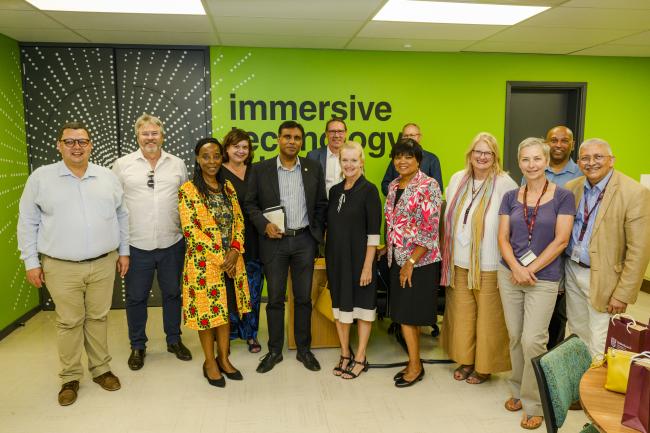
This week, the University officially opened its Immersive Technology Lab (ITL), a high-resolution, 270-degree panoramic data visualisation facility housed in the SU Library. The lab, adjacent to the Library Makerspace, is the first facility of its kind at an African university and marks a significant milestone in SU’s investment in advanced academic infrastructure.
A seven-year journey to an immersive space
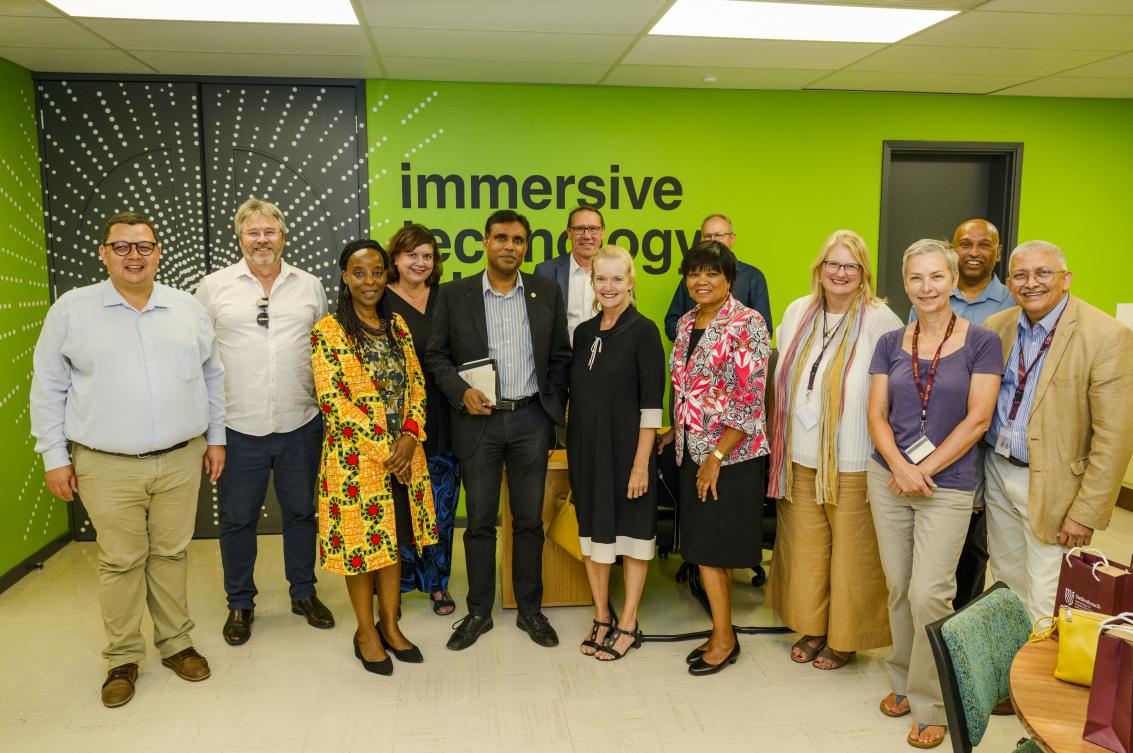
Welcoming guests to the launch, Ellen Tise, Senior Director: Library and Information Service, said the opening of the ITL was the culmination of an idea that first took shape seven years ago.
“What started as a much simpler vision has evolved alongside the rapid development of technology,” she said. “As the needs of our students and academics changed, so did our ambition.”
Originally conceived as a modest data visualisation space, the project grew into a fully immersive environment integrating data visualisation literacy training, advanced visualisation services and immersive headset experiences. “This is a space where staff and students don’t just look at data, they can step inside it,” Tise explained.
The lab brings together virtual and augmented reality technologies to support research, teaching, training and industry collaboration. It has been designed with interdisciplinarity in mind, particularly for data-intensive fields that require new ways of interpreting and communicating complex information.
Why the lab belongs in the library
Prof Sibusiso Moyo, Deputy Vice-Chancellor: Research, Innovation and Postgraduate Studies, described the ITL as a strategic asset that strengthens SU’s research and teaching capabilities while expanding how knowledge is created and shared.
“The nature of research is changing,” she noted. “Across disciplines, we are working with much larger datasets and more complex information. It is no longer enough to simply produce outputs. We also need to interpret, explore and communicate our findings clearly and responsibly.”
Immersive technology, she said, allows researchers and students to see patterns, relationships and insights that are difficult to grasp through flat representations. “It enables learning and discovery experiences that are interactive and engaging, without compromising academic rigour.”
Moyo also addressed the decision to locate the lab in the Library rather than within a specific faculty. The Library, she argued, is a neutral, shared academic space that encourages collaboration across disciplinary boundaries. “This facility is not designed for a single discipline,” she said. “It exists to support the core functions of teaching, learning and research across the University.”
Projects from multiple faculties have already been identified to use the lab, she added, particularly in areas such as climate resilience, health systems, inequality, economics and sustainable development.
A platform for the future of learning
For Prof Deresh Ramjugernath, Rector and Vice-Chancellor of Stellenbosch University, the launch of the ITL was emblematic of a broader institutional journey towards digital transformation and academic relevance.
“This is a world-class facility that supports new modes of teaching, learning and research,” he said. “It equips our students and staff with digital skills and new ways of thinking that are essential in contemporary society.”
Ramjugernath noted that the ITL is the first facility of its kind in its current format not only in South Africa, but on the African continent. “That matters. Higher education is evolving rapidly. The expectations of graduates, employers and society are changing, and universities cannot rely only on traditional approaches to teaching and learning.”
He described the lab as a purposeful investment that enhances experiential learning by allowing students to connect theory with real-world applications. “It’s not about replacing human teaching,” he said. “It’s about enhancing learning through digital tools and expanding what is possible.”
The Rector also pointed to the lab’s potential role in advancing work in artificial intelligence and data-driven research. Artificial intelligence, he said, is no longer a future concern but a present reality. “If we want our graduates to remain competitive, we must equip them with the skills to engage meaningfully with AI, within strong ethical frameworks.”
More than a single facility, Ramjugernath framed the ITL as a platform for collaboration, innovation and future growth. “What we are opening today is a foundation on which to build,” he said. “A space that supports digital learning, interdisciplinary work and academic excellence.”
Following the formal opening, guests were invited to experience rotating demonstrations of the lab’s capabilities. The experience offered a glimpse into how teaching, research and learning at SU may soon look very different – more immersive, more collaborative, and more closely aligned with the complex challenges of the world beyond the campus.
- Interested parties can contact Wouter Klapwijk for more details: (021) 808-4378 [email protected]
Related stories
Events
‘You belong here’ sets the tone as SU opens its arms to new generation of Maties
On Wednesday afternoon, Stellenbosch offered a near-perfect stage for one of the highlights in the University’s academic calendar. The mountains glowed in the...
Media release
SU and Europa-Universität Flensburg conclude strategic Memorandum of Understanding on peace and conflict research in the context of violent histories
Stellenbosch University (SU), through the Centre for the Study of the Afterlife of Violence and the Reparative Quest (AVReQ), has concluded a memorandum of...

Media release
Deputy minister praises SU’s readiness for 2026 academic year
Stellenbosch University (SU) was on Monday the first stop on a national readiness tour by Deputy Minister of Higher Education and Training Dr Mimmy Gondwe, who...