
Strengthening Rural Sustainability Through Strategic African Partnerships: SU Engages in MASSTER Consortium Meeting in Senegal
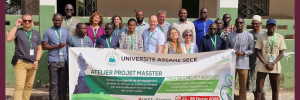
- From 23–26 February 2026, Henk Stander (Aquaculture Unit, Department of Animal Science at Stellenbosch University) participated in a workshop at Université Assane Seck de Ziguinchor in Senegal, representing the Stellenbosch University Water Institute at the ERASMUS+ co-funded MASSTER project.
- The MASSTER project strengthens support for agricultural students and farmers in Sub-Saharan Africa through innovative education and training initiatives led by Higher Education Institutions, linking agriculture, rural development and migration.
- Regional impact: Through collaboration between six partner universities in South Africa and Senegal, the project aims to build institutional capacity, support rural economic opportunities, and contribute to key Sustainable Development Goals such as Zero Hunger, Quality Education and Decent Work.
From 23–26 February 2026, Henk Stander from the Aquaculture Unit in the Department of Animal Science at Stellenbosch University (SU) participated in a workshop at Université Assane Seck de Ziguinchor in Senegal. Stander represented the Stellenbosch University Water Institute at the event, which marked the first in-person consortium meeting for partners involved in the 2026 cycle of the ERASMUS+ European Union co-funded MASSTER project.
The Managing South Africa and Senegal Sustainability Targets through Economic Diversification of Rural Areas (MASSTER) project focuses on strengthening support for agricultural students and farmers in Sub-Saharan Africa. Through innovative education and training initiatives implemented by Higher Education Institutions (HEIs), the project promotes community development and adopts a whole-of-society approach within the agriculture, rural development and migration nexus.
MASSTER aligns with several key Sustainable Development Goals (SDGs), including Zero Hunger (SDG 2), Quality Education (SDG 4), Decent Work and Economic Growth (SDG 8), and Responsible Consumption and Production (SDG 12). A central aim of the project is to address migration-related challenges by creating sustainable economic opportunities in rural areas.
Six partner higher education institutions — three in Senegal and three in South Africa — collaborate to enhance institutional capacity and regional impact. The project supports these institutions in responding to the needs of local farmers, strengthening extension services with relevant, income-oriented training programmes, and assisting municipalities in better managing economic migration dynamics in rural contexts.
To achieve this, MASSTER analyses the risk factors driving migration as well as those that discourage it and develops targeted training programmes to enhance income-generation potential among future farmers. The project also strengthens collaboration between HEIs and extension services to deliver effective training to both farmers and students, while supporting institutions in developing sustainable migration management mechanisms.
By adopting a transdisciplinary approach, MASSTER integrates agriculture, rural development, food security and migration into a coherent regional development framework. The project emphasises the interconnectedness of these sectors and seeks to enhance the capacity and relevance of local actors — particularly HEIs — in advancing sustainable development in both Senegal and South Africa.
To learn more about the MASSTER project, visit: https://www.masster-project.de
Related stories
Media release
SU lecturer tackles epic challenge to raise funds for science students in need
First-year Stellenbosch University (SU) chemistry lecturer Dr Marietjie Lutz is back in the saddle for a good cause, raising funds for students in need. But...
Media release
SU’s ‘mountain goats’ run toward the flames
While many students glance at their phones during lectures to check messages or social plans, a small group of Stellenbosch University (SU) volunteers monitor...
Events
‘You belong here’ sets the tone as SU opens its arms to new generation of Maties
On Wednesday afternoon, Stellenbosch offered a near-perfect stage for one of the highlights in the University’s academic calendar. The mountains glowed in the...