
Astronomy and Astrophysics
We focus on connecting fundamental physics with astronomical observations to understand the fundamental laws of the Universe, and to unravel the nature of dark matter and dark energy. In particular, our active research directions include the epoch of reionization, extragalactic astronomy, the early Universe, dark matter indirect detection, neutron stars and black holes. We heavily involve in South Africa’s MeerKAT, Square Kilometre Array (SKA), Hydrogen Epoch of Reionization Array (HERA) telescopes, LSST (Vera C. Rubin Observatory), FAST telescope and CMB Stage-4, and also use data from Atacama Cosmology Telescope, South Pole Telescope, ESO’s Kilo-Degree Survey (KiDS), and Dark Energy Survey Instrument (DESI).
Research group


















Research
Research Interests
- Radio Astronomy: Epoch of Reionization, Dark Matter search in radio wavelength, Pulsar Timing Array, 21-cm Intensity Mapping
- Extragalactic Astronomy: galaxy peculiar velocity field, thermal and kinetic Sunyaev-Zel’dovich effect, dynamics of local group, near-field cosmology
- Theoretical Cosmology: the cosmic microwave background radiation, observational tests of inflation, gravity theories
Current Collaboration Projects
- Hydrogen Epoch Reionization Array (HERA): Calibration and power spectra analysis
- Square Kilometer Array (SKA) team: EoR, HI, Cosmology Science working groups
- Rubin Observatory (LSST) science team
- CMB Stage-4 Survey
Institutional Collaboration
The Kapetyn Astronomical Institute, University of Groningen, Netherlands
Collaborators
- Prof Rene Breton, The University of Manchester
- Prof Xuelei Chen, National Astronomical Observatory, China
- Prof Clive Dickinson, The University of Manchester
- Prof Yu Gao, Institute of High Energy Physics
- Prof Hongjian He, Shanghai JiaoTong University
- Prof Di Li, National Astronomical Observatory, China
- Prof Douglas Scott, University of British Columbia
- Prof Aaron Parsons, University of California at Berkeley
- Prof Denis Tramonte, Xian-JiaoTong Liverpool University
- Prof Ludovic Van Waerbeke, University of British Columbia
- Prof Amanda Weltman, University of Cape Town
- Prof Qiang Yuan, Purple Mountain Observatory
Media gallery
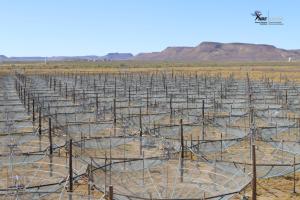
We are involved in the US-SA collaboration project “Hydrogen Epoch Reionization Array” (HERA) which measures the high-redshift 21-cm signal with radio interferometry technique.
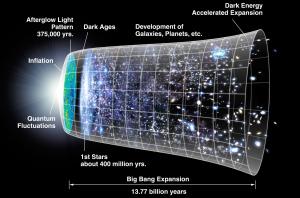
The cosmic evolution of 13.7 billion years is the major research objective of our research.
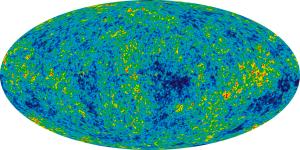
We utilise the Cosmic microwave background radiation (CMB) from Planck and CMB-S4 to understand the initial condition of the Universe.

We are involved in the MeerKAT and Square Kilometre Array (SKA) project.
Media coverage
CGTN interview of Prof Yin-Zhe Ma at the 183rd Nobel Symposium Outreach Talk in the University of the Western Cape in October 2022.

Searching for Axion Dark Matter —NITheCS Seminar.
Documentary movie “Echoes of the Skies” for South Africa’s SKA project

NItheCS Seminar on viscous dark matter by Dr. Anslyn John

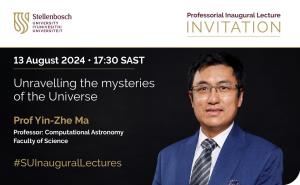
Inaugural Lecture by Prof. Yin-Zhe Ma (13/08/2024).

National Science and Technology Forum (NSTF-South32) Award for Researcher 2025
Recent research highlights
1. First Results from HERA Phase II (2026)
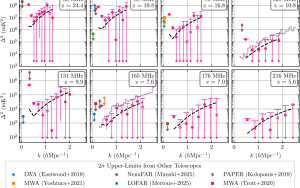
The study reports the first scientific results from Phase II of the Hydrogen Epoch of Reionization Array (HERA), a radio telescope designed to detect faint signals from the early Universe. By examining two weeks of new, higher‑bandwidth observations, the team set improved upper limits on fluctuations in the 21‑centimeter radio signal emitted by hydrogen during the Cosmic Dawn and the Epoch of Reionization—periods when the first stars and galaxies were forming. Although the elusive signal itself remains undetected, the data reveal how instrumental effects, especially "mutual coupling" between antennas, contaminate the measurements and must be carefully removed. These results demonstrate that HERA’s upgraded system is working as intended, highlight the key challenges ahead, and lay the groundwork for deeper observations that may soon illuminate how the Universe transitioned from darkness to the first light.
2. Detection of the Integrated Sachs-Wolfe effect (ISW) and thermal Sunyaev-Zeldovich effect cross-correlations
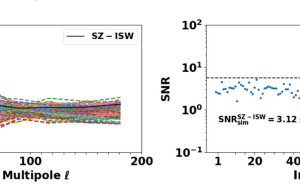
The Integrated Sachs-Wolfe (ISW) effect refers to the redshift or blueshift experienced by cosmic microwave background photons due to the evolving gravitational potential, which, in principle, is correlated with thermal gas on large scales. In Ibitoye et al. (2024), we successfully detected this phenomenon using Planck data with a confidence level of 3.6 sigma. The left panel illustrates the real SZ-ISW correlated power spectrum alongside 100 simulations represented by colored curves, while the right panel displays the signal-to-noise ratio of the genuine SZ-ISW correlation compared to the 100 simulations. Additionally, we employed the cross-correlation power spectrum, as well as tSZ and ISW auto-spectra, to constrain cosmological parameters, yielding intriguing results concerning parameters such as H_0 and S_8. For further elaboration, interested readers are encouraged to consult Ibitoye et al. (2024).
3. Cosmic web’s contribution to FRB’s dispersion measure (DM)
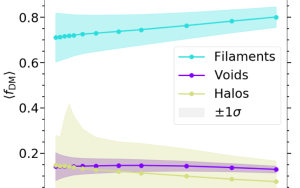
In Walker et al. (2024), we utilized the cosmological simulation "IllustrisTNG" to investigate the dispersion measures (DMs) of fast radio bursts (FRBs) accumulated as they traverse various types of large-scale structure (LSS). Along randomly selected sightlines, we pinpointed halos, filaments, voids, and collapsed structures and computed their respective contributions to DM. As depicted in the right panel, our analysis revealed that filamentary structures predominantly contribute to DM, increasing from approximately 71% to about 80% on average for FRBs for redshift range [0.1, 5]. Conversely, the contribution from halos decreases, while the contribution from voids remains relatively constant, fluctuating within approximately 1%. The primary source of DM variability among sightlines stems from halo and filamentary environments, suggesting that sightlines traversing voids exclusively could serve as more accurate probes for cosmological parameters.
Publication
35. First Results from HERA Phase II. The HERA Collaboration (including Yin-zhe Ma and corresponding author Steven Murray), 2026, ApJ 998 33 https://iopscience.iop.org/article/10.3847/1538-4357/ae2d54
34. Squared-field cross-correlation between kinetic Sunyaev-Zel’dovich effect and 21-cm intensity mapping. Zi-Yan Yuwen, Yu-Er Jiang, Yin-Zhe Ma, Paul La Plante, Adam Lidz, and Yan Gong, 2026, Phys. Rev. D 113, 023503 https://doi.org/10.1103/kvtx-zytg
33. HI Intensity Mapping Cross-correlation with Thermal Sunyaev–Zel’dovich Fluctuations: Forecasted Cosmological Parameter Estimation for FAST and Planck. Ayodeji Ibitoye, Furen Deng, Yichao Li, Yin-Zhe Ma, Yan Gong, Xuelei Chen, 2025, The Astrophysical Journal, 978 159 http://doi.org/10.3847/1538-4357/ad91a4
32. Signatures of inhomogeneous dark matter annihilation on 21-cm. Junsong Cang, Yu Gao, Yin-Zhe Ma, 2025, Phys. Rev. D 112, 103048 https://doi.org/10.1103/69jk-m5xg
31. Prospects for kSZ^2-21cm^2 Cross-Correlations during Reionization. Meng Zhou, Paul La Plante, Adam Lidz, Yi Mao, Yin-Zhe Ma, 2025, The Astrophysical Journal, 991, 195 https://doi.org/10.3847/1538-4357/adfb67
30. An independent estimate of H(z) at z = 0.5 from the stellar ages of brightest cluster galaxies. S. Ilani Loubser, Adebusola B. Alabi, Matt Hilton, Yin-Zhe Ma, et al., 2025, Monthly Notices of the Royal Astronomical Society, 540, 3135-3149 https://doi.org/10.1093/mnras/staf915
29. In search of an interaction in the dark sector through Gaussian Process and ANN approaches. Mazaharul Abedin, Guo-Jian Wang, Yin-Zhe Ma, and Supriya Pan, 2025, Monthly Notices of the Royal Astronomical Society in press https://doi.org/10.1093/mnras/staf762
28. MeerKAT HI observations of LSB/UDG candidates projected around two southern loose groups. Chandreyee Sengupta, Tom C. Scott, Hao Chen, Hyein Yoon, Yogesh Chandola, Mengtian Li, Gyula I. G. Józsa, O. Ivy Wong, Yin-Zhe Ma, Patricio Lagos, Ruta Kale, and Denis Tramonte, 2025,
The Astrophysical Journal Letters, 984, L46 https://doi.org/10.3847/2041-8213/adcee1
27. Investigating mutual coupling in the hydrogen epoch of reionization array and mitigating its effects on the 21-cm power spectrum. E. Rath et al. (including Yin-Zhe Ma), 2025, Monthly Notices of the Royal Astronomical Society, 541, 1125-1144 https://doi.org/10.1093/mnras/staf1012
26. matvis: A matrix-based visibility simulator for fast forward modelling of many-element 21 cm arrays. Piyanat Kittiwisit et al. (including Yin-Zhe Ma), 2025, RAS Techniques & Instruments (RASTI), 4, 001 https://doi.org/10.1093/rasti/rzaf001
25. Impacts and Statistical Mitigation of Missing Data on the 21cm Power Spectrum: A Case Study with the Hydrogen Epoch of Reionization Array. Kai-Feng Chen et al. (including Yin-Zhe Ma), 2025, The Astrophysical Journal, 979, 191 https://doi.org/10.3847/1538-4357/ad9b91
24.Expanded Generalized Needlet Internal Linear Combination (eGNILC) Framework for the 21 cm Foreground Removal. Wei-Ming Dai, Yin-Zhe Ma, 2025, Astrophys.J.Suppl. 276, 33 https://doi.org/10.3847/1538-4365/ad9604
23. DarkMatters: A powerful tool for WIMPy analysis. Sarkis M., Beck G., 2025, Physics of the Dark Universe, 47, 101745 https://doi.org/10.1016/j.dark.2024.101745
22. Relativistic and wide-angle corrections to galaxy power spectra. Sheean Jolicoeur, Secloka L. Guedezounme, Roy Maartens, Pritha Paul, Chris Clarkson, Stefano Camera, 2024, Journal of Cosmology and Astroparticle Physics, 08, 027, arXiv:2406.06274 https://doi.org/10.1088/1475-7516/2024/08/027
21. Multi-tracing the primordial Universe with future surveys. Kopana, M., Jolicoeur, S. & Maartens, R., 2024, Eur. Phys. J. C 84, 491, arXiv:2312.12994 https://doi.org/10.1140/epjc/s10052-024-12839-x
20. When LAMOST meets Gaia DR3 Exploring the metallicity of open clusters. R. Zhang, Guo-Jian Wang, Yuxi Lu, Sufen Guo, S. Lucatello, Xiaoting Fu, Haifeng Wang, Luqian Wang, J. Schiappacasse-Ulloa, Jianxing Chen, Zhanwen Han, 2024, Astronomy & Astrophysics, 692, A212, arXiv:2411.02743 https://doi.org/10.1051/0004-6361/202450726
19. CMBFSCNN: Cosmic Microwave Background Polarization Foreground Subtraction with a Convolutional Neural Network. Ye-Peng Yan, Si-Yu Li, Guo-Jian Wang, Zirui Zhang, Jun-Qing Xia, The Astrophysical Journal Supplement Series, 2024, 274, 4, arXiv:2406.17685 https://doi.org/10.3847/1538-4365/ad5c66
18. A demonstration of the effect of fringe-rate filtering in the hydrogen epoch of reionization array delay power spectrum pipeline. Hugh Garsden et al. (including Yin-Zhe Ma), 2024, Monthly Notices of the Royal Astronomical Society, 535, 3218-3238, arXiv:2402.08659 https://doi.org/10.1093/mnras/stae2541
17. Mitigating calibration errors from mutual coupling with time-domain filtering of 21 cm cosmological radio observations. Ntsikelelo Charles et al. (including Yin-Zhe Ma), 2024, Monthly Notices of the Royal Astronomical Society, 534, 3349-3363, arXiv: 2407.20923 https://doi.org/10.1093/mnras/stae2303
16. FAST HI 21-cm study of blueberry galaxies. Yogesh Chandola, Chao-Wei Tsai, D.J. Saikia, Di Li, Yin-Zhe Ma, 2024, The Astrophysical Journal Letters, 977, L8, arXiv: 2411.13527 https://doi.org/10.3847/2041-8213/ad901c
15. Deep extragalactic HI survey of the COSMOS field with FAST. Hengxing Pan, Matt J. Jarvis, Ming Zhu, Yin-Zhe Ma, Mario G. Santos, Anastasia A. Ponomareva, Ian Heywood, Yingjie Jing, Chen Xu, Ziming Liu, Yogesh Chandola, Yipeng Jing, 2024, Monthly Notices of the Royal Astronomical Society in press, arXiv: 2408.16597 https://doi.org/10.1093/mnras/stae2054
14. Constraining holographic dark energy and analyzing cosmological tensions. Xin Tang, Yin-Zhe Ma, Wei-Ming Dai, Hong-Jian He, 2024, Physics of the Dark Universe, 46, 101568, arXiv: 2407.08427 https://doi.org/10.1016/j.dark.2024.101568
13. FAST survey of Hi and OH absorption towards extragalactic radio sources. Yogesh Chandola, D.J.Saikia, Yin-Zhe Ma, Zheng Zheng, Chao-Wei Tsai, Di Li, Denis Tramonte, and Hengxing Pan, 2024, The Astrophysical Journal, 973, 48, arXiv: 2406.20026 https://doi.org/10.3847/1538-4357/ad5d5c
12. Hydrogen Epoch of Reionization Array (HERA) Phase II Deployment and Commissioning. Lindsay M. Berkhout et al. (including Yin-Zhe Ma), 2024, Publications of the Astronomical Society of the Pacific, 136, 045002, arXiv: 2401.04304 https://doi.org/10.1088/1538-3873/ad3122
11. Constraining primordial non-Gaussianity using Neural Networks. Chandan G. Nagarajappa, & Yin-Zhe Ma, 2024, Monthly Notices of the Royal Astronomical Society, 529, 3289-3300, arXiv: 2403.02115 https://doi.org/10.1093/mnras/stae679
10. Cross-correlation of cosmic voids with thermal Sunyaev-Zel’dovich data. Gang Li, Yin-Zhe Ma, Denis Tramonte, Guo-Liang Li, 2024, Monthly Notices of the Royal Astronomical Society, 27, 2663-2671, arXiv: 2311.00826https://doi.org/10.1093/mnras/stad3396
9. Cross-correlation between the thermal Sunyaev-Zeldovich effect and the Integrated Sachs- Wolfe effect. Ayodeji Ibitoye, Wei-Ming Dai, Yin-Zhe Ma, Patricio Vielva, Denis Tramonte, Amare Abebe, Aroonkumar Beesham, Xuelei Chen, 2024, The Astrophysical Journal Supplement Series (ApJS), 270, 16, arXiv: 2310.18478 https://doi.org/10.3847/1538-4365/ad08c5
8. The Dispersion Measure Contributions of the Cosmic Web. Charles R. H. Walker, Laura G. Spitler, Yin-Zhe Ma, Cheng Cheng, M. Celeste Artale, Cameron Hummels, 2024, Astronomy and Astrophysics, 683, A71, arXiv: 2309.08268https://doi.org/10.1051/0004-6361/202347139
7. HI content of selected mid-infrared bright, starburst blue compact dwarf galaxies. Yogesh Chandola, Di Li, Chao-Wei Tsai, Guodong Li, Yingjie Peng, Pei Zuo, Travis McIntyre, Yin-Zhe Ma, Daniel Stern, Roger Griffith, Thomas Jarrett, Peter Eisenhardt, Chantal Balkowski, 2024, Monthly Notices of the Royal Astronomical Society, 527, 603-619, arXiv: 2310.02202 https://doi.org/10.1093/mnras/stad3018
6. Solar gamma ray probe of local cosmic ray electrons. Hong-Gang Yang, Yu Gao, Yin-Zhe Ma, Roland M. Crocker, 2023, Physical Review D (Letter) 108, L061304 https://journals.aps.org/prd/pdf/10.1103/PhysRevD.108.L061304
5. Implications for primordial black holes from cosmological constraints on scalar-induced gravitational wave. Junsong Cang, Yin-Zhe Ma, Yu Gao, 2023, The Astrophysical Journal, 949, 64 (6 pages), arXiv: 2210.03476 https://iopscience.iop.org/article/10.3847/1538-4357/acc949/pdf
4. Constraints on dark matter annihilation from the FAST observation of the Coma Berenices dwarf galaxy. Wen-Qing Guo, Yichao Li, Xiaoyuan Huang, Yin-Zhe Ma, Geoff Beck, Yogesh Chandola, Feng Huang, 2023, Physical Review D, 107, 103011, arXiv: 2209.15590 https://journals.aps.org/prd/pdf/10.1103/PhysRevD.107.103011
3. GMRT HI mapping of mid-infrared bright Blue Compact Dwarf Galaxies W1016+3754 & W2326+0608. Yogesh Chandola, Chao-Wei Tsai, Di Li, Chandreyee Sengupta, Yin-Zhe Ma, Pei Zuo, 2023, Monthly Notices of the Royal Astronomical Society, 523, 3848-3862 https://doi.org/10.1093/mnras/stad1618
2. CoLFI: Cosmological Likelihood-free Inference with Neural Density Estimators. Guo-Jian Wang, Cheng Cheng, Yin-Zhe Ma, Jun-Qing Xia, Amare Abebe, and Aroonkumar Beesham, 2023, The Astrophysical Journal Supplement Series, 268, 7 https://doi.org/10.3847/1538-4365/ace113
1. Cross-Correlation Forecast of CSST Spectroscopic Galaxy and MeerKAT Neutral Hydrogen Intensity Mapping Surveys. Yu’er Jiang, Yan Gong, Meng Zhang, Qi Xiong, Xingchen Zhou, Furen Deng, Xuelei Chen, Yin-Zhe Ma, and Bin Yue, 2023, Research in Astronomy and Astrophysics, 23, 075003 (12 pages) https://iopscience.iop.org/article/10.1088/1674-4527/accdc0/pdf
Acknowledgements



Career and study opportunities
One Postdoctoral Fellow For 2025-2027
Astrophysics Research Group, Stellenbosch University
DEADLINE: 30th April 2025
The Astrophysics Research Group within the Department of Physics at Stellenbosch University invites applications for a postdoctoral fellowship, commencing in June 2025 or shortly thereafter. Established in 2023, the group comprises approximately 20 full-time researchers and is engaged in cutting-edge investigations across astrophysics and cosmology. Key research areas include the epoch of reionization, cosmic microwave background (CMB) studies, galaxy surveys and large-scale structures, neutron stars and black holes, and the indirect detection of dark matter.
The group plays a central role in South Africa’s MeerKAT telescope, the MeerKAT Extended Array, and the Hydrogen Epoch of Reionization Array (HERA). It also maintains formal collaborations with international projects such as the LSST (Vera C. Rubin Observatory), the SKA Science Working Groups, FAST, and the CMB Stage-4 survey in the United States. Additionally, the group has established a strategic partnership with the Kapteyn Astronomical Institute at Groningen University, with seven jointly supervised PhD students starting in 2025. Further collaborations extend to Stellenbosch University’s Faculty of Engineering and the School for Data Science, leveraging expertise in radio antenna technology and advanced big-data analytics. More details are available at: https://www.su.ac.za/en/faculties/science/department/physics/astro
Given the group’s involvement in these experiments, preference for this fellowship will be given to candidates with experience in any of the following areas: low-frequency radio data analysis, pulsar-timing arrays, CMB data analysis, galaxy surveys, or weak gravitational lensing.
BURSARY VALUES and DURATION: The fellowship is ZAR 320 000 (tax-free) per annum for two year (24 months), supplemented with a once-off relocation coverage, a once-off equipment grant and a limited travel allowance.
MINIMUM REQUIREMENTS: Ph.D. in astronomy, physics, or a related field (graduated within the last 5 years). Significant computational and data analysis skills are preferred.
APPLICATIONS: Please send a single PDF document to Professor Yin-Zhe Ma ([email protected]) by the closing date containing the:
- Your CV and Publication List.
- Degree Certificates
- A 3-page statement describing the previous/current research and future plan
- Names and Email addresses for 2-3 referees.
Applicants should also arrange for the 2 or 3 reference letters to be sent directly to Prof. Ma by the same closing date. An incomplete application will not be accepted.
Postdoctoral fellows are not appointed as employees and as their fellowships are awarded tax-free, they are not eligible for employee benefits. Stellenbosch University reserves the right NOT to make an appointment if suitable candidates do not apply.
INQUIRIES: Please contact Professor Yin-Zhe Ma ([email protected])
Call for Application: One MSc or PhD Bursary for 2026
Astrophysics Research Group, Stellenbosch University
DEADLINE: 20th April 2026
The Astrophysics Research Group in the Physics Department of Stellenbosch University is offering one MSc or PhD bursary (one position) starting in June 2026 or soon after. The Research Group is established in 2023 and is carrying out leading research in astrophysics and cosmology, including cosmic microwave background radiation, galaxy survey and large-scale structure, neutron stars and black holes, neutrino cosmology, and indirect detection of dark matter. The Research Group is heavily involved in South Africa’s MeerKAT telescope, MeerKAT Extended Array, Hydrogen Epoch Reionization Array (HERA), and have extensive formal collaborations with Atacama Cosmology Telescope, South Pole Telescope, SKA Science Working Groups, FAST and Tianlai telescopes (China). The Research Group is closely collaborating with Stellenbosch University’s Engineering faculty and Data science school which has strong expertise in radio antenna and big data analysis respectively. The available projects are:
[Theoretical]: Probing the Dark Ages and Helium Recombination Lines Using Cross-Correlation Techniques. This project focuses on theoretical modelling of Dark Ages 21-cm cosmology and the physics of recombination lines in the early Universe, with particular emphasis on cross-correlation techniques. Supervisors: Prof. Y.-Z. Ma and Dr. A. John.
[Data Analysis]: Signal Processing and Data Analysis for HERA Observations. This project addresses signal processing challenges in HERA data analysis, involving signal processing methods, Bayesian inference, machine-learning-based outlier detection, and high-performance simulations aimed at measuring the 21-cm signal from the Epoch of Reionization. Supervisors: Prof. Y.-Z. Ma, Dr. S. Murray.
Eligibility: Applicants should have (or expect to obtain before enrolment) an Honours degree prior to commencing an MSc, or a Master’s degree prior to commencing a PhD, in physics, astronomy, or a closely related field, with strong quantitative and computational skills.
APPLICATIONS: Please send a single PDF document by the closing date containing:
- Your CV.
- Transcripts of all university-level results.
- An indication of the preferred project.
- A brief statement of research interests and include any previous research experience, however minor, with details of the research project and supervisor.
- Applicants should also arrange for 2 reference letters to be sent via referees directly to us by the same closing date.
- Incomplete application will not be accepted.
Email: Prof. Yin-Zhe Ma ([email protected])
BURSARY VALUES and DURATION:
MSc: 2 years at ZAR 160 000 per year
PhD: 3 years at ZAR 200 000 per year
Successful candidates will be provided with a dedicated office space and a computer workstation within the research group.
INQUIRIES: Please contact Professor Yin-Zhe Ma ([email protected])